
Alessandro Giovannucci – författare
Visar alla böcker från författaren . Handla med fri frakt och snabb leverans.
2 produkter
2 produkter

E-bok
PDF, Franska, 2018331 kr
Läs direkt efter köp
Fernando Liuzzi s''évertua à élargir les horizons de la musicologie italienne en introduisant des orientations issues de la tradition allemande. Il divulgua les théories de Hanslick, Lipps et Fiedler, alors presque inconnues en Italie. D''après Liuzzi, la fusion de la réflexion philosophique et de la musicologie était cruciale afin de suggérer une nouvelle approche aux études musicales visant à transmettre les théories de Benedetto Croce. L''œuvre de Liuzzi offre une perspective intéressante sur les origines de la musicologie italienne et sur les relations avec les autres domaines du savoir.Fernando Liuzzi strove to find a compromise between the historical/analytical musicology and the aesthetics of music. He tried to expand the Italian musicology perspectives, introducing some ideas coming from the German tradition. He spread theories from Hanslick, Lipps and Fiedler, at that time rather unknown in Italy. For Liuzzi it was crucial to blend philosophical thinking and musicology, expanding Benedetto Croce''s ideas to create a new way to approach music studies. Liuzzi''s work can provide a good insight about the early Italian musicology, its self-definition and its relationship with other cultural areas.
Häftad, Svenska, 2026
358 kr
Skickas inom 5-8 vardagar
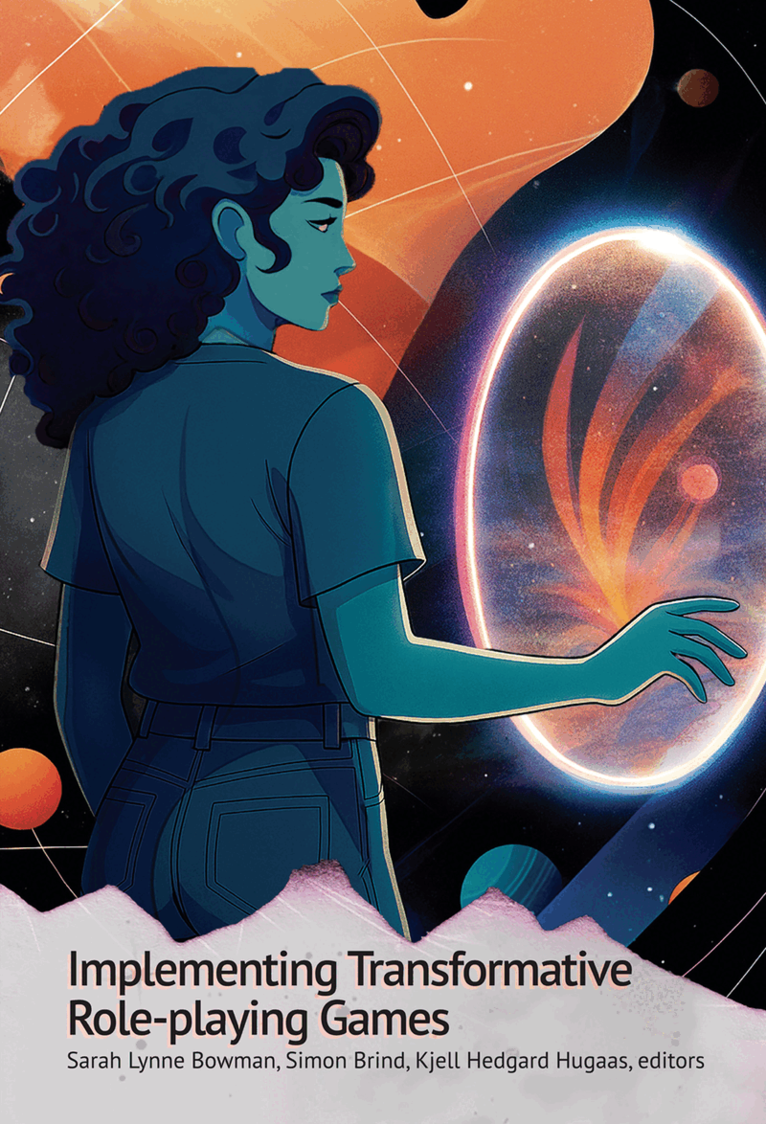
This textbook explores implementation practices for running transformative analog role-playing games, such as transformative leisure, educational, and therapeutic applications. We foreground central considerations for hacking existing games, framing, scaling up existing designs, adapting to the needs of specific populations, creating functional groups, and working with stakeholders.Additionally, the textbook covers many practical considerations when producing and running logistics. Examples include project management, organizational teams, establishing the setting, character writing, location logistics, as well as tech, interaction, and sensory design. We offer suggestions for communication, casting, documentation, guiding player preparation, workshop design, and onsite logistics. Next, the textbook discusses different facilitation roles and responsibilities. We describe several skills associated with good facilitation and recommendations for working in different settings. Additionally, the textbook presents general principles for cultivating safer and more accessible transformational communities surrounding play. We discuss ways to address physical and psychological risks in implementation for both organizers and players, such as injury, psychological overwhelm, and inappropriate behavior in the community. The textbook also features theories connected to the play experience, including motivation, creative agendas, and labor. Then, we present several concepts related to transforming one’s self concept, social identity, relationships with others, and spiritual development through transformative play. We include various practical recommendations for working with preparatory activities, steering, bleed, different types of immersion, interpersonal dynamics, group dynamics, and gathering play experiences through feedback and documentation. The textbook closes with a chapter offering practical advice for playtesting, iteration, and conducting research on transformative play, including study design, ethics, data gathering, and analysis. We conclude with a list of studies offering empirical evidence for the affective, cognitive, and behavioral benefits of these games. We recommend also reading the first book in this series, Transformative Role-playing Game Design, edited by Bowman, Diakolambrianou, and Brind.