Alessandro Santoni - Böcker
Visar alla böcker från författaren Alessandro Santoni. Handla med fri frakt och snabb leverans.
4 produkter
4 produkter
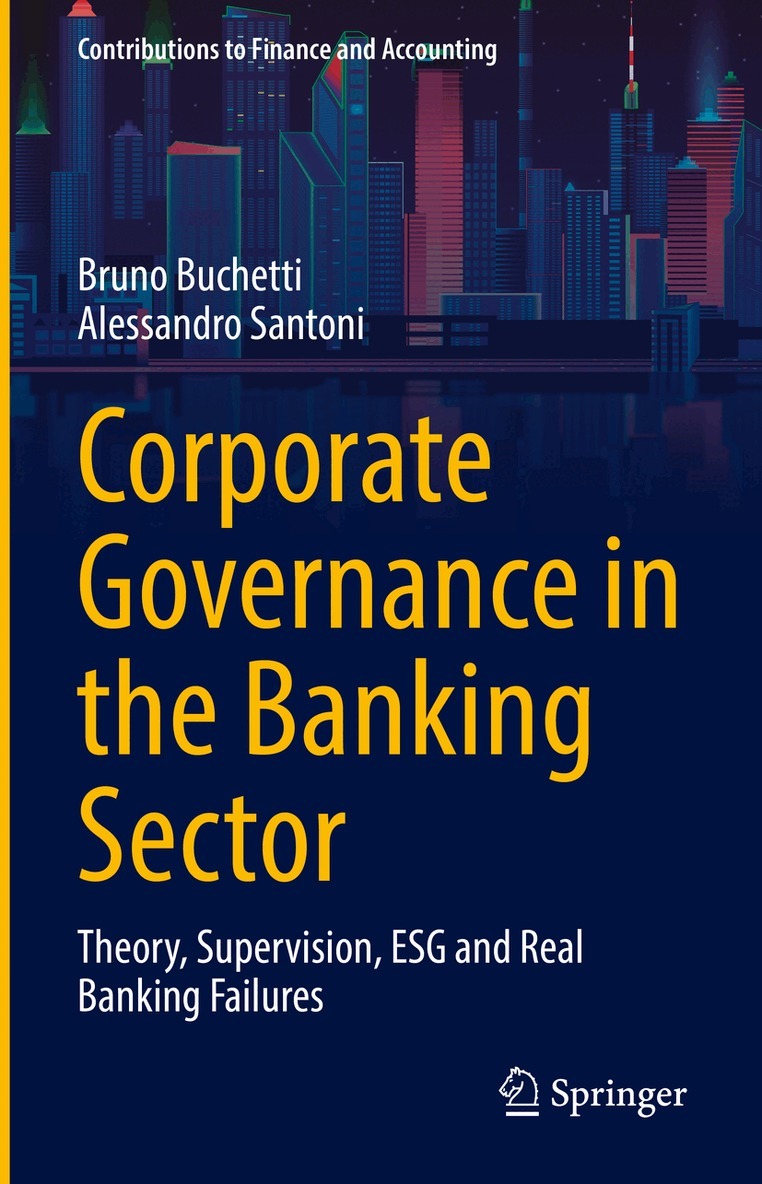
Corporate Governance in the Banking Sector
Theory, Supervision, ESG and Real Banking Failures
Inbunden, Engelska, 2022
1 528 kr
Skickas inom 10-15 vardagar
This book gives an overview of the most important theories on Corporate Governance, investigating the myth and the reality of it. It argues that within the banking sector exist two new agency costs (i.e., bank depositors and shareholders vs. directors and bank depositors vs. shareholders and directors). These agency problems are difficult to reduce for two reasons. First, banks are complex and opaque. Second, government implicit guarantees and the deposit insurance systems reduce the monitoring of depositors.This book also takes a deep dive into research on CG in the banking sector via a unique and innovative literature review covering the time period between 2000-2020. It finds that some specific CG characteristics affect banks: risk appetite, performance, accounting quality, compensation and corporate social responsibility disclosure.Furthermore, this publication contends that institutional investors are changing CG for the better, describing how major financialmarkets factors such as rating agencies and sell-side financial analysts make CG visible. Additionally, it investigates how managerial biases and irrational investors can affect CG negatively, leading to company distress.All-in-all, this book makes a threefold contribution: for regulators, it offers suggestions on how to improve banks’ supervision; for researchers, it suggests new research topics; and for practitioners, it connects CG theory with real cases of CG failure.
Corporate Governance in the Banking Sector
Theory, Supervision, ESG and Real Banking Failures
Häftad, Engelska, 2023
1 528 kr
Skickas inom 10-15 vardagar
This book gives an overview of the most important theories on Corporate Governance, investigating the myth and the reality of it. It argues that within the banking sector exist two new agency costs (i.e., bank depositors and shareholders vs. directors and bank depositors vs. shareholders and directors). These agency problems are difficult to reduce for two reasons. First, banks are complex and opaque. Second, government implicit guarantees and the deposit insurance systems reduce the monitoring of depositors.This book also takes a deep dive into research on CG in the banking sector via a unique and innovative literature review covering the time period between 2000-2020. It finds that some specific CG characteristics affect banks: risk appetite, performance, accounting quality, compensation and corporate social responsibility disclosure.Furthermore, this publication contends that institutional investors are changing CG for the better, describing how major financialmarkets factors such as rating agencies and sell-side financial analysts make CG visible. Additionally, it investigates how managerial biases and irrational investors can affect CG negatively, leading to company distress.All-in-all, this book makes a threefold contribution: for regulators, it offers suggestions on how to improve banks’ supervision; for researchers, it suggests new research topics; and for practitioners, it connects CG theory with real cases of CG failure.
1 094 kr
Skickas inom 10-15 vardagar
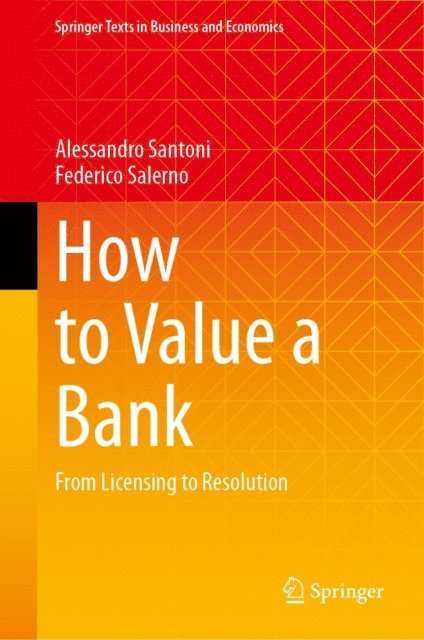
This book gives an overview of the most common techniques used by analysts and experts to assess and value banks in all phases of a Bank’s life, from licensing to resolution. These include licensing procedures, going concern market valuation techniques, liquidation, and resolution methodologies. The author sheds light on financial institutions’ reporting and financial statements and explains how to interpret the data. Special attention is given to the different valuation approaches for financial institutions ranging from the basic PE and PBV methodologies to the more sophisticated ones such Discount cash flow (DCF), Dividend discount model (DDM), excess return models (EVA), and their variant, the warranted equity value (WEV) method. The authors also illustrate how to build a sum-of-the-parts model (SOTP) and how to treat capital in the process as well as developing a bottom-up approach for the cost of equity. The book provides numerous real-world examples which will hopefully help practitioners build their own MS Excel models. Furthermore, this publication investigates some of the critical aspects of banking M&A and its valuation implications.This book also takes a deep dive into valuation for Banks in gone concern status, describing the basis for three different types of valuation of Banks in resolution: to inform a decision on whether to put a bank into resolution; to inform the choice of resolution tools and the extent of any bail-in of liabilities; and to determine whether any creditors would have been better off had the bank gone into insolvency. Special attention is given to the valuation of non-performing loans (NPLs) and financial assets focusing on some operational aspects of winding-down a bank’s loan and trading book portfolio.
1 573 kr
Kommande
This book demystifies the neo-banking phenomenon, exploring how it is reshaping the financial landscape to cater to the modern consumer's needs. It offers a deep dive into the innovative business model and compelling economics of neo-banking, as well as the trends and technologies driving this transformation. Whether you're a fintech enthusiast, a digital banker, or simply curious about the future of finance, this book provides insights into the challenges and opportunities of digital banking, the impact of emerging trends, and the strategic approaches for staying ahead in this fast-evolving industry. With real-world case studies, expert analysis, and practical advice, this book is an essential read for anyone looking to understand the future of banking and how it impacts consumers, businesses, and the global economy.