Alex Crawford - Böcker
Visar alla böcker från författaren Alex Crawford. Handla med fri frakt och snabb leverans.
4 produkter
4 produkter
155 kr
Skickas inom 5-8 vardagar
258 kr
Tillfälligt slut
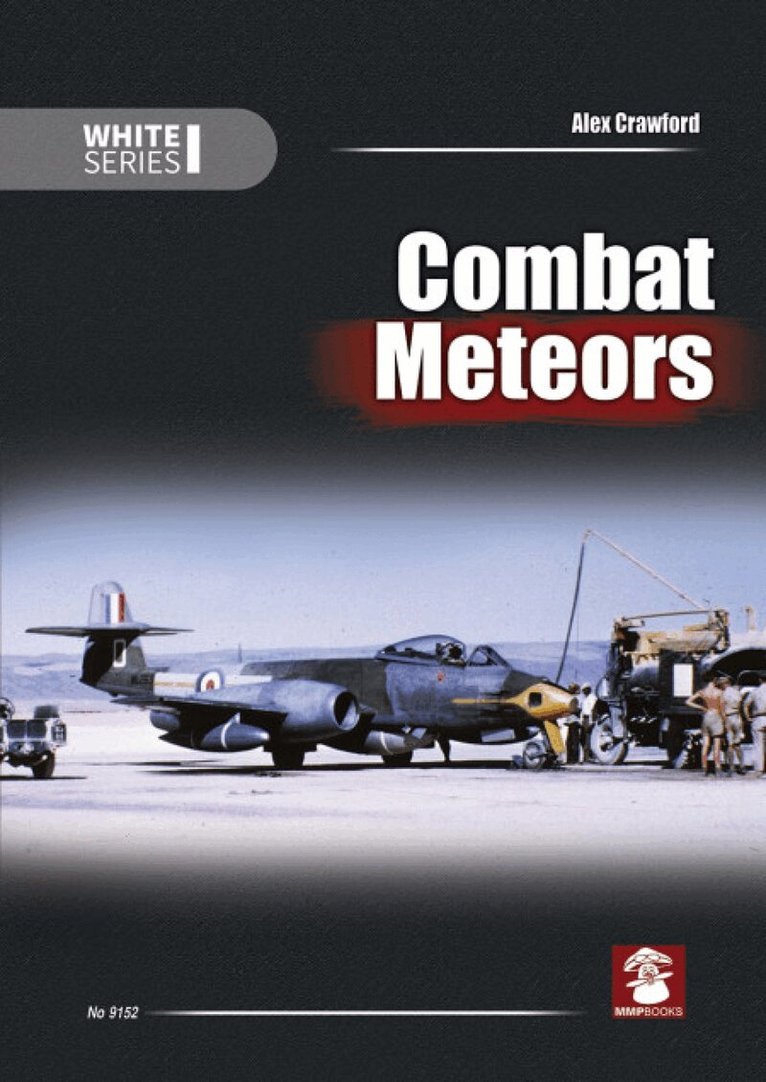
As the title suggests, this book is devoted to the nations that used the Meteor in anger. After WWII Europe’s air forces were keen to rebuild their air arms with jet aircraft. With little to choose from the Meteor was the prime candidate and hundreds were sold over the following years. Further afield in the Middle East, Meteors were sold to Egypt, Israel and Syria. In far off South America, Argentina, Brazil and Ecuador purchased the aircraft. On the other side of the World, South Africa and Australia operated them as well.Several of these nations used their Meteors operationally in open conflicts. From the RAF’s struggle against the V-1 menace to the various hot spots around the dwindling Empire from Aden to Malaya. The Suez Crisis of 1956 would see Meteors from the RAF, Egypt, Israel and Syria all operating in the same conflict. During the Korean War (1950-53) the Royal Australian Air Force carried out thousands of ground attack missions and even engaged the MiG-15 in air to air combat. During a number of internal revolutions in Argentina in 1956, both sides operated the Meteor. Even France operated a handful of Meteor night fighters during their troubles in Algeria in 1957. Although it did not achieve a large amount of victories, the Meteor played an important part in the emerging air forces of a forever changing post-WWII World. Essential reading for aviation enthusiasts & scale aeromodellers.
258 kr
Skickas
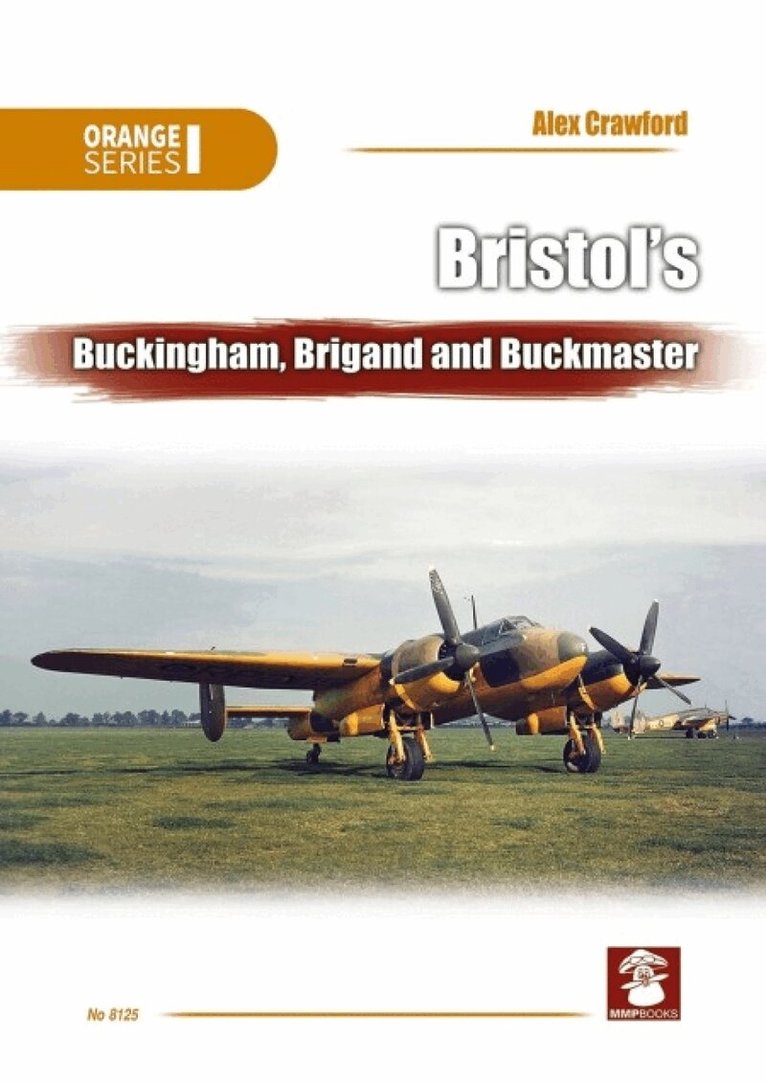
In late 1939, the Air Ministry were looking to replace the Blenheim as a medium bomber. Bristol Aircraft Company (BAC) initially came up with a bomber development of the Beaufighter, the Type 161. Due to specification changes and redesigns, the end result was the Type 163 Buckingham, a twin engined, twin tailed medium bomber. At the time of the Buckinghams conception inquiries were made about a torpedo bomber version. A redesign of the Buckingham brought about the Type 164 Brigand. The torpedo requirement was eventually dropped and the aircraft re-configures as a bomber. With no suitable trainers to train the Buckingham and Brigand pilots BAC came up with the Buckmaster, which was basically a Buckingham with a new nose section containing dual controls.By the time the Buckingham and Brigand entered service their roles had been superseded with newer and better aircraft. Most Buckinghams went straight into storage to await their fate, but some were converted in high speed courier aircraft with four seats. But it was too little too late. The Mosquito could do a better job at almost half the cost. The Brigand with its long range was earmarked for the Far East and the battle against Japan, but the war ended before they could be sent over. It was the Malaya Emergency that saved the Brigand. Carrying out a role for which it was never designed, that of a dive bomber, two Squadrons carried out over 3,500 against the Communist Terrorist.Had it not been for the constant delays and construction changes the aircraft may have lived up to their expectations. As it was they were plagued by mechanical and hydraulic issues as well as structural defects. After a number of catastrophic airframe failures the Brigands were retired from operational service in early 1953.
258 kr
Kommande
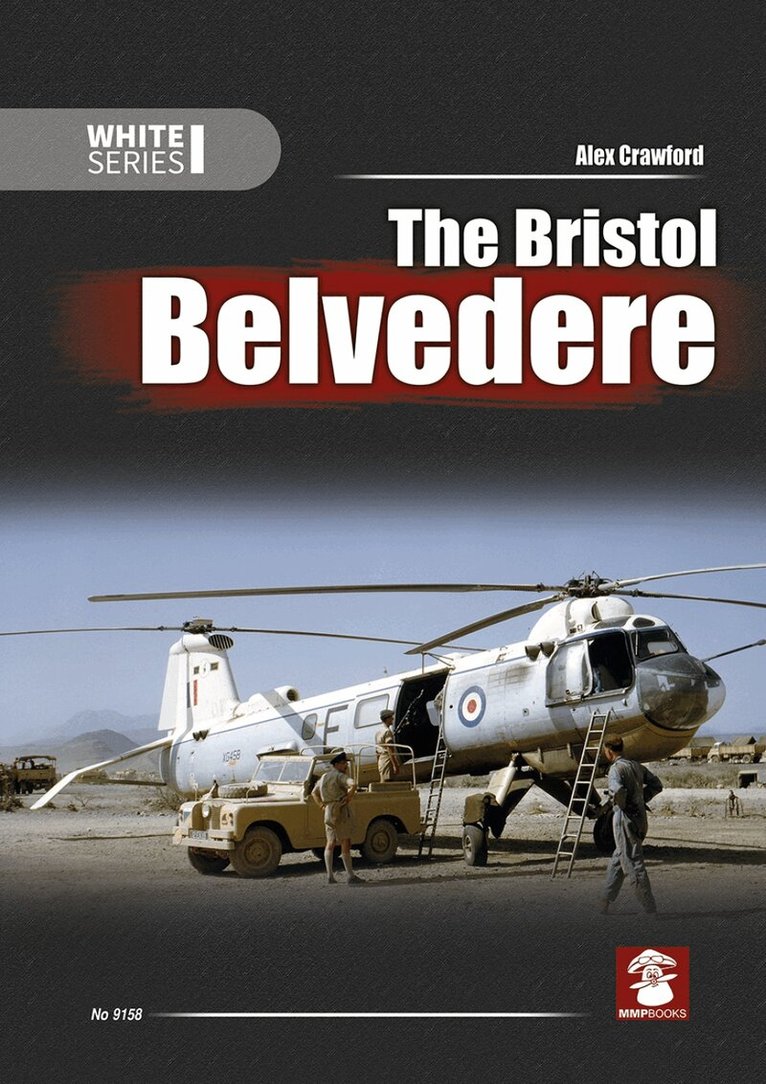
This book provides a comprehensive look at the Fairey Belvedere, the first British twin-rotor helicopter to enter operational service. It covers the aircraft’s development, technical specifications, service history, and operational use with the Royal Air Force. Richly illustrated with rare archival photographs, detailed technical drawings, and high-quality colour profiles, the book offers valuable insights into both the design and deployment of this unique helicopter. It is an excellent reference for aviation historians, enthusiasts, and scale modellers seeking accurate visual and historical information.