Alex Mullen - Böcker
Visar alla böcker från författaren Alex Mullen. Handla med fri frakt och snabb leverans.
6 produkter
6 produkter
2 001 kr
Skickas inom 5-8 vardagar
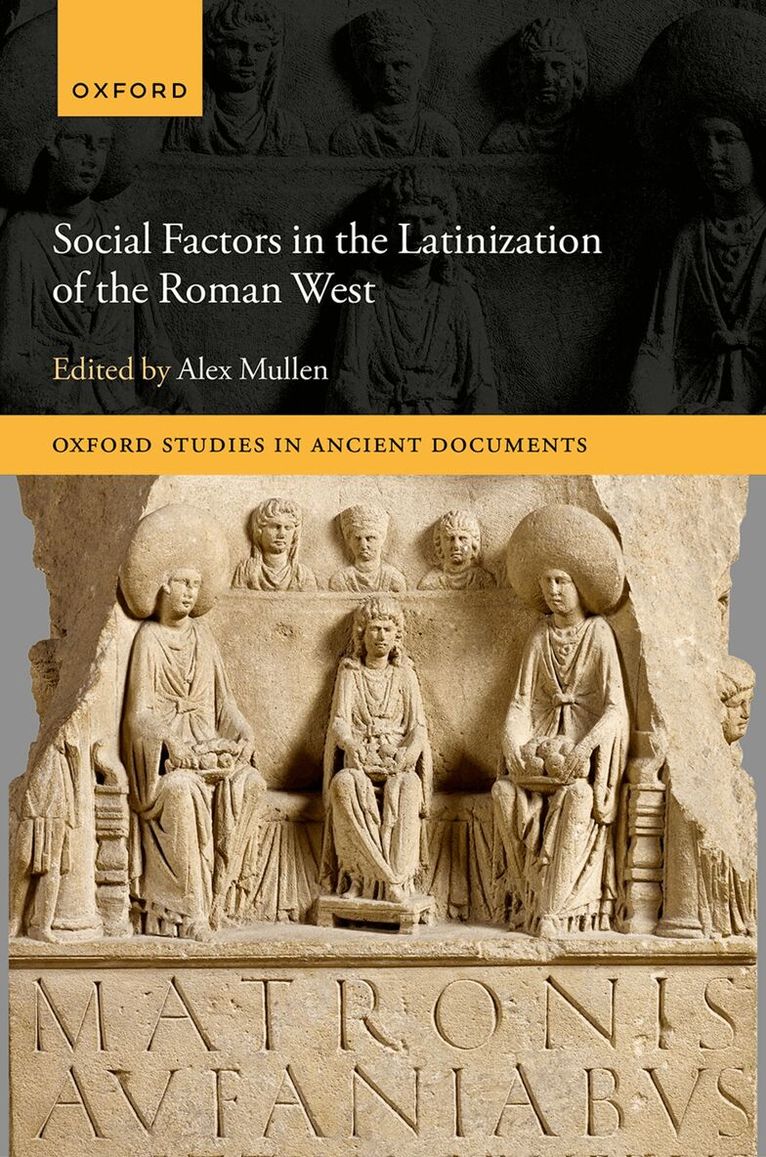
This is an open access title available under the terms of a CC BY-NC-ND 4.0 International licence. It is free to read on Oxford Academic and offered as a free PDF download from OUP and selected open access locations.Latinization is a strangely overlooked topic. Historians have noted it has been 'taken for granted' and viewed as an unremarkable by-product of 'Romanization', despite its central importance for understanding the Roman provincial world, its life, and languages. This volume aims to fill the gap in our scholarship. Expert contributors have been selected to create a multi-disciplinary volume with a thematic approach to the vast subject, tackling administration, army, economy, law, mobility, religion (local and imperial religions and Christianity), social status, and urbanism. They situate the phenomena of Latinization, literacy, and bi- and multilingualism within local and broader social developments and draw together materials and arguments that have not before been coordinated in a single volume. The result is a comprehensive guide to the topic, which offers original and more experimental work. The sociolinguistic, historical, and archaeological contributions reinforce, expand, and sometimes challenge our vision of Latinization and lay the foundations for future explorations.This volume will be accompanied by two further volumes from the European Research Council-funded LatinNow project: Latinization, Local Languages, and Literacies in the Roman West, and Languages and Communities in the Late-Roman and Post-Imperial Western Provinces.
1 906 kr
Skickas inom 7-10 vardagar
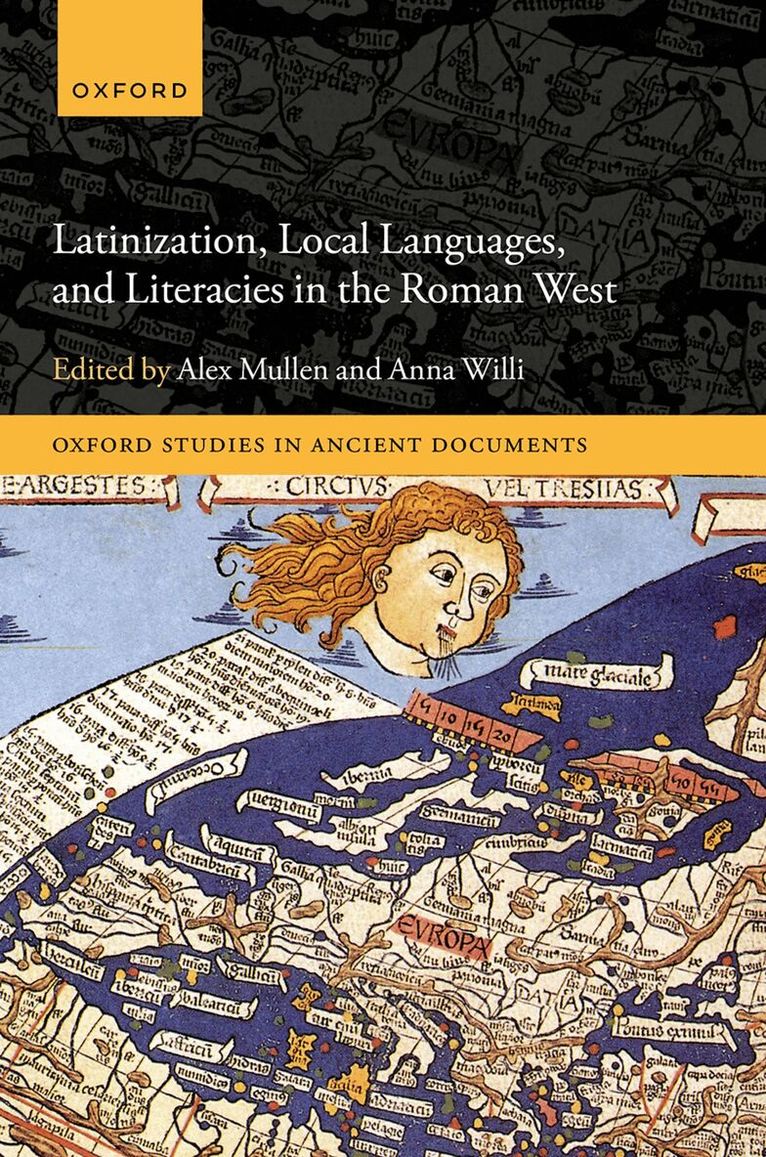
This is an open access title available under the terms of a CC BY-NC-ND 4.0 International licence. It is free to read on Oxford Academic and offered as a free PDF download from OUP and selected open access locations.The patchwork of local languages which existed across the western provinces in the Iron Age was radically reconfigured by the rise of Latin. Latinization, Local Languages and Literacies in the Roman West offers a detailed anatomy of the local and regional patterning across Britain, Gaul, the Germanies and the Iberian Peninsula primarily from the later Republic to the end of the Principate. The chapters draw on a combination of various sets of evidence and an interdisciplinary perspective--historical, archaeological, sociolinguistic, and epigraphic--to uncover local voices, tracking 'differential Latinization', and revealing the probable survival of local languages, alongside, or even to the exclusion of, Latin in some communities in non-Mediterranean areas. The results underscore the variety of factors involved in language change and the importance of sensitivity to local communities. By including everyday writing in their epigraphic evidence, the volume reveals regionality in the varieties of Latin used and disparities in engagement in both the epigraphic habit and broader literate practices. New data enable the description of types of literacies, and movement away from debates on provincial percentages of literacy and from generalizations about associated social dynamics. Contributors to the volume grapple with the 'characterful' datasets they have created and collated, the careful treatment of which enables the exploration of a range of themes vital for understanding provincial life. The complexity uncovered by these studies will be a starting point for future investigations.
Languages and Communities in the Late-Roman and Post-Imperial Western Provinces
Inbunden, Engelska, 2023
2 001 kr
Skickas inom 7-10 vardagar
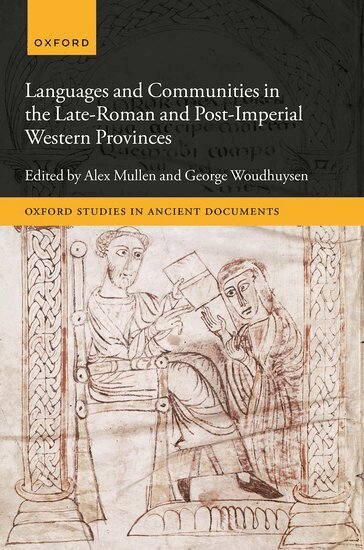
This is an open access title available under the terms of a CC BY-NC-ND 4.0 International licence. It is free to read on Oxford Academic and offered as a free PDF download from OUP and selected open access locations.Languages are central to the creation and expression of identities and cultures, as well as to life itself, yet the linguistic variegation of the later-Roman and post-imperial period in the Roman west is remarkably understudied. A deeper understanding of this important issue is crucial to any reconstruction of the broader story of linguistic continuity and change in Europe and the Mediterranean, as well as to the history of the communities who wrote, read, and spoke Latin and other languages. Languages and Communities in the Late-Roman and Post-Imperial Western Provinces offers the first comprehensive modern study of the main developments, key features and debates of the later-Roman and post-imperial linguistic environment, focusing on the Iberian Peninsula, North Africa, Gaul, the Germanies, Britain and Ireland. The chapters collected in this volume help us to understand better the embeddedness, or not, of Latin, at different social levels and across provinces, to consider (socio)linguistic variegation, bi-/multi-lingualism, and attitudes towards languages, and to confront the complex role of language in the communities, identities, and cultures of the later- and post-imperial Roman western world.This volume will be accompanied by two further volumes from the European Research Council-funded LatinNow project: Social Factors in the Latinization of the Roman West and Latinization, Local Languages, and Literacies in the Roman West.
1 485 kr
Skickas inom 7-10 vardagar
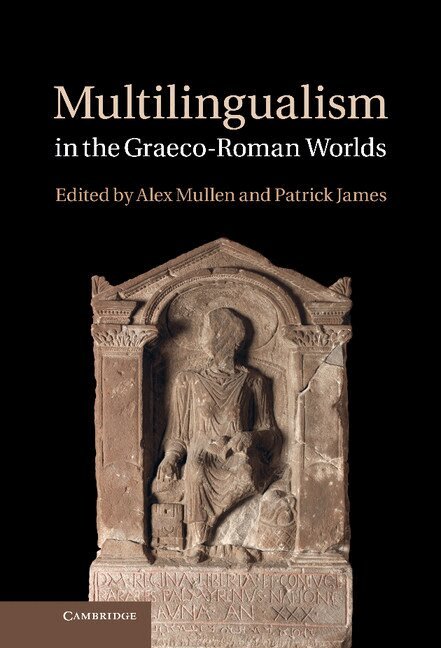
Through words and images employed both by individuals and by a range of communities across the Graeco-Roman worlds, this book explores the complexity of multilingual representations of identity. Starting with the advent of literacy in the Mediterranean, it encompasses not just the Greek and Roman empires but also the transformation of the Graeco-Roman world under Islam and within the medieval mind. By treating a range of materials, contexts, languages, and temporal and political boundaries, the contributors consider points of cross-cultural similarity and difference and the changing linguistic landscape of East and West from antiquity into the medieval period. Insights from contemporary multilingualism theory and interdisciplinary perspectives are employed throughout to exploit the material fully.
1 371 kr
Skickas inom 7-10 vardagar
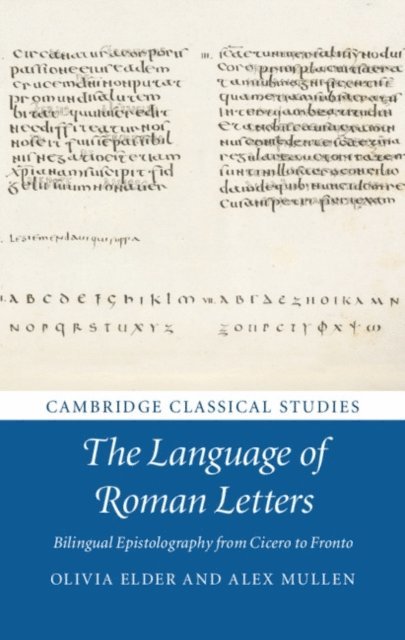
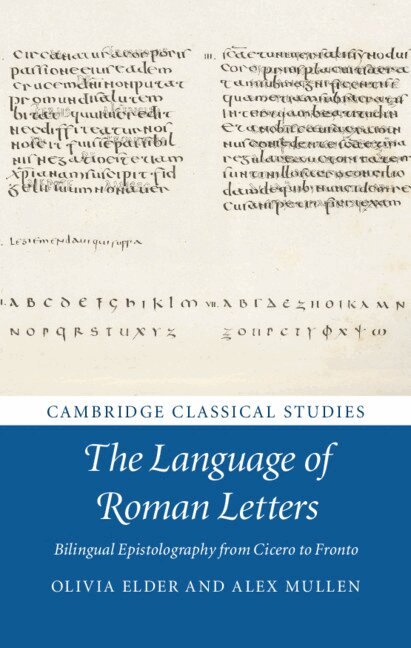
Roman letters demonstrate that language has imperium: the power to resolve problems, to negotiate relationships and to construct identities. This book combines sociolinguistic and historical approaches to explore how that power is deployed by the bilingual elite of the Roman Republic and Empire, offering the first systematic analysis of Greek code-switches in the letters of Cicero, Pliny, Marcus Aurelius and Fronto and in the Lives of Suetonius. Greek was a subtle tool within Latin epistolary communication, and an analysis of letter writers' bilingual practices reveals their manipulation of language to manage relationships between peers and across hierarchical or political divides, uncovering the workings of politics and society. Comparative analysis of Roman and modern code-switching contributes to the debate on how bilingual strategies in letters evolve and how they relate to oral and literary language. The language of letters illuminates the Roman world and its entanglements with Greek language and culture.
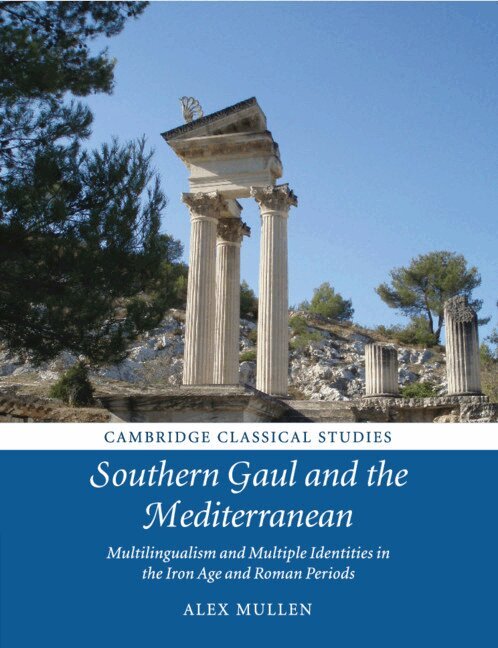
Southern Gaul and the Mediterranean
Multilingualism and Multiple Identities in the Iron Age and Roman Periods
Häftad, Engelska, 2019
604 kr
Skickas inom 7-10 vardagar
The interactions of the Celtic-speaking communities of Southern Gaul with the Mediterranean world have intrigued commentators since antiquity. This book combines sociolinguistics and archaeology to bring to life the multilingualism and multiple identities of the region from the foundation of the Greek colony of Massalia in 600 BC to the final phases of Roman Imperial power. It builds on the interest generated by the application of modern bilingualism theory to ancient evidence by modelling language contact and community dynamics, and adopting an innovative interdisciplinary approach. This produces insights into the entanglements and evolving configurations of a dynamic zone of cultural contact. Key foci of contact-induced change are exposed and new interpretations of cultural phenomena highlight complex origins and influences from the entire Mediterranean koine. Southern Gaul reveals itself to be fertile ground for considering the major themes of multilingualism, ethnolinguistic vitality, multiple identities, colonialism and Mediterraneanization.