Alex Prud'homme – författare
Visar alla böcker från författaren Alex Prud'homme. Handla med fri frakt och snabb leverans.
13 produkter
13 produkter
Häftad, Engelska, 2014
120 kr
Skickas inom 5-8 vardagar
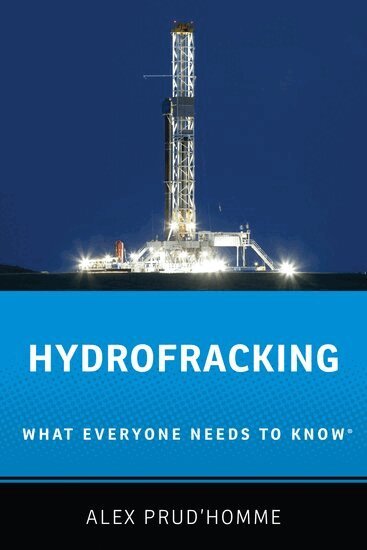
Constantly in the news and the subject of much public debate, fracking, as it is known for short, is one of the most promising yet controversial methods of extracting natural gas and oil. Today, 90 percent of natural gas wells use fracking. Though highly effective, the process-which fractures rock with pressurized fluid-has been criticized for polluting land, air, and water, and endangering human health. A timely addition to Oxford's What Everyone Needs to Know series, Hydrofracking tackles this contentious topic, exploring both sides of the debate and providing a clear guide to the science underlying the technique. In concise question-and-answer format, Alex Prud'homme cuts through the maze of opinions and rhetoric to uncover key points, from the economic and political benefits of fracking to the health dangers and negative effects on the environment. Prud'homme offers clear answers to a range of fundamental questions, including: What is fracking fluid? How does it impact water supplies? Who regulates the industry? How much recoverable natural gas exists in the U.S.? What new innovations are on the horizon? Supporters as diverse as President Obama and the conservative billionaire T. Boone Pickens have promoted natural gas as a clean, "21st-century" fuel that will reduce global warming, create jobs, and provide tax revenues, but concerns remain, with environmental activists like Bill McKibben and others leading protests to put an end to fracking as a means of obtaining alternative energy. Prud'homme considers ways to improve methods in the short-term, while also exploring the possibility of transitioning to more sustainable resources-wind, solar, tidal, and perhaps nuclear power-for the long term. Written for general readers, Hydrofracking clearly explains both the complex science of fracking and the equally complex political and economic issues that surround it, giving readers all the information they need to understand what will no doubt remain a contentious issue for years to come.
Inbunden, Engelska, 2013
822 kr
Skickas inom 5-8 vardagar
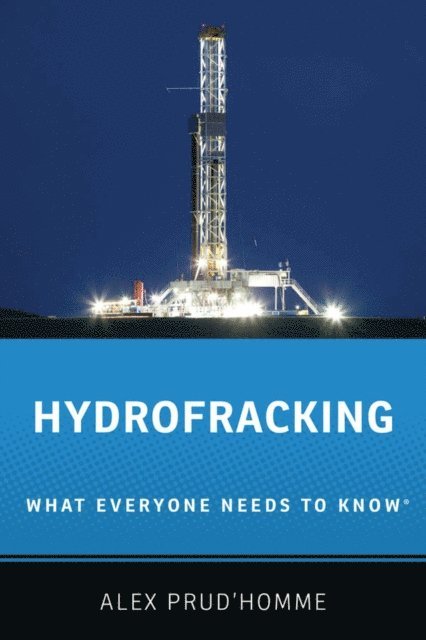
Constantly in the news and the subject of much public debate, fracking, as it is known for short, is one of the most promising yet controversial methods of extracting natural gas and oil. Today, 90 percent of natural gas wells use fracking. Though highly effective, the process-which fractures rock with pressurized fluid-has been criticized for polluting land, air, and water, and endangering human health. A timely addition to Oxford's What Everyone Needs to Know series, Hydrofracking tackles this contentious topic, exploring both sides of the debate and providing a clear guide to the science underlying the technique. In concise question-and-answer format, Alex Prud'homme cuts through the maze of opinions and rhetoric to uncover key points, from the economic and political benefits of fracking to the health dangers and negative effects on the environment. Prud'homme offers clear answers to a range of fundamental questions, including: What is fracking fluid? How does it impact water supplies? Who regulates the industry? How much recoverable natural gas exists in the U.S.? What new innovations are on the horizon? Supporters as diverse as President Obama and the conservative billionaire T. Boone Pickens have promoted natural gas as a clean, "21st-century" fuel that will reduce global warming, create jobs, and provide tax revenues, but concerns remain, with environmental activists like Bill McKibben and others leading protests to put an end to fracking as a means of obtaining alternative energy. Prud'homme considers ways to improve methods in the short-term, while also exploring the possibility of transitioning to more sustainable resources-wind, solar, tidal, and perhaps nuclear power-for the long term. Written for general readers, Hydrofracking clearly explains both the complex science of fracking and the equally complex political and economic issues that surround it, giving readers all the information they need to understand what will no doubt remain a contentious issue for years to come.
E-bok
PDF, Engelska, 2013109 kr
Läs direkt efter köp
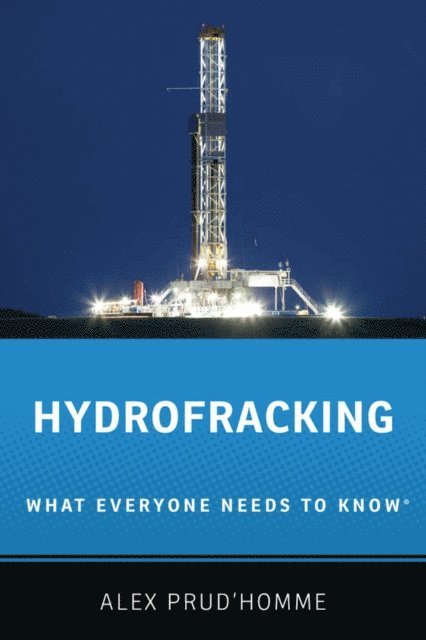
Constantly in the news and the subject of much public debate, fracking, as it is known for short, is one of the most promising yet controversial methods of extracting natural gas and oil. Today, 90 percent of natural gas wells use fracking. Though highly effective, the process-which fractures rock with pressurized fluid-has been criticized for polluting land, air, and water, and endangering human health. A timely addition to Oxford''s What Everyone Needs to Know® series, Hydrofracking tackles this contentious topic, exploring both sides of the debate and providing a clear guide to the science underlying the technique. In concise question-and-answer format, Alex Prud''homme cuts through the maze of opinions and rhetoric to uncover key points, from the economic and political benefits of fracking to the health dangers and negative effects on the environment. Prud''homme offers clear answers to a range of fundamental questions, including: What is fracking fluid? How does it impact water supplies? Who regulates the industry? How much recoverable natural gas exists in the U.S.? What new innovations are on the horizon? Supporters as diverse as President Obama and the conservative billionaire T. Boone Pickens have promoted natural gas as a clean, "21st-century" fuel that will reduce global warming, create jobs, and provide tax revenues, but concerns remain, with environmental activists like Bill McKibben and others leading protests to put an end to fracking as a means of obtaining alternative energy. Prud''homme considers ways to improve methods in the short-term, while also exploring the possibility of transitioning to more sustainable resources-wind, solar, tidal, and perhaps nuclear power-for the long term. Written for general readers, Hydrofracking clearly explains both the complex science of fracking and the equally complex political and economic issues that surround it, giving readers all the information they need to understand what will no doubt remain a contentious issue for years to come.What Everyone Needs to Know® is a registered trademark of Oxford University Press.
E-bok
Engelska, 2013109 kr
Läs direkt efter köp
Constantly in the news and the subject of much public debate, fracking, as it is known for short, is one of the most promising yet controversial methods of extracting natural gas and oil. Today, 90 percent of natural gas wells use fracking. Though highly effective, the process-which fractures rock with pressurized fluid-has been criticized for polluting land, air, and water, and endangering human health. A timely addition to Oxford''s What Everyone Needs to Know® series, Hydrofracking tackles this contentious topic, exploring both sides of the debate and providing a clear guide to the science underlying the technique. In concise question-and-answer format, Alex Prud''homme cuts through the maze of opinions and rhetoric to uncover key points, from the economic and political benefits of fracking to the health dangers and negative effects on the environment. Prud''homme offers clear answers to a range of fundamental questions, including: What is fracking fluid? How does it impact water supplies? Who regulates the industry? How much recoverable natural gas exists in the U.S.? What new innovations are on the horizon? Supporters as diverse as President Obama and the conservative billionaire T. Boone Pickens have promoted natural gas as a clean, "21st-century" fuel that will reduce global warming, create jobs, and provide tax revenues, but concerns remain, with environmental activists like Bill McKibben and others leading protests to put an end to fracking as a means of obtaining alternative energy. Prud''homme considers ways to improve methods in the short-term, while also exploring the possibility of transitioning to more sustainable resources-wind, solar, tidal, and perhaps nuclear power-for the long term. Written for general readers, Hydrofracking clearly explains both the complex science of fracking and the equally complex political and economic issues that surround it, giving readers all the information they need to understand what will no doubt remain a contentious issue for years to come.What Everyone Needs to Know® is a registered trademark of Oxford University Press.
E-bok
Engelska, 2006135 kr
Läs direkt efter köp
Julia Child singlehandedly created a new approach to American cuisine with her cookbook Mastering the Art of French Cooking and her television show The French Chef, but as she reveals in this bestselling memoir, she was not always a master chef. Indeed, when she first arrived in France in 1948 with her husband, Paul, who was to work for the USIS, she spoke no French and knew nothing about the country itself. But as she dove into French culture, buying food at local markets and taking classes at the Cordon Bleu, her life changed forever with her newfound passion for cooking and teaching. Julia’s unforgettable story – struggles with the head of the Cordon Bleu, rejections from publishers to whom she sent her now-famous cookbook, a wonderful, nearly fifty-year long marriage that took them across the globe – unfolds with the spirit so key to her success as a chef and a writer, brilliantly capturing one of the most endearing American personalities of the last fifty years.From the Trade Paperback edition.
Häftad, Engelska
197 kr
Skickas inom 3-6 vardagar
E-bok
Engelska, 2016165 kr
Läs direkt efter köp
The enchanting story of Julia Child''s years as TV personality and beloved cookbook author--a sequel in spirit to My Life in France--by her great-nephew Julia Child is synonymous with French cooking, but her legacy runs much deeper. Now, her great-nephew and My Life in France coauthor vividly recounts the myriad ways in which she profoundly shaped how we eat today. He shows us Child in the aftermath of the publication of Mastering the Art of French Cooking, suddenly finding herself America''s first lady of French food and under considerable pressure to embrace her new mantle. We see her dealing with difficult colleagues and the challenges of fame, ultimately using her newfound celebrity to create what would become a totally new type of food television. Every bit as entertaining, inspiring, and delectable as My Life in France, The French Chef in America uncovers Julia Child beyond her "French chef" persona and reveals her second act to have been as groundbreaking and adventurous as her first.
Häftad, Engelska, 2024
325 kr
Skickas inom 3-6 vardagar
Häftad, Engelska, 2017
309 kr
Skickas inom 3-6 vardagar
Häftad, Engelska, 2012
263 kr
Skickas inom 5-8 vardagar
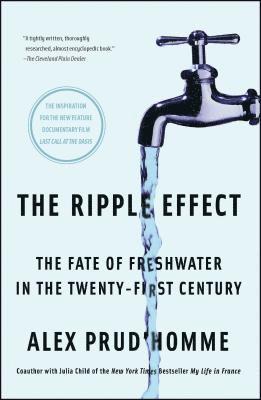
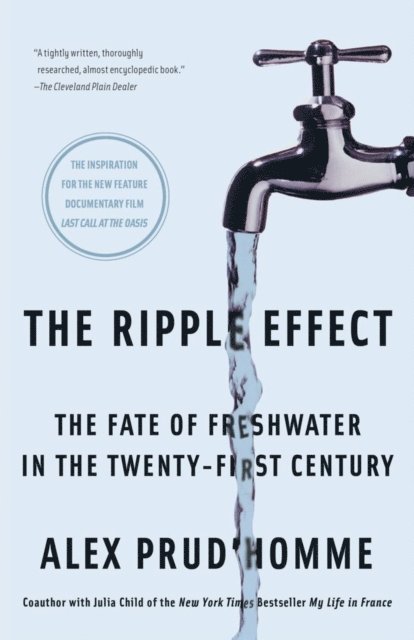
From the bestselling coauthor with Julia Child of My Life in France “a balanced and insightful assessment of what could emerge as the dominant issue in decades ahead” (Associated Press)—the fate of fresh water in the twenty-first century.Will there be enough drinkable water to satisfy future demand? What is the state of our water infrastructure—both the pipes that bring us freshwater and the levees that keep it out? How secure is our water supply from natural disasters and terrorist attacks? Can we create new sources for our water supply through scientific innovation? Is water a right like air or a commodity like oil? Will the wars of the twenty-first century be fought over water? As the climate warms and world population grows, demand for water has surged, but supplies of freshwater are static or dropping, and new threats to water quality appear every day. The Ripple Effect is Alex Prud’homme’s vividly written and engaging inquiry into the fate of freshwater in the twenty-first century. Like Daniel Yergin’s classic The Prize: The Epic Quest for Oil, Money & Power, Prud’homme’s The Ripple Effect is a masterwork of investigation and dramatic narrative. Prud’homme introduces readers to an array of colorful, obsessive, brilliant—and sometimes shadowy— characters through whom these issues come alive. The Ripple Effect will change the way we think about the water we drink.
E-bok
Engelska, 2011117 kr
Läs direkt efter köp
AS ALEX PRUD’HOMME and his great-aunt Julia Child were completing their collaboration on her memoir, My Life in France, they began to talk about the French obsession with bottled water, which had finally spread to America. From this spark of interest, Prud’homme began what would become an ambitious quest to understand the evolving story of freshwater. What he found was shocking: as the climate warms and world population grows, demand for water has surged, but supplies of freshwater are static or dropping, and new threats to water quality appear every day. The Ripple Effect is Prud’homme’s vivid and engaging inquiry into the fate of freshwater in the twenty-first century. The questions he sought to answer were urgent: Will there be enough water to satisfy demand? What are the threats to its quality? What is the state of our water infrastructure—both the pipes that bring us freshwater and the levees that keep it out? How secure is our water supply from natural disasters and terrorist attacks? Can we create new sources for our water supply through scientific innovation? Is water a right like air or a commodity like oil—and who should control the tap? Will the wars of the twenty-first century be fought over water? Like Daniel Yergin’s classic The Prize: The Epic Quest for Oil, Money & Power, Prud’homme’s The Ripple Effect is a masterwork of investigation and dramatic narrative. With striking instincts for a revelatory story, Prud’homme introduces readers to an array of colorful, obsessive, brilliant—and sometimes shadowy—characters through whom these issues come alive. Prud’homme traversed the country, and he takes readers into the heart of the daily dramas that will determine the future of this essential resource—from the alleged murder of a water scientist in a New Jersey purification plant, to the epic confrontation between salmon fishermen and copper miners in Alaska, to the poisoning of Wisconsin wells, to the epidemic of intersex fish in the Chesapeake Bay, to the wars over fracking for natural gas. Michael Pollan has changed the way we think about the food we eat; Alex Prud’homme will change the way we think about the water we drink. Informative and provocative, The Ripple Effect is a major achievement.
E-bok
Engelska, 2023222 kr
Läs direkt efter köp
Inbunden, Engelska, 2022
217 kr
Skickas inom 11-20 vardagar