Alexander A. Lisyansky – författare
Visar alla böcker från författaren Alexander A. Lisyansky. Handla med fri frakt och snabb leverans.
6 produkter
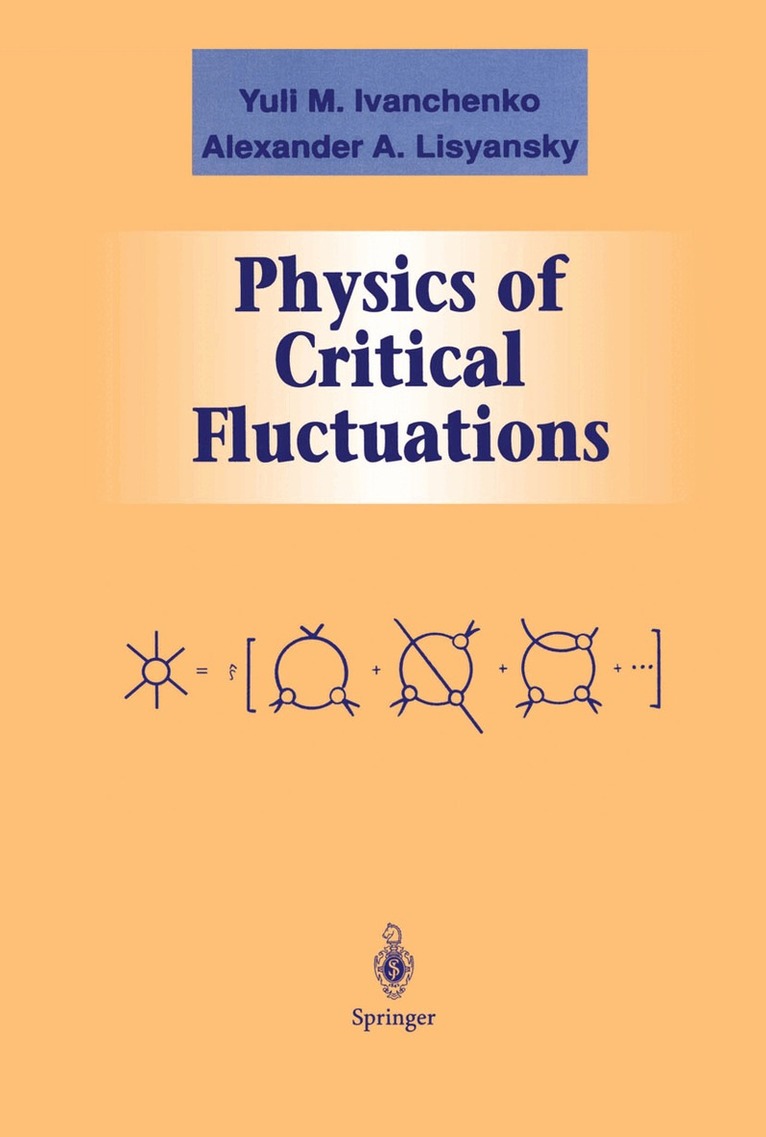
Physics of Critical Fluctuations
Av Yuli M. Ivanchenko, Alexander A. Lisyansky
Inbunden, 1995
552 kr
Lägg i varukorg
Building on Wilson's renormalization group, the authors have developed a unified approach that not only reproduces known results but also yields new results. A systematic exposition of the contemporary theory of phase transitions, the book includes detailed discussions of phenomena in Heisenberg …
Physics of Critical Fluctuations
Av Alexander A. Lisyansky, Yuli M. Ivanchenko
E-bok, 2012
734 kr
Lägg i varukorg
Building on Wilson''s renormalization group, the authors have developed a unified approach that not only reproduces known results but also yields new results. A systematic exposition of the contemporary theory of phase transitions, the book includes detailed discussions of phenomena in Heisenberg …
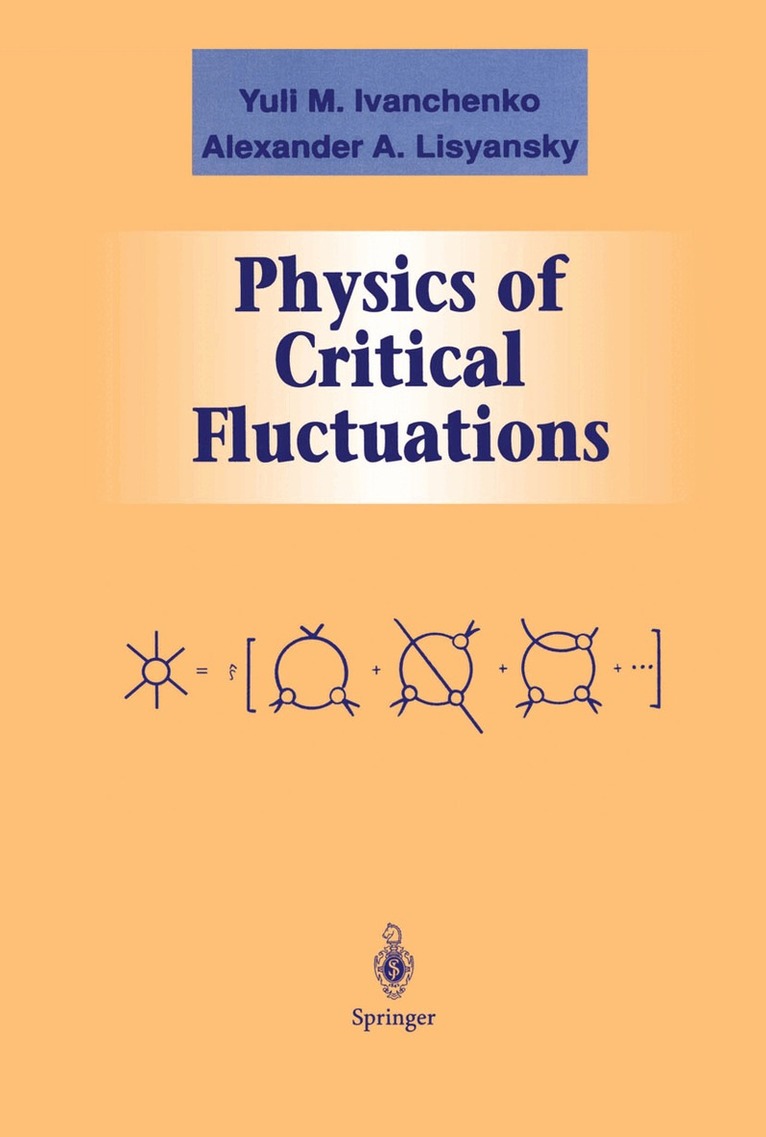
Physics of Critical Fluctuations
Av Yuli M. Ivanchenko, Alexander A. Lisyansky
Häftad, 2012
552 kr
Lägg i varukorg
Building on Wilson's renormalization group, the authors have developed a unified approach that not only reproduces known results but also yields new results. A systematic exposition of the contemporary theory of phase transitions, the book includes detailed discussions of phenomena in Heisenberg …
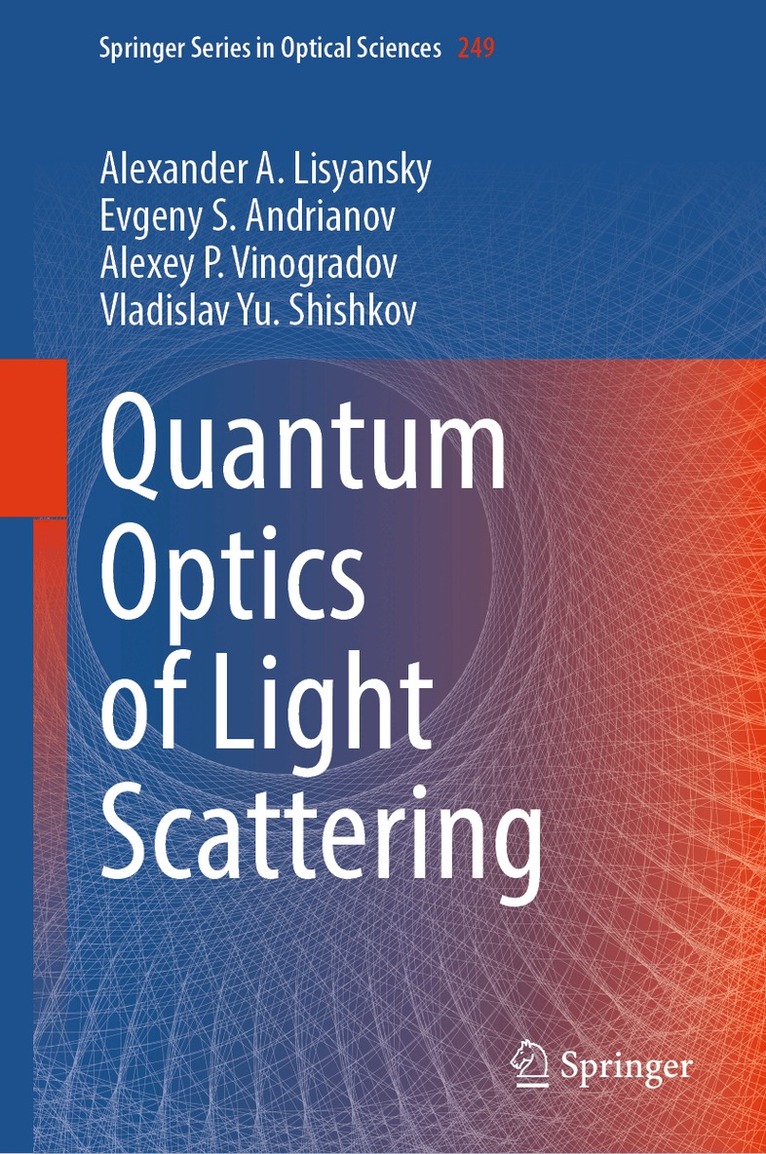
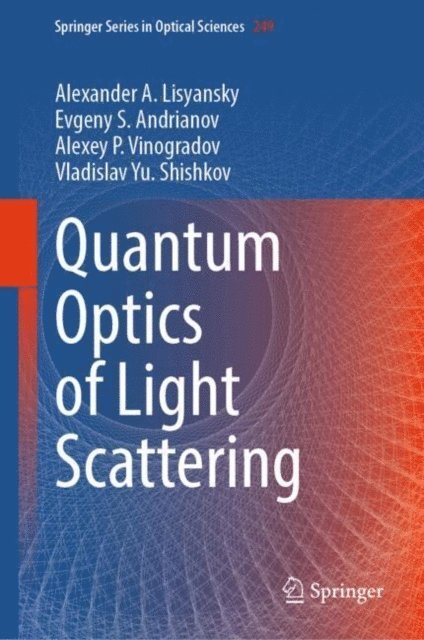
Quantum Optics of Light Scattering
Av Alexander A. Lisyansky, Evgeny S. Andrianov m. fl.
Inbunden, 2024
1425 kr
Lägg i varukorg
This book presents a quantum framework for understanding inelastic light scattering which is consistent with the classical descriptions of Raman phenomena and Rayleigh scattering, thus creating a unified theoretical picture of light scattering. The Raman effect was discovered in 1928 and has since …
Quantum Optics of Light Scattering
Av Vladislav Yu. Shishkov, Alexey P. Vinogradov m. fl.
E-bok, 2024
1754 kr
Lägg i varukorg
This book presents a quantum framework for understanding inelastic light scattering which is consistent with the classical descriptions of Raman phenomena and Rayleigh scattering, thus creating a unified theoretical picture of light scattering. The Raman effect was discovered in 1928 and has since …
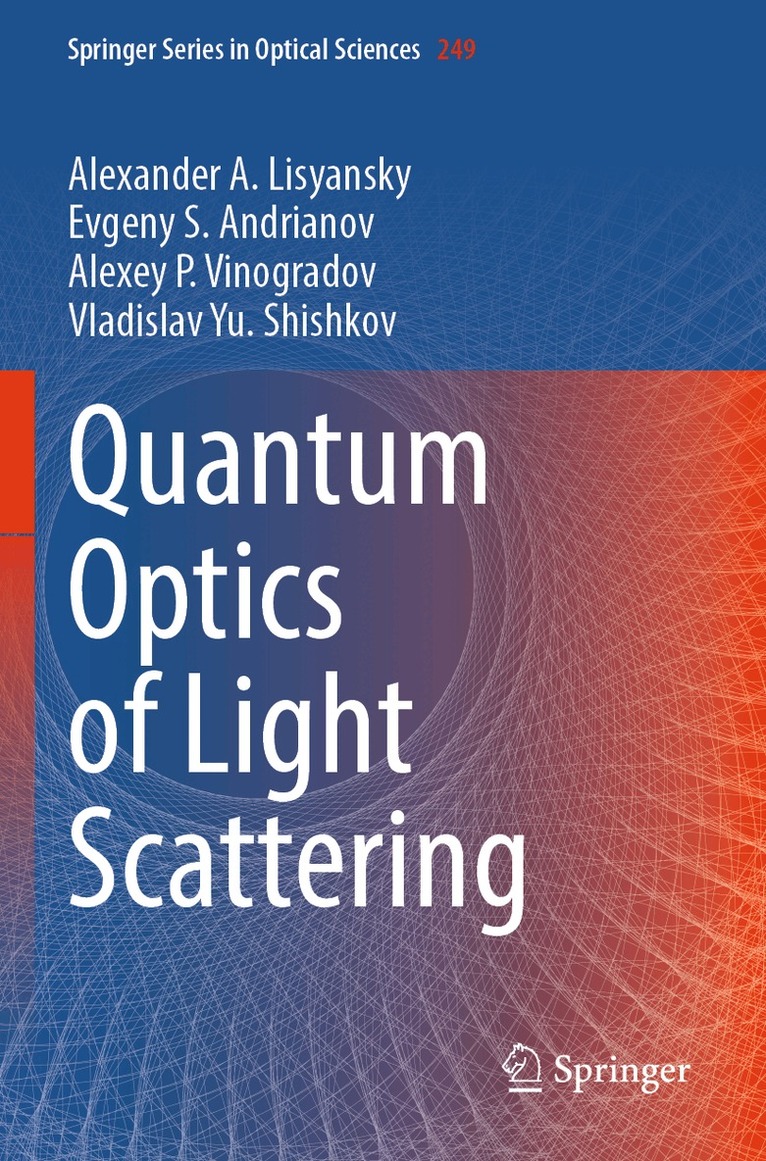
Quantum Optics of Light Scattering
Av Alexander A. Lisyansky, Evgeny S. Andrianov m. fl.
Häftad, 2025
1425 kr
Lägg i varukorg
This book presents a quantum framework for understanding inelastic light scattering which is consistent with the classical descriptions of Raman phenomena and Rayleigh scattering, thus creating a unified theoretical picture of light scattering. The Raman effect was discovered in 1928 and has since …