Alexander C. Diener – författare
110 kr
Skickas inom 5-8 vardagar
92 kr
Läs direkt efter köp
92 kr
Läs direkt efter köp
719 kr
Skickas inom 10-15 vardagar
2 435 kr
Skickas inom 10-15 vardagar
1 537 kr
Skickas inom 10-15 vardagar
702 kr
Skickas inom 10-15 vardagar
897 kr
Skickas inom 10-15 vardagar
650 kr
Läs direkt efter köp
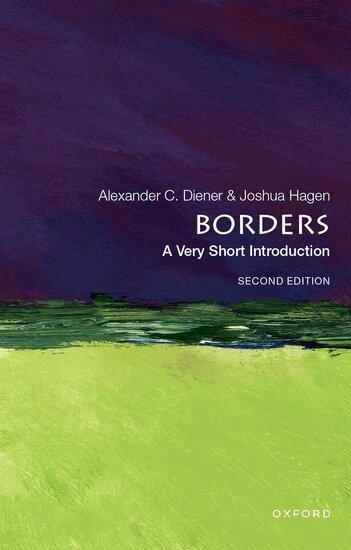
This book critically challenges the usual territorial understanding of borders by examining the often messy internal, transborder, ambiguous, and in-between spaces that co-exist with traditional borders. By considering those less visible aspects of borders, the book develops an inclusive understanding of how contemporary borders are structured and how they influence human identity, mobility, and belonging.
The introduction and conclusion provide theoretical and contextual framing, while chapters explore topics of global labor and refugees, unrecognized states, ethnic networks, cyberspace, transboundary resource conflicts, and indigenous and religious spaces that rarely register on conventional maps or commonplace understandings of territory. In the end, the volume demonstrates that, despite being "invisible" on most maps, these borders have a very real, material, and tangible presence and consequences for those people who live within, alongside, and across them.
650 kr
Läs direkt efter köp
This book critically challenges the usual territorial understanding of borders by examining the often messy internal, transborder, ambiguous, and in-between spaces that co-exist with traditional borders. By considering those less visible aspects of borders, the book develops an inclusive understanding of how contemporary borders are structured and how they influence human identity, mobility, and belonging.
The introduction and conclusion provide theoretical and contextual framing, while chapters explore topics of global labor and refugees, unrecognized states, ethnic networks, cyberspace, transboundary resource conflicts, and indigenous and religious spaces that rarely register on conventional maps or commonplace understandings of territory. In the end, the volume demonstrates that, despite being "invisible" on most maps, these borders have a very real, material, and tangible presence and consequences for those people who live within, alongside, and across them.
706 kr
Läs direkt efter köp
This book provides geographical perspectives on the complex and multifaceted relationship between people and their lived environments. Scholars with varied regional, theoretical, and topical specialties offer chapters that explore different aspects of a phenomenon so pervasive that no conception of social or political action can afford to ignore it.
In the process of spatial organization and differentiation, people develop emotional attachments to specific places, as well as people, objects, and practices associated with those places. Place attachments thereby shape everyday routines (e.g., routes to work, shopping, social interactions), major life choices (e.g., places of residence, education, and vacations), and identities (e.g., civic, national, and religious). These attachments occur across multiple scales from personal dwellings to community, region, and homeland. It is our hope that this book reveals synergies between geography and other disciplines engaging with place attachment whilst invigorating research on the topic. The Power of Place in Place Attachment will be of great value to researchers and scholars of geography, identity, mobility, and urban landscape change. The chapters in this book were originally published as a special issue of Geographical Review.
706 kr
Läs direkt efter köp
This book provides geographical perspectives on the complex and multifaceted relationship between people and their lived environments. Scholars with varied regional, theoretical, and topical specialties offer chapters that explore different aspects of a phenomenon so pervasive that no conception of social or political action can afford to ignore it.
In the process of spatial organization and differentiation, people develop emotional attachments to specific places, as well as people, objects, and practices associated with those places. Place attachments thereby shape everyday routines (e.g., routes to work, shopping, social interactions), major life choices (e.g., places of residence, education, and vacations), and identities (e.g., civic, national, and religious). These attachments occur across multiple scales from personal dwellings to community, region, and homeland. It is our hope that this book reveals synergies between geography and other disciplines engaging with place attachment whilst invigorating research on the topic. The Power of Place in Place Attachment will be of great value to researchers and scholars of geography, identity, mobility, and urban landscape change. The chapters in this book were originally published as a special issue of Geographical Review.
629 kr
Skickas inom 10-15 vardagar
2 071 kr
Skickas inom 10-15 vardagar
629 kr
Skickas inom 10-15 vardagar
2 336 kr
Skickas inom 10-15 vardagar
849 kr
Läs direkt efter köp
The development of post-socialist cities has become a major field of study among critical theorists from across the social sciences and humanities. Originally constructed under the dictates of central planners and designed to serve the demands of command economies, post-socialist urban centers currently develop at the nexus of varied and often competing economic, cultural, and political forces. Among these, nationalist aspirations, previously simmering beneath the official rhetoric of communist fraternity and veneer of architectural conformity, have emerged as dominant factors shaping the urban landscape. This book explores this burgeoning field of research through detailed cases studies relating to the cultural politics of architecture, urban planning, and identity in the post-socialist cities of Eurasia.
This book was published as a special issue of Nationalities Papers.
849 kr
Läs direkt efter köp
The development of post-socialist cities has become a major field of study among critical theorists from across the social sciences and humanities. Originally constructed under the dictates of central planners and designed to serve the demands of command economies, post-socialist urban centers currently develop at the nexus of varied and often competing economic, cultural, and political forces. Among these, nationalist aspirations, previously simmering beneath the official rhetoric of communist fraternity and veneer of architectural conformity, have emerged as dominant factors shaping the urban landscape. This book explores this burgeoning field of research through detailed cases studies relating to the cultural politics of architecture, urban planning, and identity in the post-socialist cities of Eurasia.
This book was published as a special issue of Nationalities Papers.
1 189 kr
Skickas inom 10-15 vardagar
563 kr
Skickas inom 10-15 vardagar