Alexander Eisenschmidt - Böcker
Visar alla böcker från författaren Alexander Eisenschmidt. Handla med fri frakt och snabb leverans.
5 produkter
5 produkter
285 kr
Tillfälligt slut
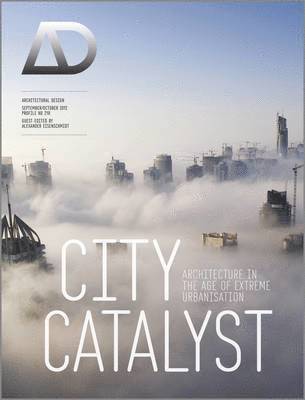
This publication allows architects to become familiar with the type of constantly changing, urban conditions that architecture has commonly avoided. A resource for a new generation of designers, young professionals, students, and academics who want to engage with the city on its own grounds, to abet its potentials and seek opportunities in its existing condition, City Catalyst demonstrates how today's architecture is redefining its position within the city.
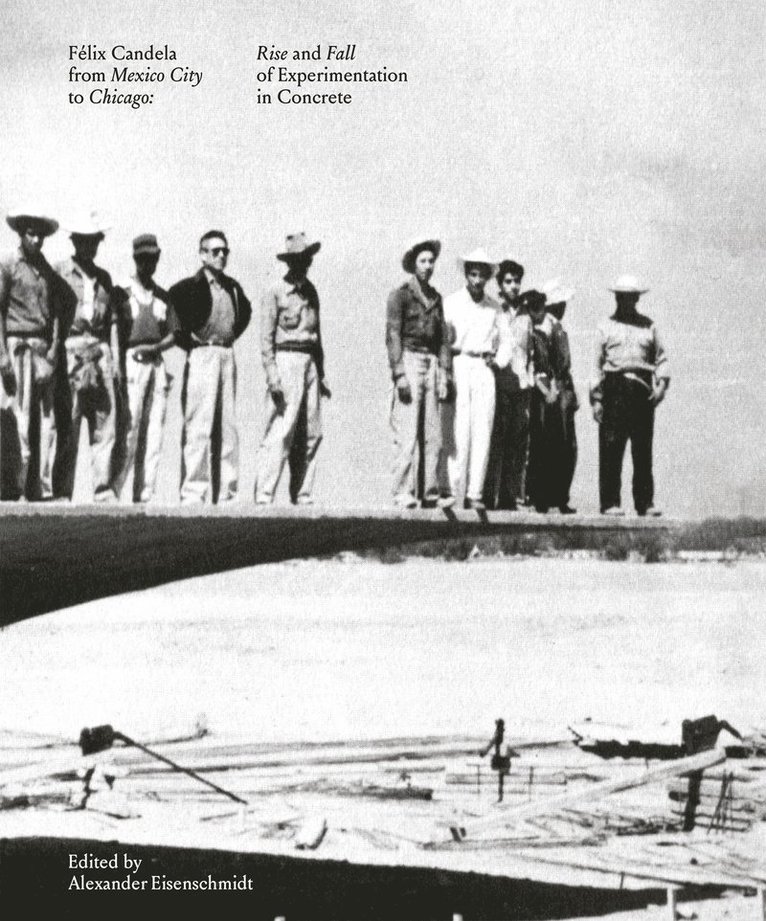
Felix Candela From Mexico City to Chicago
Rise and Fall of Experimentation in Concrete
Inbunden, Engelska, 2024
475 kr
Skickas inom 3-6 vardagar
Trans-Atlantic Engagements
The Contribution and Impact of German Educators to US Architectural Education
Häftad, Engelska, 2021
282 kr
Skickas inom 7-10 vardagar
This book takes a critical look at the influence of German educators. It is a publication that explores the history of pedagogical concepts of German-born professors of architecture at schools in the United States. The research and book publication are structured in three parts; it aims to make a significant contribution to the understanding of architectural education in the United States and its historical cross-fertilisation with German educational concepts at large, with research outcomes responding directly to current and future educational and societal challenges. The ideals of the Bauhaus school shaped more than just design and architecture around the world; these guiding principles and pedagogy also transformed teaching. The project examines the post-Bauhaus influence on these German-born educators today and how the Bauhaus model has evolved over the last 50 years. There are currently over 30 German-born educators, active in shaping architectural and design education in the US, influencing thousands of students as the next generation of future architects in this country. Compared to other professions, succeeding in studies of architecture is known as a long endeavor that requires a strong commitment and dedication from the student. The task for the educators is to shape the next generation of architects as well as possible and, at the same time, turn it into a positive experience and fun to be part of this demanding profession. The book features interviews (conversations) with selected professors and explores how the Bauhaus legacy of Gropius and Mies van der Rohe is still relevant for their educational strategies and design teaching today. The Bauhaus aimed to unite all creative arts through direct field and workshop experience in the crafts with a concentration on modern materials, industrial techniques and mass production. It was initially a school of design which included architecture, and not a school of architecture per se. Gropius resigned in 1928, and it was largely under the directorship of Ludwig Mies van der Rohe from 1930 to 1933 that the Bauhaus developed into a school of architecture with subsidiary art and workshop departments. The pedagogical experiments of the Bauhaus, imported by Gropius, Mies, Hilberseimer, Albers and others to the US system, challenged traditional Beaux-Arts thinking and played a crucial role in shaping modern architectural education. Historically, the German architectural training has always been different from the French tradition. These new interdisciplinary and technology-focused modes of teaching architecture and design had long-lasting impact, however, are now again transformed by the educators currently active in reshaping curricula. The conversations reveal the critical and independent thinking of this group and how they make a meaningful contribution to the discourse of architectural education appropriate to the 21st century. Authored by an internationally recognised scholar with personal insight into the topic, the six selected educators profiled in this volume render visible a broad array of discursive pedagogical strategies that partially build on the seminal educational model of the Bauhaus; they have transformed it to a new contemporary pedagogical model. The study provides insight into the ways in which these German-trained educators influence architectural and design education in the United States to this day.
694 kr
Skickas inom 3-6 vardagar
The housing shortage is a global problem that cannot be resolved through market-driven models of home ownership. This book, therefore, postulates a radical shift from house to housing and from the individual to the collective. The reintroduction of the term "collective" is here understood as a mechanism to refocus housing as a community-building, solidarity-building, and city-building activity.The book addresses the topic in four chapters—from alternative urban housing typologies and concepts of communal construction to historical models from which the current housing struggle can learn. The individual essays include examples from five different continents.
366 kr
Skickas inom 7-10 vardagar
Chicago has long captured global imagination as a place of tall, shining buildings rising from the fog, the playground for many great architects - from Mies van der Rohe to Frank Lloyd Wright - and a surprising epicentre for modern construction and building techniques. Chicagoisms brings together contributions by a diverse pool of curators, artists, architects, historians, critics, and theorists, forming a multifarious portrait of the "Second City".The essays cover a vast range of topics, from Chicago's relationship to contemporary global trends to tracking the boom-and-bust cycle of the city's commitment to architecture. They look back at the Chicago's architectural history and connect it to the "digital project". Studied is also the impact of Chicago's architecture and grid system on immigrants, such as Mies van der Rohe, and how they again influenced the next generation of architects. In addition, historical events that linked the city to the emerging discourse of global modernism and phenomena like the introduction of Chicago's park designs to Europe are explored. Complementing the essays, the book presents some twenty iconic projects that demonstrate Chicago's power as an instigator of ideas.