Alexander V. Pantsov – författare
Visar alla böcker från författaren Alexander V. Pantsov. Handla med fri frakt och snabb leverans.
12 produkter
12 produkter
Häftad, Engelska, 2017
269 kr
Skickas inom 5-8 vardagar
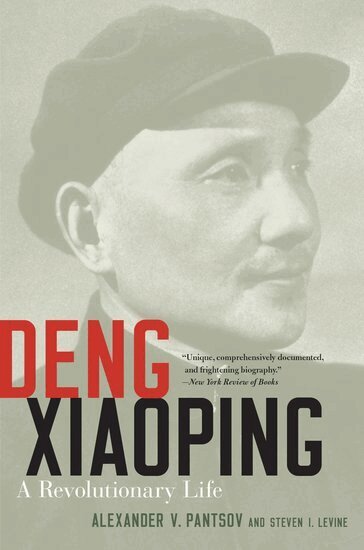
Deng Xiaoping joined the Chinese Communist movement as a youth and rose in its ranks to become an important lieutenant of Mao's from the 1930s onward. Two years after Mao's death in 1976, Deng became the de facto leader of the Chinese Communist Party and the prime architect of China's post-Mao reforms. Abandoning the Maoist socio-economic policies he had long fervently supported, he set in motion changes that would dramatically transform China's economy, society, and position in the world. Three decades later, we are living with the results. China has become the second largest economy and the workshop of the world. And while it is essentially a market economy ("socialism with Chinese characteristics"), Deng and his successors ensured the continuation of CCP rule by severely repressing the democratic movement and maintaining an iron grip on power. When Deng died at the age of 92 in 1997, he had set China on the path it is following to this day.Alexander Pantsov and Steven Levine's new biography of Deng Xiaoping does what no other biography has done: based on newly discovered documents, it covers his entire life, from his childhood and student years to the post-Tiananmen era. Thanks to unprecedented access to Russian archives containing massive files on the Chinese Communist Party, the authors present a wealth of new material on Deng dating back to the 1920s. In a long and extraordinary life, Deng navigated one epic crisis after another. Born in 1904, Deng, like many Asian revolutionary leaders, spent part of the 1920s in Paris, where he joined the CCP in its early years. He then studied in the USSR just as Stalin was establishing firm control over the Soviet communist party. He played an increasingly important role in the troubled decades of the 1930s and 1940s that were marked by civil war and the Japanese invasion. He was commissar of a communist-dominated area in the early 1930s, loyal henchman to Mao during the Long March, regional military commander in the anti-Japanese war, and finally a key leader in the 1946-49 revolution. During Mao's quarter century rule, Deng oscillated between the heights and the depths of power. He was purged during the Cultural Revolution, only to reemerge after Mao's death to become China's paramount leader until his own death in 1997.This objective, balanced, and unprecedentedly rich biography changes our understanding of one of the most important figures in modern history.
Inbunden, Engelska, 2015
388 kr
Skickas inom 5-8 vardagar
Deng Xiaoping joined the Chinese Communist movement as a youth and rose in its ranks to become an important lieutenant of Mao's from the 1930s onward. Two years after Mao's death in 1976, Deng became the de facto leader of the Chinese Communist Party and the prime architect of China's post-Mao reforms. Abandoning the Maoist socio-economic policies he had long fervently supported, he set in motion changes that would dramatically transform China's economy, society, and position in the world. Three decades later, we are living with the results. China has become the second largest economy and the workshop of the world. And while it is essentially a market economy ("socialism with Chinese characteristics"), Deng and his successors ensured the continuation of CCP rule by severely repressing the democratic movement and maintaining an iron grip on power. When Deng died at the age of 92 in 1997, he had set China on the path it is following to this day.Alexander Pantsov and Steven Levine's new biography of Deng Xiaoping does what no other biography has done: based on newly discovered documents, it covers his entire life, from his childhood and student years to the post-Tiananmen era. Thanks to unprecedented access to Russian archives containing massive files on the Chinese Communist Party, the authors present a wealth of new material on Deng dating back to the 1920s. In a long and extraordinary life, Deng navigated one epic crisis after another. Born in 1904, Deng, like many Asian revolutionary leaders, spent part of the 1920s in Paris, where he joined the CCP in its early years. He then studied in the USSR just as Stalin was establishing firm control over the Soviet communist party. He played an increasingly important role in the troubled decades of the 1930s and 1940s that were marked by civil war and the Japanese invasion. He was commissar of a communist-dominated area in the early 1930s, loyal henchman to Mao during the Long March, regional military commander in the anti-Japanese war, and finally a key leader in the 1946-49 revolution. During Mao's quarter century rule, Deng oscillated between the heights and the depths of power. He was purged during the Cultural Revolution, only to reemerge after Mao's death to become China's paramount leader until his own death in 1997.This objective, balanced, and unprecedentedly rich biography changes our understanding of one of the most important figures in modern history.
E-bok
PDF, Engelska, 2015171 kr
Läs direkt efter köp
Deng Xiaoping joined the Chinese Communist movement as a youth and rose in its ranks to become an important lieutenant of Mao''s from the 1930s onward. Two years after Mao''s death in 1976, Deng became the de facto leader of the Chinese Communist Party and the prime architect of China''s post-Mao reforms. Abandoning the Maoist socio-economic policies he had long fervently supported, he set in motion changes that would dramatically transform China''s economy, society, and position in the world. Three decades later, we are living with the results. China has become the second largest economy and the workshop of the world. And while it is essentially a market economy ("socialism with Chinese characteristics"), Deng and his successors ensured the continuation of CCP rule by severely repressing the democratic movement and maintaining an iron grip on power. When Deng died at the age of 92 in 1997, he had set China on the path it is following to this day.Alexander Pantsov and Steven Levine''s new biography of Deng Xiaoping does what no other biography has done: based on newly discovered documents, it covers his entire life, from his childhood and student years to the post-Tiananmen era. Thanks to unprecedented access to Russian archives containing massive files on the Chinese Communist Party, the authors present a wealth of new material on Deng dating back to the 1920s. In a long and extraordinary life, Deng navigated one epic crisis after another. Born in 1904, Deng, like many Asian revolutionary leaders, spent part of the 1920s in Paris, where he joined the CCP in its early years. He then studied in the USSR just as Stalin was establishing firm control over the Soviet communist party. He played an increasingly important role in the troubled decades of the 1930s and 1940s that were marked by civil war and the Japanese invasion. He was commissar of a communist-dominated area in the early 1930s, loyal henchman to Mao during the Long March, regional military commander in the anti-Japanese war, and finally a key leader in the 1946-49 revolution. During Mao''s quarter century rule, Deng oscillated between the heights and the depths of power. He was purged during the Cultural Revolution, only to reemerge after Mao''s death to become China''s paramount leader until his own death in 1997.This objective, balanced, and unprecedentedly rich biography changes our understanding of one of the most important figures in modern history.
E-bok
Engelska, 2015171 kr
Läs direkt efter köp
Deng Xiaoping joined the Chinese Communist movement as a youth and rose in its ranks to become an important lieutenant of Mao''s from the 1930s onward. Two years after Mao''s death in 1976, Deng became the de facto leader of the Chinese Communist Party and the prime architect of China''s post-Mao reforms. Abandoning the Maoist socio-economic policies he had long fervently supported, he set in motion changes that would dramatically transform China''s economy, society, and position in the world. Three decades later, we are living with the results. China has become the second largest economy and the workshop of the world. And while it is essentially a market economy ("socialism with Chinese characteristics"), Deng and his successors ensured the continuation of CCP rule by severely repressing the democratic movement and maintaining an iron grip on power. When Deng died at the age of 92 in 1997, he had set China on the path it is following to this day.Alexander Pantsov and Steven Levine''s new biography of Deng Xiaoping does what no other biography has done: based on newly discovered documents, it covers his entire life, from his childhood and student years to the post-Tiananmen era. Thanks to unprecedented access to Russian archives containing massive files on the Chinese Communist Party, the authors present a wealth of new material on Deng dating back to the 1920s. In a long and extraordinary life, Deng navigated one epic crisis after another. Born in 1904, Deng, like many Asian revolutionary leaders, spent part of the 1920s in Paris, where he joined the CCP in its early years. He then studied in the USSR just as Stalin was establishing firm control over the Soviet communist party. He played an increasingly important role in the troubled decades of the 1930s and 1940s that were marked by civil war and the Japanese invasion. He was commissar of a communist-dominated area in the early 1930s, loyal henchman to Mao during the Long March, regional military commander in the anti-Japanese war, and finally a key leader in the 1946-49 revolution. During Mao''s quarter century rule, Deng oscillated between the heights and the depths of power. He was purged during the Cultural Revolution, only to reemerge after Mao''s death to become China''s paramount leader until his own death in 1997.This objective, balanced, and unprecedentedly rich biography changes our understanding of one of the most important figures in modern history.
Inbunden, Engelska, 2023
372 kr
Skickas inom 5-8 vardagar
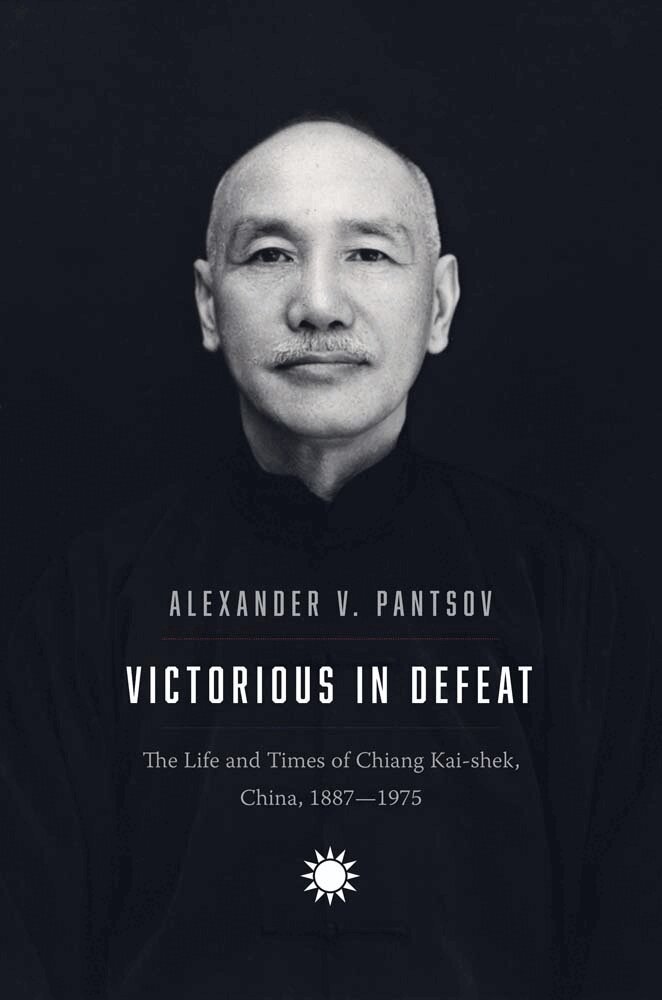
An extensively researched, comprehensive biography of Chinese Nationalist leader Chiang Kai-shek, one of the twentieth century’s most powerful and controversial figures Chiang Kai-shek (1887–1975) led the Republic of China for almost fifty years, starting in 1926. He was the architect of a new, republican China, a hero of the Second World War, and a faithful ally of the United States. Simultaneously a Christian and a Confucian, Chiang dreamed of universal equality yet was a perfidious and cunning dictator responsible for the deaths of over 1.5 million innocent people. This critical biography is based on Chiang Kai-shek’s unpublished diaries, his extensive personal files from the Russian archives, and the Russian files of his relatives, associates, and foes. Alexander V. Pantsov sheds new light on the role played by the Russians in Chiang’s rise to power in the 1920s and throughout his political career—and indeed the Russian influence on the Chinese revolutionary movement as a whole—as well as on Chiang’s complex relationship with top officials of the United States. It is a detailed portrait of a man who ranks with Stalin, Roosevelt, Hitler, Churchill, and Gandhi as leaders who shaped our world.
Häftad, Engelska, 2013
295 kr
Skickas inom 3-6 vardagar
E-bok
Engelska, 2012142 kr
Läs direkt efter köp
This major new biography of Mao uses extensive Russian documents previously unavailable to biographers to reveal surprising details about Mao’s rise to power and his leadership in China. Mao Zedong was one of the most important figures of the twentieth century, the most important in the history of modern China. A complex figure, he was champion of the poor and brutal tyrant, poet and despot. Pantsov and Levine show Mao’s relentless drive to succeed, vividly describing his growing role in the nascent Communist Party of China. They disclose startling facts about his personal life, particularly regarding his health and his lifelong serial affairs with young women. They portray him as the loyal Stalinist that he was, who never broke with the Soviet Union until after Stalin’s death. Mao brought his country from poverty and economic backwardness into the modern age and onto the world stage. But he was also responsible for an unprecedented loss of life. The disastrous Great Leap Forward with its accompanying famine and the bloody Cultural Revolution were Mao’s creations. Internationally Mao began to distance China from the USSR under Khrushchev and shrewdly renewed relations with the U.S. as a counter to the Soviets. He lived and behaved as China’s last emperor.
Häftad, Engelska, 2021
564 kr
Skickas inom 5-8 vardagar
This collection of documents, sealed for years in Stalin's secret archives, gathers some of Karl Bernhardovich Radek's most important contributions to the early Soviet debates about China and its working-class. Radek (1885-1939) was the foremost Soviet specialist on China, a leading activist in the Russian revolutionary movement, and a leader of the Trotskyist Opposition. In these letters, articles, and minutes he presents an original conception of the history of China from ancient times to the twentieth century, as well as a delineation of the fundamental political problems of China in the 1920s. The appendices also contain communications between Trotsky and Radek, as well as the "Chronological Information" of Zionviev and Trotsky, outlining the most important stages of the struggle of the United Left Opposition against the Stalinist majority in the All-Union Commuist Party regarding problems of the first Chinese revolution.None of the documents collected here have ever been published in English.
Inbunden, Tyska, 2014
387 kr
Skickas inom 3-6 vardagar
E-bok
Tyska, 2014170 kr
Läs direkt efter köp
Tyrann, »Held der Armen«, Despot und Poet – die maßgebliche Biographie Mao ZedongsEr lebte und agierte wie der letzte Kaiser von China: Mao Zedong, der »Große Vorsitzende« der Volksrepublik China. Es gibt zahlreiche Mythen und Propagandabilder, die sein Leben nachzeichnen.Doch wer war er wirklich? Der russische Historiker Pantsov und der amerikanische China-Experte Levine bringen überraschende Einsichten ans Licht: über Maos blutigen Kampf um die Macht, seine Liebschaften, seine Mitstreiter und Rivalen. Diese große Biographie stützt sich auf noch nie genutzte Quellen, u.a. ermöglichen bislang unbekannte Dokumente erstmals, Maos Verhältnis zu Stalin in Gänze zu verstehen. Ein umfassendes und dichtes Porträt einer der einflussreichsten und komplexesten Persönlichkeiten des 20. Jahrhunderts.»Umfassend, fundiert, detailreich… Ein großes Werk.«New York Review of Books
Del 219 - Historical Materialism Book Series
Karl Radek on China
Documents from the Former Secret Soviet Archives
Inbunden, Engelska, 2020
3 532 kr
Skickas inom 5-8 vardagar
The collection of archival documents Karl Radek on China reflects the views of one of the major Soviet China specialists, activists of the Russian revolutionary movement, and leaders of the Trotskyist Opposition, Karl Bernhardovich Radek (1885-1939). The documents present an original conception of the history of China from ancient times to the twentieth century as well as a delineation of the fundamental political problems of China in the 1920s. The appendices contain letters from Trotsky to Radek as well as the 'Chronological Information' of Zinoviev and Trotsky, outlining the most important stages of the struggle of the United Left Opposition against the Stalinist majority in the AUCP(b) regarding problems of the Chinese revolution. None of the documents have ever been published in English.
E-bok
PDF, Engelska, 20203 660 kr
Läs direkt efter köp
The collection of archival documents Karl Radek on China reflects the views of one of the major Soviet China specialists, activists of the Russian revolutionary movement, and leaders of the Trotskyist Opposition, Karl Bernhardovich Radek (1885-1939). The documents present an original conception of the history of China from ancient times to the twentieth century as well as a delineation of the fundamental political problems of China in the 1920s. The appendices contain letters from Trotsky to Radek as well as the 'Chronological Information' of Zinoviev and Trotsky, outlining the most important stages of the struggle of the United Left Opposition against the Stalinist majority in the AUCP(b) regarding problems of the Chinese revolution. None of the documents have ever been published in English.