Alexander W. Astin – författare
456 kr
Skickas inom 5-8 vardagar
443 kr
Skickas inom 5-8 vardagar
490 kr
Läs direkt efter köp
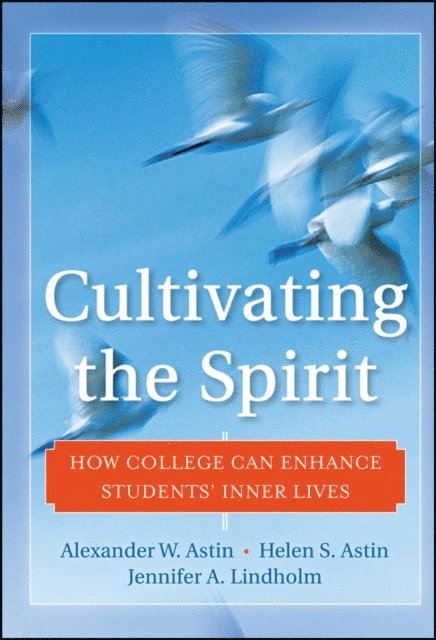
Cultivating the Spirit
THIS GROUNDBREAKING WORK IS BASED on a five-year study of how students change during the college years and the role college plays in facilitating the development of their spiritual qualities. Students, the authors argue, grapple with the big questions in life: Who am I? What are my values? Do I have a mission in life? Why am I in college? What kind of person do I want to be? What sort of world do I want to help to create? Their answers to these questions help determine their academic and career choices and are tied to the development of personal qualities such as empathy, caring, and social responsibility.
The study finds that, while students'' religious engagement declines during college, at the same time they become substantially more caring, tolerant, connected with others, and actively egaged in a spiritual quest. Spiritual growth also enhances academic performance, leadership development, and satisfaction with college. The study provides strong evidence pointing to specific experiences during college that can contribute to students'' spiritual growth.
The need for spiritual development in college is apparent. Two-thirds of the students in the study express a strong interest in spiritual matters, well over half report that their professors never encourage discussions of religious or spiritual matters, and about the same proportion report that professors never provide opportunities to discuss the purpose and meaning of life. Cultivating the Spirit aims to raise the awareness of academic administrators, faculty, and the public at large to the vital role that spirituality plays in student learning and development. Throughout the book, the authors identify strategies for enhancing students'' development and encourage the academy to give greater priority to the spiritual aspects of students'' educational and personal development.
520 kr
Läs direkt efter köp
Cultivating the Spirit
THIS GROUNDBREAKING WORK IS BASED on a five-year study of how students change during the college years and the role college plays in facilitating the development of their spiritual qualities. Students, the authors argue, grapple with the big questions in life: Who am I? What are my values? Do I have a mission in life? Why am I in college? What kind of person do I want to be? What sort of world do I want to help to create? Their answers to these questions help determine their academic and career choices and are tied to the development of personal qualities such as empathy, caring, and social responsibility.
The study finds that, while students'' religious engagement declines during college, at the same time they become substantially more caring, tolerant, connected with others, and actively egaged in a spiritual quest. Spiritual growth also enhances academic performance, leadership development, and satisfaction with college. The study provides strong evidence pointing to specific experiences during college that can contribute to students'' spiritual growth.
The need for spiritual development in college is apparent. Two-thirds of the students in the study express a strong interest in spiritual matters, well over half report that their professors never encourage discussions of religious or spiritual matters, and about the same proportion report that professors never provide opportunities to discuss the purpose and meaning of life. Cultivating the Spirit aims to raise the awareness of academic administrators, faculty, and the public at large to the vital role that spirituality plays in student learning and development. Throughout the book, the authors identify strategies for enhancing students'' development and encourage the academy to give greater priority to the spiritual aspects of students'' educational and personal development.
515 kr
Skickas inom 5-8 vardagar
442 kr
Läs direkt efter köp
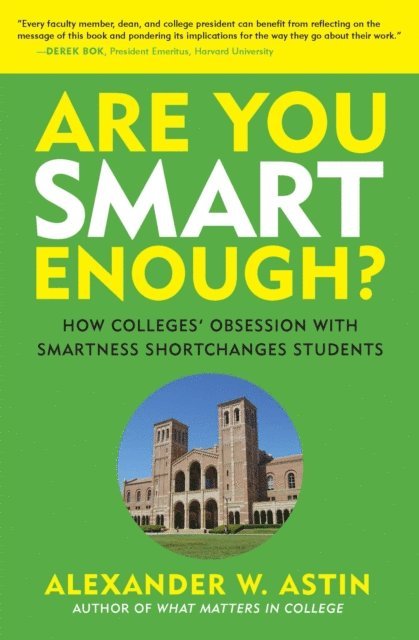
This book explores the many ways in which the obsession with “being smart” distorts the life of a typical college or university, and how this obsession leads to a higher education that shortchanges the majority of students, and by extension, our society’s need for an educated population. The author calls on his colleagues in higher education to return the focus to the true mission of developing the potential of each student: However “smart” they are when they get to college, both the student and the college should be able to show what they learned while there.Unfortunately, colleges and universities have embraced two very narrow definitions of smartness: the course grade and especially the standardized test. A large body of research shows that it will be very difficult for colleges to fulfill their stated mission unless they substantially broaden their conception to include student qualities such as leadership, social responsibility, honesty, empathy, and citizenship. Specifically, the book grapples with issues such as the following:• Why America’s 3,000-plus colleges and universities have evolved into a hierarchical pecking order, where institutions compete with each other to recruit “smart” students, and where a handful of elite institutions at the top of the pecking order enroll the “smartest” students.• Why higher education favors its smartest students to the point where the “not so smart” students get second-class treatment.• Why so many colleges find it difficult to make good on their commitment to affirmative action and “equality of opportunity.”• Why college faculties tend to value being smart more than developing students’ smartness (i.e., teaching and learning).
442 kr
Läs direkt efter köp
This book explores the many ways in which the obsession with “being smart” distorts the life of a typical college or university, and how this obsession leads to a higher education that shortchanges the majority of students, and by extension, our society’s need for an educated population. The author calls on his colleagues in higher education to return the focus to the true mission of developing the potential of each student: However “smart” they are when they get to college, both the student and the college should be able to show what they learned while there.Unfortunately, colleges and universities have embraced two very narrow definitions of smartness: the course grade and especially the standardized test. A large body of research shows that it will be very difficult for colleges to fulfill their stated mission unless they substantially broaden their conception to include student qualities such as leadership, social responsibility, honesty, empathy, and citizenship. Specifically, the book grapples with issues such as the following:• Why America’s 3,000-plus colleges and universities have evolved into a hierarchical pecking order, where institutions compete with each other to recruit “smart” students, and where a handful of elite institutions at the top of the pecking order enroll the “smartest” students.• Why higher education favors its smartest students to the point where the “not so smart” students get second-class treatment.• Why so many colleges find it difficult to make good on their commitment to affirmative action and “equality of opportunity.”• Why college faculties tend to value being smart more than developing students’ smartness (i.e., teaching and learning).
469 kr
Skickas inom 5-8 vardagar
1 479 kr
Skickas inom 10-15 vardagar
1 010 kr
Skickas inom 10-15 vardagar
1 074 kr
Läs direkt efter köp
334 kr
Skickas inom 5-8 vardagar
818 kr
Skickas inom 5-8 vardagar
232 kr
Läs direkt efter köp
2 097 kr
Skickas inom 10-15 vardagar
384 kr
Skickas inom 10-15 vardagar
348 kr
Läs direkt efter köp