Alexandra Bounia - Böcker
Visar alla böcker från författaren Alexandra Bounia. Handla med fri frakt och snabb leverans.
7 produkter
7 produkter
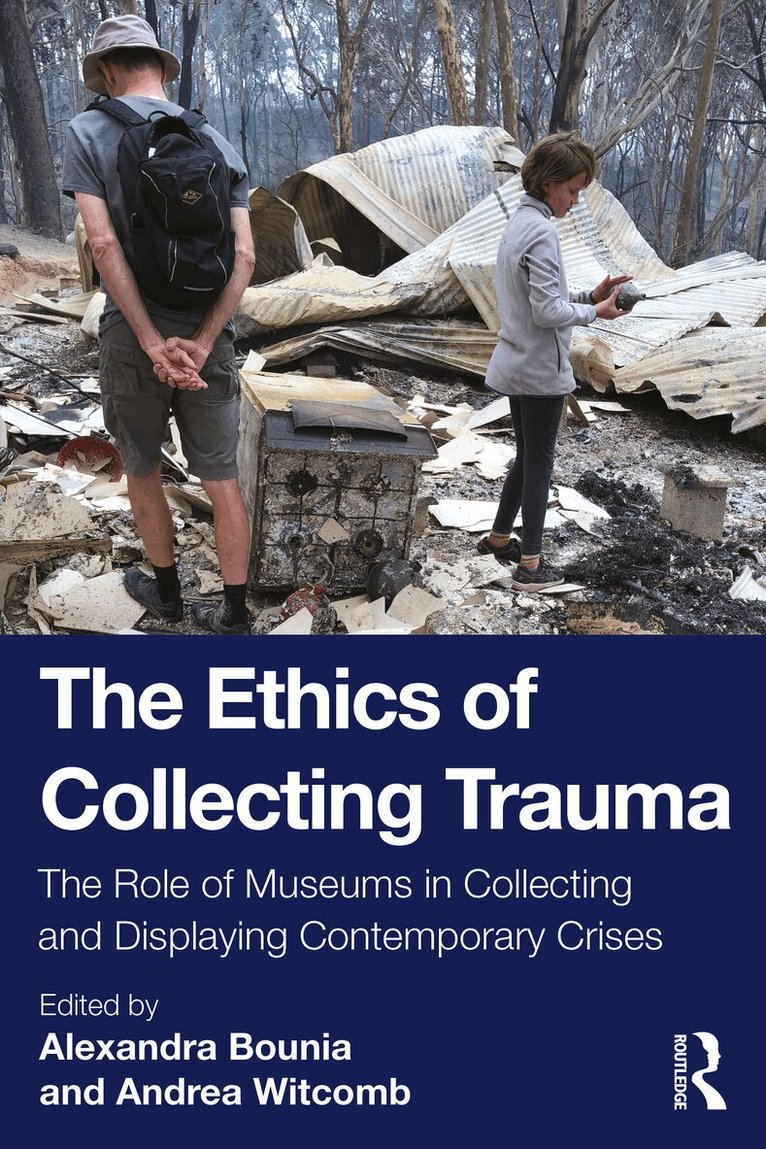
Ethics of Collecting Trauma
The Role of Museums in Collecting and Displaying Contemporary Crises
Häftad, Engelska, 2024
551 kr
Skickas inom 10-15 vardagar
The Ethics of Collecting Trauma offers an interdisciplinary dialogue on the ethics of contemporary museums that are involved in collecting moments of collective trauma.Including a range of international contributions, the volume explores the ethics of collecting material that documents contemporary traumatic events. The case studies focus on four categories of such events: forced migration; terrorism attacks; major natural disasters; and cultural traumas, such as the ongoing legacy of colonization. Contributors consider whether cultural institutions have a right to collect materials about these events and what kind of materials they should focus on, if so; who is being memorialized, who should hold the power to decide what is collected, and what the critical timeline for such initiatives is. The volume also considers what the larger purpose of such collecting is and how to deal with past collecting practices, arguing that museums need to consider, in a careful and deliberate way, their ethical responsibilities as cultural institutions.The Ethics of Collecting Trauma will be of interest to academics and students working in the areas of museum and heritage studies, cultural studies, trauma studies, memory studies, and migration studies. The book will also appeal to museum professionals working around the globe.
Ethics of Collecting Trauma
The Role of Museums in Collecting and Displaying Contemporary Crises
Inbunden, Engelska, 2024
2 012 kr
Skickas inom 10-15 vardagar
The Ethics of Collecting Trauma offers an interdisciplinary dialogue on the ethics of contemporary museums that are involved in collecting moments of collective trauma.Including a range of international contributions, the volume explores the ethics of collecting material that documents contemporary traumatic events. The case studies focus on four categories of such events: forced migration; terrorism attacks; major natural disasters; and cultural traumas, such as the ongoing legacy of colonization. Contributors consider whether cultural institutions have a right to collect materials about these events and what kind of materials they should focus on, if so; who is being memorialized, who should hold the power to decide what is collected, and what the critical timeline for such initiatives is. The volume also considers what the larger purpose of such collecting is and how to deal with past collecting practices, arguing that museums need to consider, in a careful and deliberate way, their ethical responsibilities as cultural institutions.The Ethics of Collecting Trauma will be of interest to academics and students working in the areas of museum and heritage studies, cultural studies, trauma studies, memory studies, and migration studies. The book will also appeal to museum professionals working around the globe.
1 434 kr
Tillfälligt slut
The phenomenon of collecting as a systematic activity undertaken for symbolic rather than actual needs, is traditionally taken to originate in the middle of the fifteenth century, when the first cabinets of curiosities appear in Italy. Yet it is clear that the practice of collecting started long before that, indeed its origins can be traced back thousands of years to European prehistoric communities. Whilst this early genesis is, due to lack of written records, still shrouded in much mystery, The Nature of Classical Collecting argues that the collecting practices of classical Greece and Rome offer a rich tapestry of experiences which can be reconstructed to illuminate a pivotal period in the long and ever developing phenomenon of collecting. Utilizing a wide variety of examples of classical collections - including grave goods, the accumulations of Greek temples and open-air shrines, the royal collections of Hellenistic kings, Roman art and curiosity collections, and relics - The Nature of Classical Collecting focuses on the field of the 'pre-history' of collecting, a neglected yet critical phase that helped crystallize the western concept of collecting. Drawing primarily on Latin writings from the period 100 BCE to 100 CE it shows how collecting underwent a transition from a religious and political activity, to an intellectual practice in which connoisseurship could impart social status. It also demonstrates how the appreciation of objects and artists changed as new qualities were attributed to material culture, resulting in the establishment of art markets, patronage and an interest in the history of art. By exploring these early developments, The Nature of Classical Collecting not only provides a fascinating insight into the culture of late Hellenistic/early Imperial Roman collecting, but also offers a much fuller grounding for understanding the influences and inspirations of those Renaissance collectors who themselves were to have such a profound influence on the course of European art, architecture and culture.
2 357 kr
Skickas inom 10-15 vardagar
This engaging volume reveals how politics permeates all facets of museum practice, particularly in regions of political conflict. In these settings, museums can be extraordinarily influential for shaping identity and collective memory and for peace building. Using key Cypriote archaeological, historical, ethnographic, and art museums as examples, this book:provides a multifaceted and deeper understanding of how politics, conflict, national agendas, and individual initiatives can shape museums and their narratives; discusses how these forces contribute to the creation of, and conflict over, national, community and personal identities; examines how museums use inclusion and exclusion in their collections, exhibitions, objects and interpretive material as a way of selectively constructing collective memories.This book will be an important resource for museum professionals, as well as scholars interested in the effects of politics on museums and interpretations of the past.
789 kr
Skickas inom 10-15 vardagar
This engaging volume reveals how politics permeates all facets of museum practice, particularly in regions of political conflict. In these settings, museums can be extraordinarily influential for shaping identity and collective memory and for peace building. Using key Cypriote archaeological, historical, ethnographic, and art museums as examples, this book:provides a multifaceted and deeper understanding of how politics, conflict, national agendas, and individual initiatives can shape museums and their narratives; discusses how these forces contribute to the creation of, and conflict over, national, community and personal identities; examines how museums use inclusion and exclusion in their collections, exhibitions, objects and interpretive material as a way of selectively constructing collective memories.This book will be an important resource for museum professionals, as well as scholars interested in the effects of politics on museums and interpretations of the past.
1 956 kr
Skickas inom 3-6 vardagar
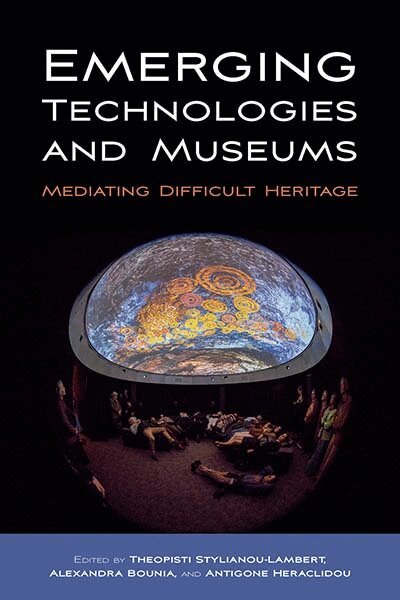
How can emerging technologies display, reveal and negotiate difficult, dissonant, negative or undesirable heritage? Emerging technologies in museums have the potential to reveal unheard or silenced stories, challenge preconceptions, encourage emotional responses, introduce the unexpected, and overall provide alternative experiences. By examining varied theoretical approaches and case studies, authors demonstrate how “awkward”, contested, and rarely discussed subjects and stories are treated – or can be potentially treated - in a museum setting with the use of the latest technology.
270 kr
Kommande