Alexandra Cosima Budabin - Böcker
Visar alla böcker från författaren Alexandra Cosima Budabin. Handla med fri frakt och snabb leverans.
3 produkter
3 produkter
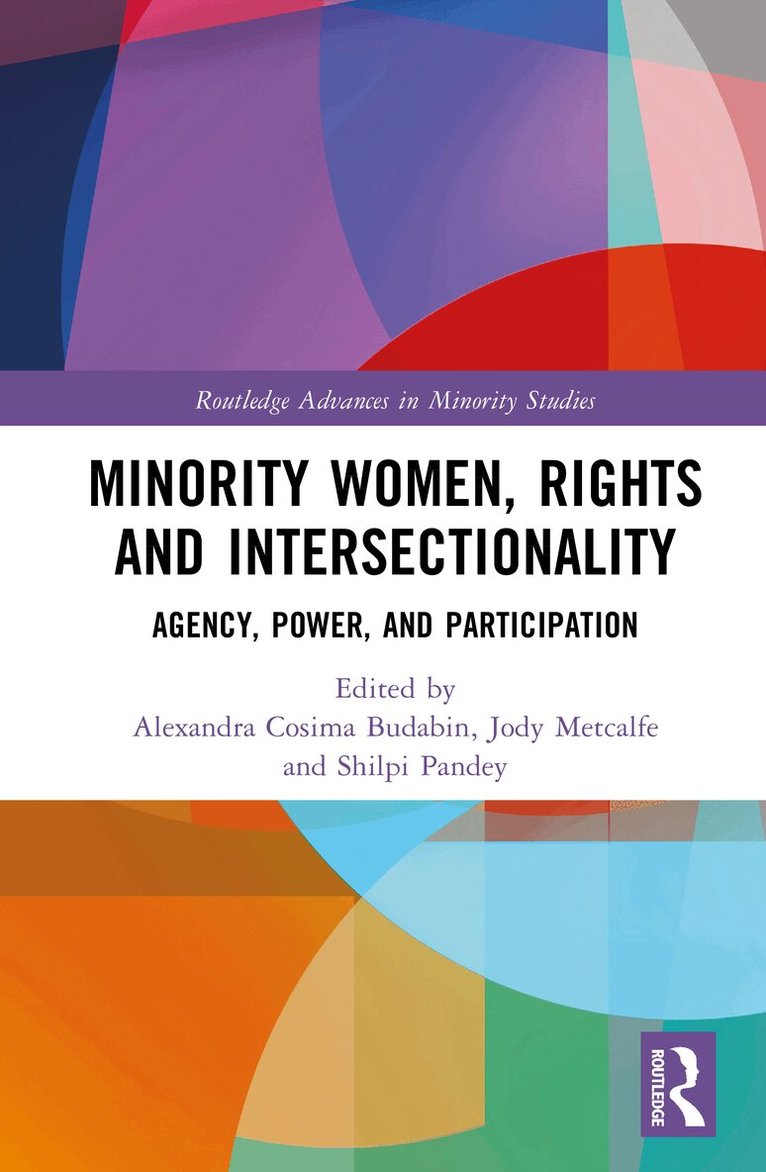
Minority Women, Rights and Intersectionality
Agency, Power, and Participation
Inbunden, Engelska, 2025
1 935 kr
Skickas inom 10-15 vardagar
This collection focuses on minority women through the perspectives of minority rights and intersectionality to investigate key concepts such as discrimination, inequality, agency, participation, resistance, and solidarity while also unpacking dynamics of power. It presents diverse grounded empirical cases drawing on field research and data collection while offering a global perspective that explores intersectionality and its effects on minority women ascribed alternately by nationality, religion, ethno-culture, gender, migration background, and race in seven countries as well as in digital and international political spaces. The authors include legal scholars, political scientists, sociologists, and anthropologists who study inequality, minority rights, race and gender issues, and the digital sphere. This interdisciplinary concatenation of authors offers an advantage when working at the junction between intersectionality and minority rights. Interdisciplinary in approach, the book will be of interest to researchers, academics, and policy-makers working in the areas of Human Rights Law, Minority Rights, Gender Studies, Political Science, Social and Cultural Anthropology, and Sociology.The Open Access version of this book, available at http://www.taylorfrancis.com, has been made available under a Creative Commons [Attribution (CC-BY)] 4.0 license.
1 165 kr
Skickas inom 10-15 vardagar
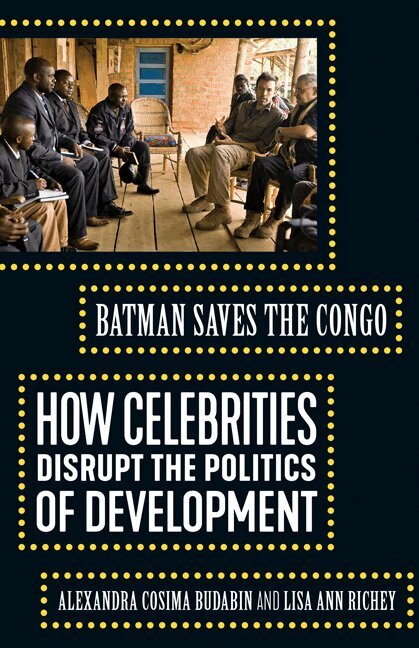
How celebrity strategic partnerships are disrupting humanitarian spaceCan a celebrity be a “disrupter,” promoting strategic partnerships to bring new ideas and funding to revitalize the development field-or are celebrities just charismatic ambassadors for big business? Examining the role of the rich and famous in development and humanitarianism, Batman Saves the Congo argues that celebrities do both, and that understanding why and how yields insight into the realities of neoliberal development. In 2010, entertainer Ben Affleck, known for his superhero performance as Batman, launched the Eastern Congo Initiative to bring a new approach to the region’s development. This case study is central to Batman Saves the Congo. Affleck’s organization operates with special access, diversified funding, and significant support of elites within political, philanthropic, development, and humanitarian circuits. This sets it apart from other development organizations. With his convening power, Affleck has built partnerships with those inside and outside development, staking bipartisan political ground that is neither charity nor aid but “good business.” Such visible and recognizable celebrity humanitarians are occupying the public domain yet not engaging meaningfully with any public, argues Batman Saves the Congo. They are an unruly bunch of new players in development who amplify business solutions. As elite political participants, celebrities shape development practices through strategic partnerships that are both an innovative way to raise awareness and funding for neglected causes and a troubling trend of unaccountable elite leadership in North–South relations. Batman Saves the Congo helps illuminate the power of celebritized business solutions and the development contexts they create.
286 kr
Skickas inom 10-15 vardagar
How celebrity strategic partnerships are disrupting humanitarian spaceCan a celebrity be a “disrupter,” promoting strategic partnerships to bring new ideas and funding to revitalize the development field-or are celebrities just charismatic ambassadors for big business? Examining the role of the rich and famous in development and humanitarianism, Batman Saves the Congo argues that celebrities do both, and that understanding why and how yields insight into the realities of neoliberal development. In 2010, entertainer Ben Affleck, known for his superhero performance as Batman, launched the Eastern Congo Initiative to bring a new approach to the region’s development. This case study is central to Batman Saves the Congo. Affleck’s organization operates with special access, diversified funding, and significant support of elites within political, philanthropic, development, and humanitarian circuits. This sets it apart from other development organizations. With his convening power, Affleck has built partnerships with those inside and outside development, staking bipartisan political ground that is neither charity nor aid but “good business.” Such visible and recognizable celebrity humanitarians are occupying the public domain yet not engaging meaningfully with any public, argues Batman Saves the Congo. They are an unruly bunch of new players in development who amplify business solutions. As elite political participants, celebrities shape development practices through strategic partnerships that are both an innovative way to raise awareness and funding for neglected causes and a troubling trend of unaccountable elite leadership in North–South relations. Batman Saves the Congo helps illuminate the power of celebritized business solutions and the development contexts they create.