Alexandre A. Soloviev – författare
Visar alla böcker från författaren Alexandre A. Soloviev. Handla med fri frakt och snabb leverans.
3 produkter
3 produkter
Inbunden, Engelska, 2002
1 084 kr
Skickas inom 10-15 vardagar
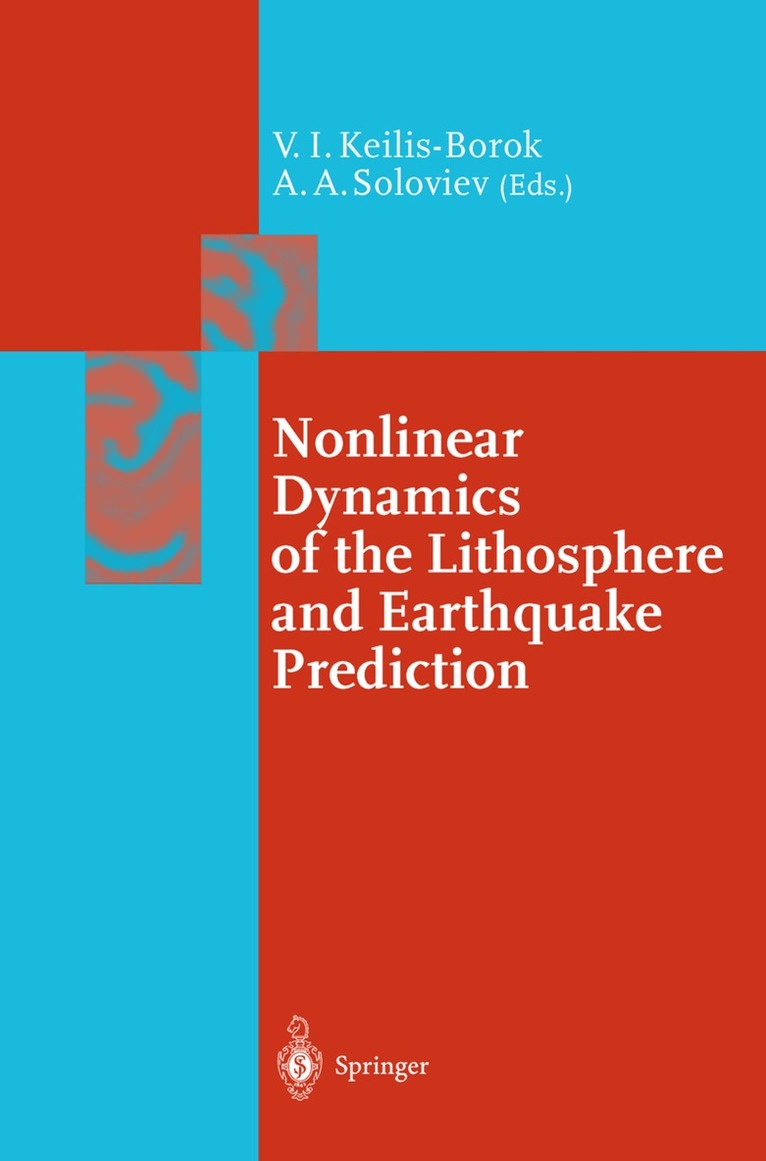
The vulnerability of our civilization to earthquakes is rapidly growing, rais ing earthquakes to the ranks of major threats faced by humankind. Earth quake prediction is necessary to reduce that threat by undertaking disaster preparedness measures. This is one of the critically urgent problems whose solution requires fundamental research. At the same time, prediction is a ma jor tool of basic science, a source of heuristic constraints and the final test of theories. This volume summarizes the state-of-the-art in earthquake prediction. Its following aspects are considered: - Existing prediction algorithms and the quality of predictions they pro vide. - Application of such predictions for damage reduction, given their current accuracy, so far limited. - Fundamental understanding of the lithosphere gained in earthquake prediction research. - Emerging possibilities for major improvements of earthquake prediction methods. - Potential implications for predicting other disasters, besides earthquakes. Methodologies. At the heart of the research described here is the inte gration of three methodologies: phenomenological analysis of observations; "universal" models of complex systems such as those considered in statistical physics and nonlinear dynamics; and Earth-specific models of tectonic fault networks. In addition, the theory of optimal control is used to link earthquake prediction with earthquake preparedness.
Häftad, Engelska, 2010
1 084 kr
Skickas inom 10-15 vardagar
The vulnerability of our civilization to earthquakes is rapidly growing, rais ing earthquakes to the ranks of major threats faced by humankind. Earth quake prediction is necessary to reduce that threat by undertaking disaster preparedness measures. This is one of the critically urgent problems whose solution requires fundamental research. At the same time, prediction is a ma jor tool of basic science, a source of heuristic constraints and the final test of theories. This volume summarizes the state-of-the-art in earthquake prediction. Its following aspects are considered: - Existing prediction algorithms and the quality of predictions they pro vide. - Application of such predictions for damage reduction, given their current accuracy, so far limited. - Fundamental understanding of the lithosphere gained in earthquake prediction research. - Emerging possibilities for major improvements of earthquake prediction methods. - Potential implications for predicting other disasters, besides earthquakes. Methodologies. At the heart of the research described here is the inte gration of three methodologies: phenomenological analysis of observations; "universal" models of complex systems such as those considered in statistical physics and nonlinear dynamics; and Earth-specific models of tectonic fault networks. In addition, the theory of optimal control is used to link earthquake prediction with earthquake preparedness.
E-bok
PDF, Engelska, 20131 416 kr
Läs direkt efter köp
The vulnerability of our civilization to earthquakes is rapidly growing, rais ing earthquakes to the ranks of major threats faced by humankind. Earth quake prediction is necessary to reduce that threat by undertaking disaster preparedness measures. This is one of the critically urgent problems whose solution requires fundamental research. At the same time, prediction is a ma jor tool of basic science, a source of heuristic constraints and the final test of theories. This volume summarizes the state-of-the-art in earthquake prediction. Its following aspects are considered: - Existing prediction algorithms and the quality of predictions they pro vide. - Application of such predictions for damage reduction, given their current accuracy, so far limited. - Fundamental understanding of the lithosphere gained in earthquake prediction research. - Emerging possibilities for major improvements of earthquake prediction methods. - Potential implications for predicting other disasters, besides earthquakes. Methodologies. At the heart of the research described here is the inte gration of three methodologies: phenomenological analysis of observations; "universal" models of complex systems such as those considered in statistical physics and nonlinear dynamics; and Earth-specific models of tectonic fault networks. In addition, the theory of optimal control is used to link earthquake prediction with earthquake preparedness.