Alexandru Filip – författare
Visar alla böcker från författaren Alexandru Filip. Handla med fri frakt och snabb leverans.
3 produkter
3 produkter
Inbunden, Engelska, 2021
1 416 kr
Skickas inom 10-15 vardagar
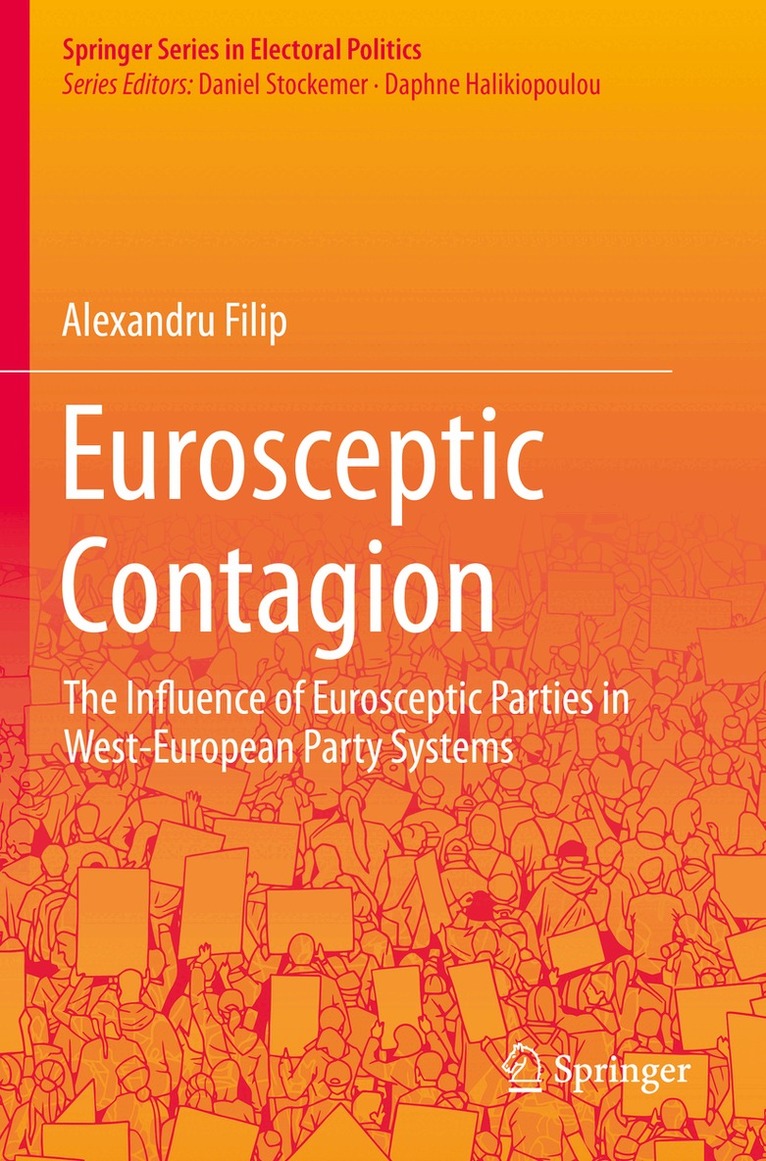
In light of the growing support for populist political actors, this book examines political party behavior and political positions towards the integration process in the European Union. It explores the correlation between eurosceptic success and mainstream party behavior.Presenting both an indepth empirical investigation of electoral campaigns and the politics of party leaders, as well as applying various theoretical models, the author analyses different eurosceptical trends and circumstances and dynamics of eurosceptic contagion. In particular, he addresses the following questions: Do Europe's mainstream parties maintain their standard discourse and policy positions unaltered, or are they forced to qualify their typical pro-integration stances when eurosceptic challengers are successful at the ballot box? Are some parties or party systems more susceptible to eurosceptic “contagion” than others? These are just some of the timely questions thatare examined by the author.The book argues that political parties at the ideological center of their party systems use the electoral success of eurosceptic parties as indications of changes in the public’s political preferences. In order to avoid losing voters to these parties, moderate parties will qualify their positions on the issue of EU integration. The author explores these dynamics and discusses their implications for the future of European integration.
E-bok
Engelska, 20211 733 kr
Läs direkt efter köp
In light of the growing support for populist political actors, this book examines political party behavior and political positions towards the integration process in the European Union. It explores the correlation between eurosceptic success and mainstream party behavior.Presenting both an indepth empirical investigation of electoral campaigns and the politics of party leaders, as well as applying various theoretical models, the author analyses different eurosceptical trends and circumstances and dynamics of eurosceptic contagion. In particular, he addresses the following questions: Do Europe''s mainstream parties maintain their standard discourse and policy positions unaltered, or are they forced to qualify their typical pro-integration stances when eurosceptic challengers are successful at the ballot box? Are some parties or party systems more susceptible to eurosceptic “contagion” than others? These are just some of the timely questions thatare examined by the author.The book argues that political parties at the ideological center of their party systems use the electoral success of eurosceptic parties as indications of changes in the public’s political preferences. In order to avoid losing voters to these parties, moderate parties will qualify their positions on the issue of EU integration. The author explores these dynamics and discusses their implications for the future of European integration.
Häftad, Engelska, 2022
1 416 kr
Skickas inom 10-15 vardagar
In light of the growing support for populist political actors, this book examines political party behavior and political positions towards the integration process in the European Union. It explores the correlation between eurosceptic success and mainstream party behavior.Presenting both an indepth empirical investigation of electoral campaigns and the politics of party leaders, as well as applying various theoretical models, the author analyses different eurosceptical trends and circumstances and dynamics of eurosceptic contagion. In particular, he addresses the following questions: Do Europe's mainstream parties maintain their standard discourse and policy positions unaltered, or are they forced to qualify their typical pro-integration stances when eurosceptic challengers are successful at the ballot box? Are some parties or party systems more susceptible to eurosceptic “contagion” than others? These are just some of the timely questions thatare examined by the author.The book argues that political parties at the ideological center of their party systems use the electoral success of eurosceptic parties as indications of changes in the public’s political preferences. In order to avoid losing voters to these parties, moderate parties will qualify their positions on the issue of EU integration. The author explores these dynamics and discusses their implications for the future of European integration.