Alfonso J. García Osuna - Böcker
Visar alla böcker från författaren Alfonso J. García Osuna. Handla med fri frakt och snabb leverans.
5 produkter
5 produkter
723 kr
Skickas inom 5-8 vardagar
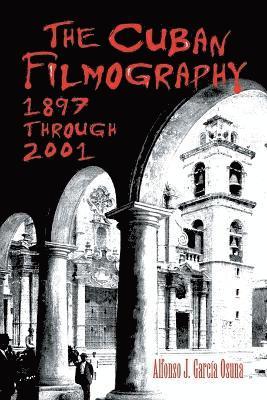
On January 24, 1897, an event took place that would change Cuban culture forever: the first moving pictures were shown in Havana. A couple of weeks later, on February 7, the first movie was filmed on the island. Since then, cinematography and Cuba have shared peculiar and innate connections, as their beginnings roughly coincide and Cubans are living in both the age of independence and revolution and the age of film.This work is a filmography of every Cuban film (including documentaries, shorts and cartoons) released from 1897, the first year films were shown and made in Cuba, through 2001. Each entry gives the original title of the film, the English translation of it, director, production company or companies, year of release, black and white or color, total running time, writing credits if the film is based on a story or novel, animation credits if the film is a cartoon, music credits if music has been written specifically for the film, cast credits, and a synopsis and short critical evaluation.The work also provides comments on the relationship between Cuban film and history, and the changes that have taken place over the years in themes, topics, methods, and other aspects of filmmaking in Cuba.
633 kr
Skickas
572 kr
Skickas inom 5-8 vardagar
643 kr
Skickas inom 10-15 vardagar
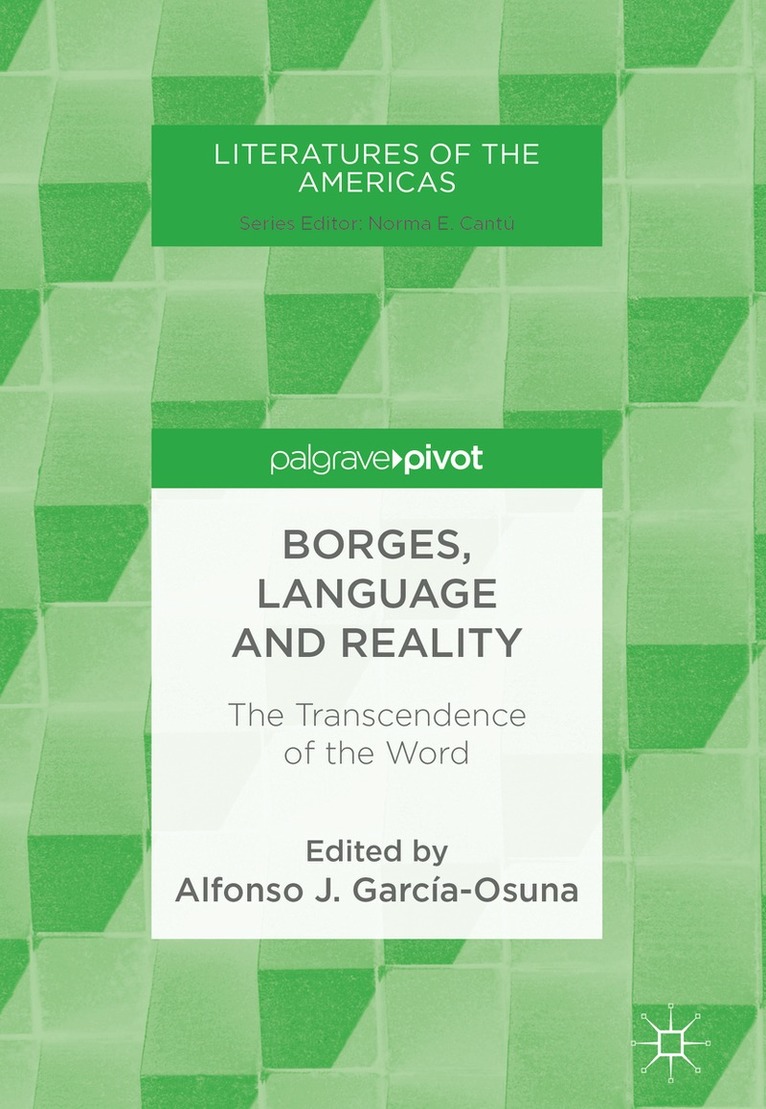
This book brings together the work of several scholars to shed light on the Argentine author Jorge Luis Borges' complex relationship with language and reality. A critical assumption driving the work is that there is, as Jaime Alazraki has put it, 'a genuine effort to overcome the narrowness that Western tradition has imposed as a master and measure of reality' in Borges' writing. That narrowness is in large measure a consequence of the chronic influence of positivist approaches to reality that rely on empirical evidence for any authentication of what is 'real'. This study shows that, in opposition to such restrictions, Borges saw in fiction, in literature, the most viable means of discussing reality in a pragmatic manner. Moreover, by scrutinising several of the author's works, it establishes signposts for considering the truly complicated relationship that Borges had with reality, one that intimately associates the 'real' with human perception, insight and language.
643 kr
Skickas inom 10-15 vardagar
This book brings together the work of several scholars to shed light on the Argentine author Jorge Luis Borges' complex relationship with language and reality.