Alfred L. Chan - Böcker
Visar alla böcker från författaren Alfred L. Chan. Handla med fri frakt och snabb leverans.
2 produkter
2 produkter
569 kr
Skickas inom 5-8 vardagar
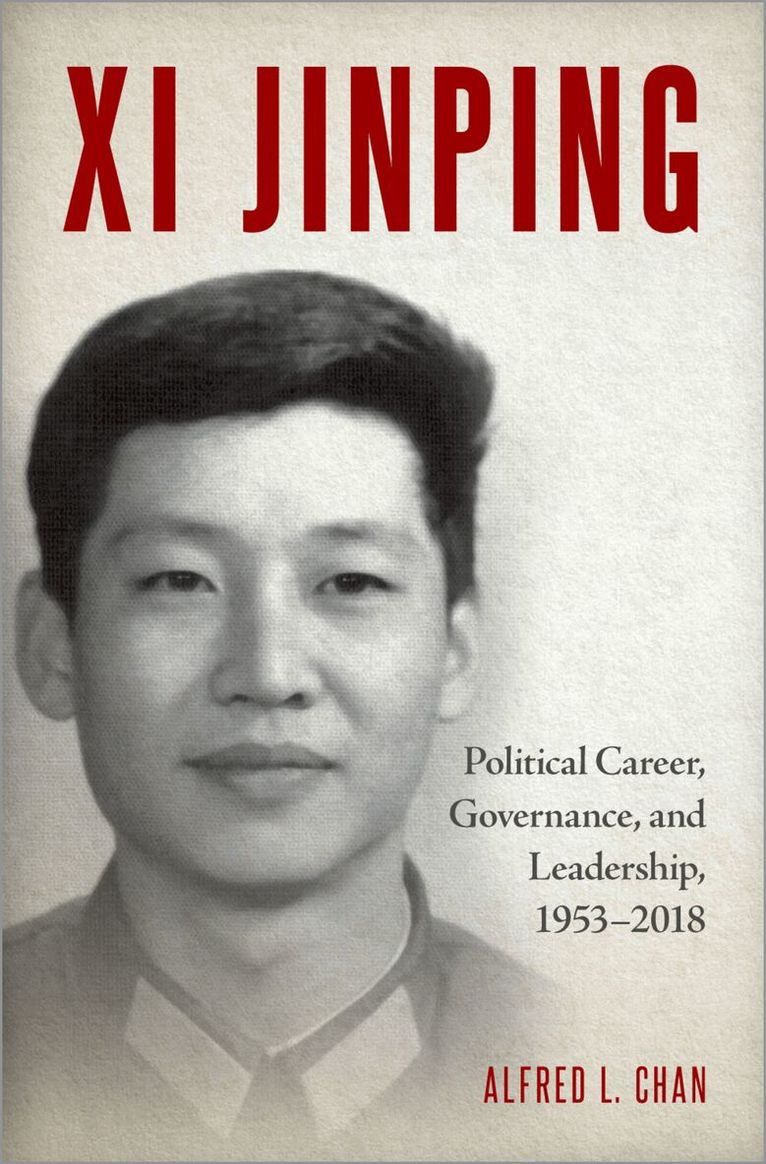
Xi Jinping has proven to be one of the most transformative political leaders of the twenty-first century. After a long career that began at the village level, he became General Secretary of the Chinese Communist Party and China's paramount leader in 2012. Few expected what would come next: a sweeping restructuring of China's political economy and political culture which included anti-corruption campaigns against the Party, and a full recalibration of China's relations with the outside world. In Xi Jinping, Alfred L. Chan offers a comprehensive account of his life and times.Chan discusses Xi's early years as a "princeling" and his ordeal during the tumultuous Cultural Revolution. Xi's privileged childhood was shattered during his youth when he was mercilessly tormented as a counter-revolutionary, declared a juvenile delinquent and pauper, ultimately becoming an ordinary peasant. But he clawed his way back up a ladder of success reflecting the changing zeitgeist of the times. He entered politics at age seventeen and accumulated administrative experiences at the county and provincial levels. Chan documents Xi's long path upward through the system, revealing how he built a reputation as an astute leader and a corruption fighter.The second half of the book focuses on the post-2012 period, and Chan pays particular attention to the context surrounding Xi's governance once he consolidated power. He makes clear that Xi's core guiding principle has been Leninism, which prioritizes disciplined party rule above all else. Throughout, Chan applies a range of social scientific theories drawn from comparative politics, international relations theory, public policy, and theories of governance to explain policymaking during an era of turbulent changes. Sweeping in scope and addressing virtually every aspect of Xi's life, this study will be essential for anyone seeking to understand not just Xi himself, but the overlapping global and domestic political contexts that shaped his career and style of rule.
Mao's Crusade
Politics and Policy Implementation in China's Great Leap Forward
Inbunden, Engelska, 2001
2 662 kr
Skickas inom 5-8 vardagar
During 1957 and 1958 Mao was seized by a vision that the Chinese economy could develop rapidly in leaps and bounds by relying on intuition and mass spontaneity. As a consequence, he single-handedly launched a colossal mobilization campaign called the Great Leap Forward, which featured many radical policy innovations, including the people's communes. This book is the first in-depth and original study of policy formulation and implementation during the Leap to link the roles of Mao, the central leaders, the ministries, and the province of Guangdong. Rejecting the theory that the Leap was an outcome of bureaucratic politics and competition, the study establishes beyond doubt the supreme and dominant position of Mao in initiating and commanding the Leap. Alfred L. Chan goes further than propounding a Mao-dominant model by documenting the strategic and tactical moves made by Mao in order to neutralize all opposition and to carry the day. He also discusses in detail the policy roles and input of other top leaders on whom the improvising Mao relied to feed his imagination and to flesh out his policies. In the chapters on the implementation of the Leap, Dr Chan explores how the ministries of Metallurgy and Agriculture were transformed from bureaucratic agencies into agents of mobilization, and how impossible targets forced them to keep up appearances by focussing on the rituals of mass mobilization. Similarly, other chapters on Guangdong show the simultaneously fervent, ritualistic, and desperate attempts to implement every hunch and intuition emanating from the centre. Exhaustive research using new material made available in the post-Mao era, as well as archives from the 1950s and 1960s, has yielded novel and original insights into the leader Mao, central decision-making, and policy implementation in the communist hierarchy.