Alfred Stein - Böcker
Visar alla böcker från författaren Alfred Stein. Handla med fri frakt och snabb leverans.
6 produkter
6 produkter
963 kr
Skickas inom 10-15 vardagar
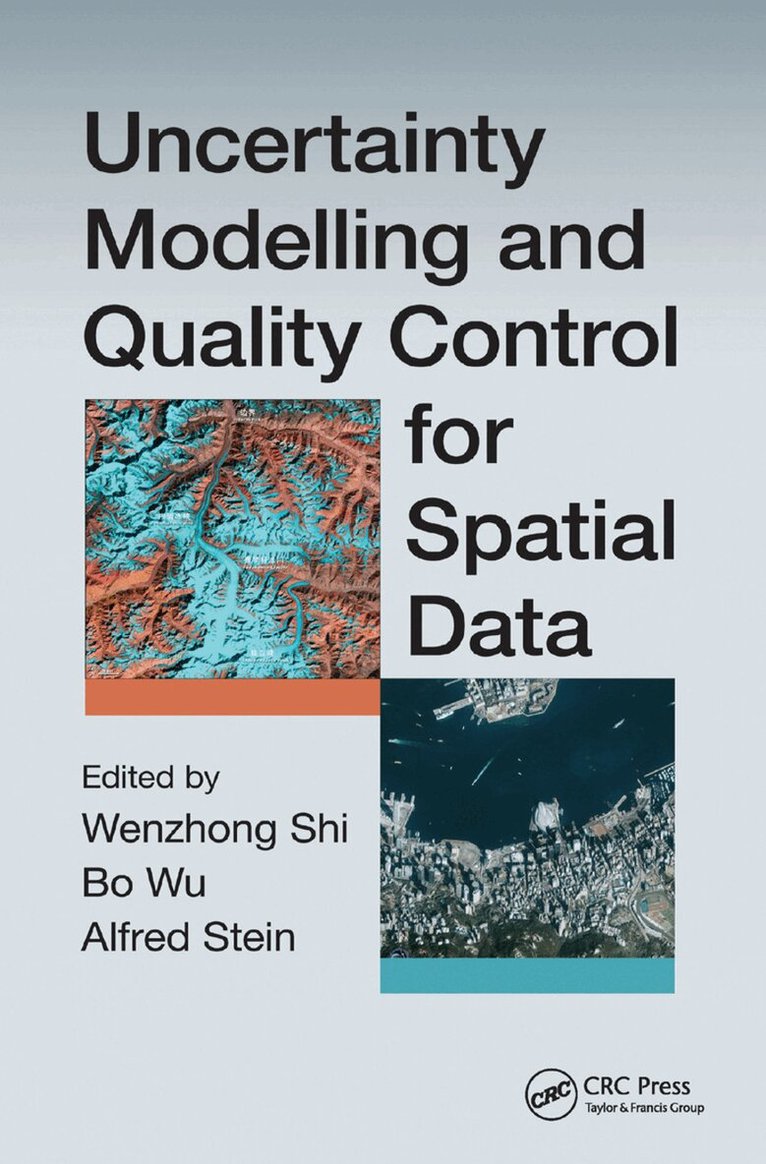
Offers New Insight on Uncertainty ModellingFocused on major research relative to spatial information, Uncertainty Modelling and Quality Control for Spatial Data introduces methods for managing uncertainties—such as data of questionable quality—in geographic information science (GIS) applications. By using original research, current advancement, and emerging developments in the field, the authors compile various aspects of spatial data quality control. From multidimensional and multi-scale data integration to uncertainties in spatial data mining, this book launches into areas that are rarely addressed. Topics covered include: New developments of uncertainty modelling, quality control of spatial data, and related research issues in spatial analysisSpatial statistical solutions in spatial data qualityEliminating systematic error in the analytical results of GIS applicationsA data quality perspective for GIS function workflow designData quality in multi-dimensional integrationResearch challenges on data quality in the integration and analysis of data from multiple sources A new approach for imprecision management in the qualitative data warehouseA multi-dimensional quality assessment of photogrammetric and LiDAR datasets based on a vector approachAn analysis on the uncertainty of multi-scale representation for street-block settlement Uncertainty Modelling and Quality Control for Spatial Data serves university students, researchers and professionals in GIS, and investigates the uncertainty modelling and quality control in multi-dimensional data integration, multi-scale data representation, national or regional spatial data products, and new spatial data mining methods.
991 kr
Skickas inom 10-15 vardagar
Describes the State-of-the-Art in Spatial Data Mining, Focuses on Data QualitySubstantial progress has been made toward developing effective techniques for spatial information processing in recent years. This science deals with models of reality in a GIS, however, and not with reality itself. Therefore, spatial information processes are often imprecise, allowing for much interpretation of abstract figures and data. Quality Aspects in Spatial Data Mining introduces practical and theoretical solutions for making sense of the often chaotic and overwhelming amount of concrete data available to researchers. In this cohesive collection of peer-reviewed chapters, field authorities present the latest field advancements and cover such essential areas as data acquisition, geoinformation theory, spatial statistics, and dissemination. Each chapter debuts with an editorial preview of each topic from a conceptual, applied, and methodological point of view, making it easier for researchers to judge which information is most beneficial to their work. Chapters Evolve From Error Propagation and Spatial Statistics to Address Relevant ApplicationsThe book advises the use of granular computing as a means of circumventing spatial complexities. This counter-application to traditional computing allows for the calculation of imprecise probabilities – the kind of information that the spatial information systems community wrestles with much of the time.Under the editorial guidance of internationally respected geoinformatics experts, this indispensable volume addresses quality aspects in the entire spatial data mining process, from data acquisition to end user. It also alleviates what is often field researchers’ most daunting task by organizing the wealth of concrete spatial data available into one convenient source, thereby advancing the frontiers of spatial inf
Statistics for the Environment, Statistical Aspects of Health and the Environment
Inbunden, Engelska, 1998
4 687 kr
Skickas inom 7-10 vardagar
In line with the SPRUCE initiative, concerned as it is withStatistics in Public Resources, Utilities and Care of theEnvironment, the recent conference brought together leading workersfrom a widely multidisciplinary background. The SPRUCE IV programmewas divided into five thematic sections:* Small Area Studies and Disease Mapping* Atmospheric Pollution Studies* Disease Risks and Social Effects* Effects of Radiation* Agriculture and the Food ChainProviding a stimulating overview of current methods and developingresearch trends across the field of Statistical Aspects of Healthand the Environment, this volume presents a co-ordinated andstructured review of the recent SPRUCE conference. This volume isthe fourth in the Wiley Series on Statistics and the Environment.Environmental issues continue to be of major concern to scientistsand those involved with policy formulation. The concisepresentation of arguments, statistical models and their applicationwill make this volume essential reading.
2 358 kr
Skickas inom 10-15 vardagar
Describes the State-of-the-Art in Spatial Data Mining, Focuses on Data QualitySubstantial progress has been made toward developing effective techniques for spatial information processing in recent years. This science deals with models of reality in a GIS, however, and not with reality itself. Therefore, spatial information processes are often imprecise, allowing for much interpretation of abstract figures and data. Quality Aspects in Spatial Data Mining introduces practical and theoretical solutions for making sense of the often chaotic and overwhelming amount of concrete data available to researchers. In this cohesive collection of peer-reviewed chapters, field authorities present the latest field advancements and cover such essential areas as data acquisition, geoinformation theory, spatial statistics, and dissemination. Each chapter debuts with an editorial preview of each topic from a conceptual, applied, and methodological point of view, making it easier for researchers to judge which information is most beneficial to their work. Chapters Evolve From Error Propagation and Spatial Statistics to Address Relevant ApplicationsThe book advises the use of granular computing as a means of circumventing spatial complexities. This counter-application to traditional computing allows for the calculation of imprecise probabilities – the kind of information that the spatial information systems community wrestles with much of the time.Under the editorial guidance of internationally respected geoinformatics experts, this indispensable volume addresses quality aspects in the entire spatial data mining process, from data acquisition to end user. It also alleviates what is often field researchers’ most daunting task by organizing the wealth of concrete spatial data available into one convenient source, thereby advancing the frontiers of spatial inf
2 088 kr
Skickas inom 10-15 vardagar
Offers New Insight on Uncertainty ModellingFocused on major research relative to spatial information, Uncertainty Modelling and Quality Control for Spatial Data introduces methods for managing uncertainties—such as data of questionable quality—in geographic information science (GIS) applications. By using original research, current advancement, and emerging developments in the field, the authors compile various aspects of spatial data quality control. From multidimensional and multi-scale data integration to uncertainties in spatial data mining, this book launches into areas that are rarely addressed. Topics covered include: New developments of uncertainty modelling, quality control of spatial data, and related research issues in spatial analysisSpatial statistical solutions in spatial data qualityEliminating systematic error in the analytical results of GIS applicationsA data quality perspective for GIS function workflow designData quality in multi-dimensional integrationResearch challenges on data quality in the integration and analysis of data from multiple sources A new approach for imprecision management in the qualitative data warehouseA multi-dimensional quality assessment of photogrammetric and LiDAR datasets based on a vector approachAn analysis on the uncertainty of multi-scale representation for street-block settlement Uncertainty Modelling and Quality Control for Spatial Data serves university students, researchers and professionals in GIS, and investigates the uncertainty modelling and quality control in multi-dimensional data integration, multi-scale data representation, national or regional spatial data products, and new spatial data mining methods.
605 kr
Skickas inom 3-6 vardagar