Alfredo Morabia - Böcker
Visar alla böcker från författaren Alfredo Morabia. Handla med fri frakt och snabb leverans.
6 produkter
6 produkter
1 307 kr
Skickas inom 5-8 vardagar
Searching for the causes of mental disorders is as exciting as it is complex. The relationship between pathophysiology and its overt manifestations is exceedingly intricate, and often the causes of a disorder are elusive at best. This book is an invaluable resource for anyone trying to track these causes, whether they be clinical researchers, public health practitioners, or psychiatric epidemiologists-in-training. Uniting theory and practice in very clear language, it makes a wonderful contribution to both epidemiologic and psychiatric research. Rather than attempting to review the descriptive epidemiology of mental disorders, this book gives a much more dynamic exposition of the thinking and techniques used to establish it.Starting out by tracing the brief history of psychiatric epidemiology, the book describes the study of risk factors as causes of mental disorders. Subsequent sections discuss approaches to investigation of biologic, genetic or social causes and the statistical analysis of study results. The book concludes by following some of the problems involved in the search for genetic causes of mental disorders, and more complex causal relationships.
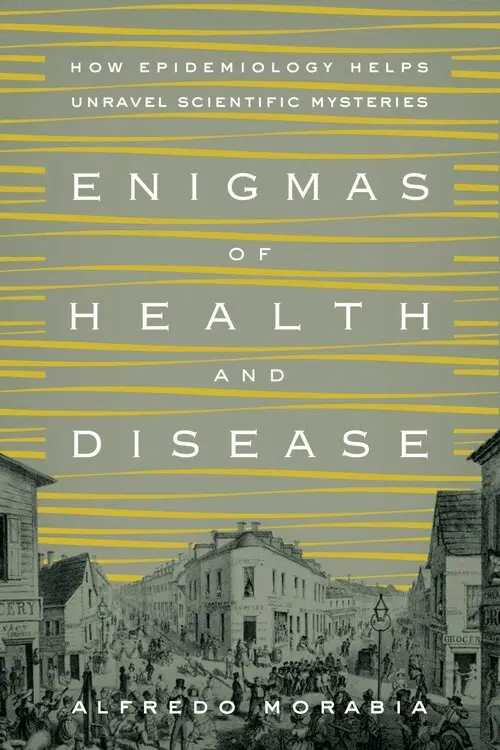
Enigmas of Health and Disease
How Epidemiology Helps Unravel Scientific Mysteries
Inbunden, Engelska, 2014
2 191 kr
Skickas inom 3-6 vardagar
This book is the principal account of epidemiology's role in the development of effective measures to identify, prevent, and treat diseases. Throughout history, epidemiologists have challenged conventional knowledge, elucidating mysteries of causality and paving the way for remedies. From the outbreak of the bubonic plague, cholera, and cancer to the search for an effective treatment of AIDS and the origins of Alzheimer's disease, epidemiological thought has been crucial in shaping our understanding of population health issues. Alfredo Morabia's lucid retelling sheds new light on the historical triumphs of epidemiological research and allows for contemporary readers, patients, and nontechnical audiences to make sense of the immense amount of health information disseminated by the media. By drawing from both historical and contemporary sources, Morabia provides the reader with the tools to differentiate health beliefs from health knowledge. The book covers important topics, including the H1N1 swine flu epidemic, breast cancer, the effects of aspirin, and the link between cigarettes and lung cancer.
Enigmas of Health and Disease
How Epidemiology Helps Unravel Scientific Mysteries
Häftad, Engelska, 2014
610 kr
Skickas inom 3-6 vardagar
This book is the principal account of epidemiology's role in the development of effective measures to identify, prevent, and treat diseases. Throughout history, epidemiologists have challenged conventional knowledge, elucidating mysteries of causality and paving the way for remedies. From the outbreak of the bubonic plague, cholera, and cancer to the search for an effective treatment of AIDS and the origins of Alzheimer's disease, epidemiological thought has been crucial in shaping our understanding of population health issues. Alfredo Morabia's lucid retelling sheds new light on the historical triumphs of epidemiological research and allows for contemporary readers, patients, and nontechnical audiences to make sense of the immense amount of health information disseminated by the media. By drawing from both historical and contemporary sources, Morabia provides the reader with the tools to differentiate health beliefs from health knowledge. The book covers important topics, including the H1N1 swine flu epidemic, breast cancer, the effects of aspirin, and the link between cigarettes and lung cancer.
387 kr
Skickas inom 7-10 vardagar
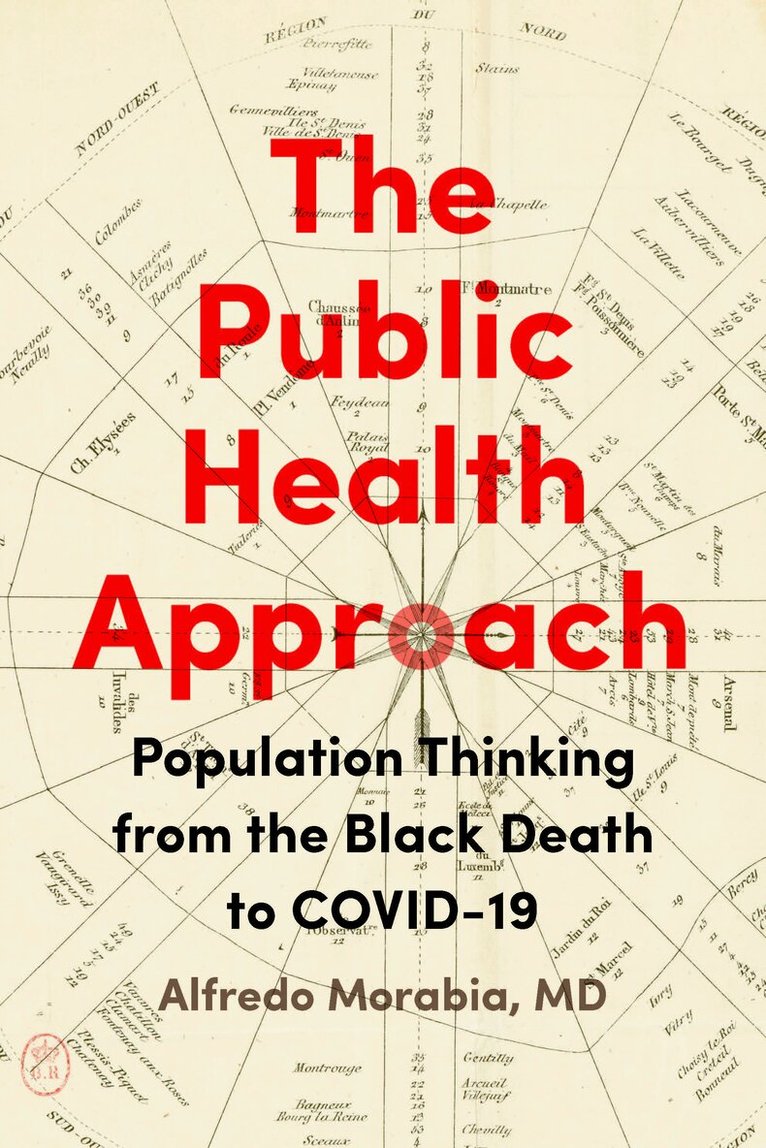
How public health's distinctive way of approaching human health has evolved by trial and error over a series of historic epidemics.The field of public health has developed a distinctive way of approaching human health by focusing on the health of the population to improve the health of the individual. In The Public Health Approach, Dr. Alfredo Morabia narrates the history of this population thinking and how it has helped address and combat a series of historic epidemics.Morabia explains how this approach to public health has historically developed in response to major crises like the plague, smallpox, cholera, tuberculosis, influenza, HIV/AIDS, and the COVID-19 pandemic. By comparing population health outcomes, this public health approach helps reveal and address behavioral and social determinants of health. Through these examples, Morabia demonstrates that individual health outcomes are intimately tied to the health of the population.Morabia describes how public health professionals think and respond to crises by using scientific methods that uncover patterns that would otherwise remain hidden when focused on individual health or anecdotal data. The COVID-19 pandemic—and the successes and failures surrounding our response to it—reinforces the urgent need for the public health approach. This book is an engaging primer on the history of public health and its distinctive approach to understanding and intervening in human health.
570 kr
Skickas inom 3-6 vardagar
1 528 kr
Skickas inom 10-15 vardagar
Methods, just as diseases or scientists, have their own history. It is important for scientists to be aware of the genesis of the methods they use and of the context in which they were developed. A History of Epidemiologic Methods and Concepts is based on a collection of contributions which appeared in "SPM International Journal of Public Health", starting in January 2001. The contributions focus on the historical emergence of current epidemiological methods and their relative importance at different points in time, rather than on specific achievements of epidemiology in controlling plagues such as cholera, tuberculosis, malaria, typhoid fever, or lung cancer. The papers present the design of prospective and retrospective studies, and the concepts of bias, confounding, and interaction. The compilation of articles is complemented by an introduction and comments by Prof Alfredo Morabia which puts them in the context of current epidemiological research.