Ali Abdullatif Ahmida – författare
Visar alla böcker från författaren Ali Abdullatif Ahmida. Handla med fri frakt och snabb leverans.
10 produkter
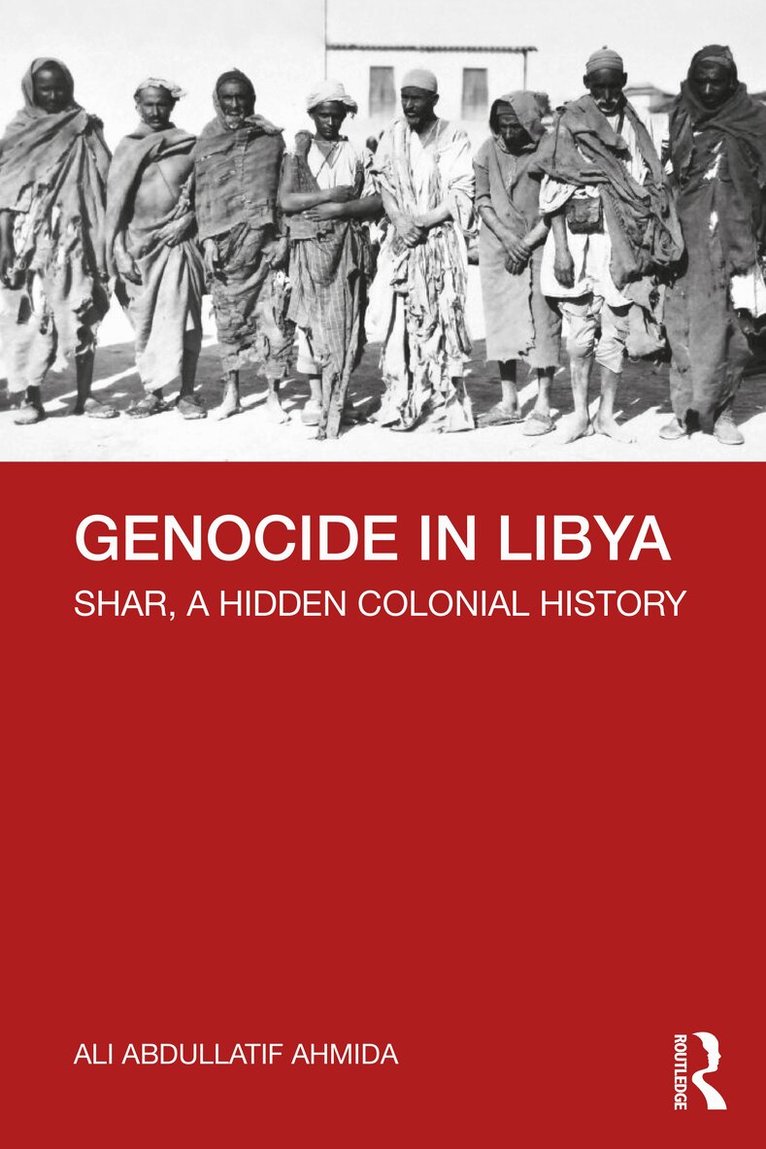
Genocide in Libya
Shar, a Hidden Colonial History
Häftad, 2020
651 kr
Lägg i varukorg
Winner of the L. Carl Brown AIMS Book Prize in North African Studies 2022This original research on the forgotten Libyan genocide specifically recovers the hidden history of the fascist Italian concentration camps (1929–1934) through the oral testimonies of Libyan survivors. This book links the …
Genocide in Libya
Shar, a Hidden Colonial History
Inbunden, 2020
2381 kr
Lägg i varukorg
Winner of the L. Carl Brown AIMS Book Prize in North African Studies 2022This original research on the forgotten Libyan genocide specifically recovers the hidden history of the fascist Italian concentration camps (1929–1934) through the oral testimonies of Libyan survivors. This book links the …
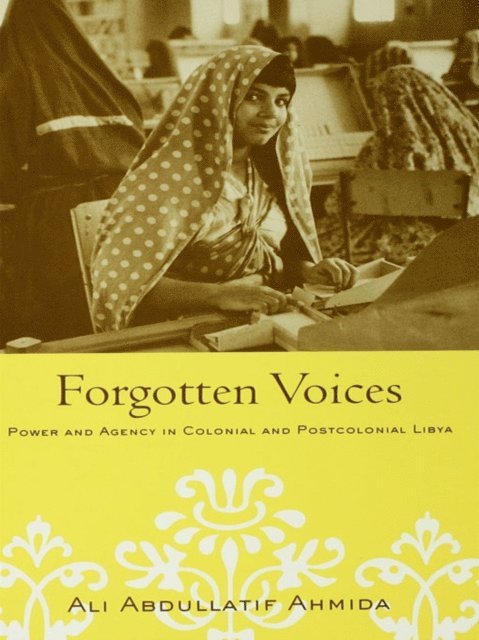
Forgotten Voices
Power and Agency in Colonial and Postcolonial Libya
Inbunden, 2005
2820 kr
Lägg i varukorg
In Forgotten Voices, Ali Abdullatif Ahmida employs archival research, oral interviews and comparative analysis to rethink the history of colonial and nationalist categories and analyses of modern Libya.
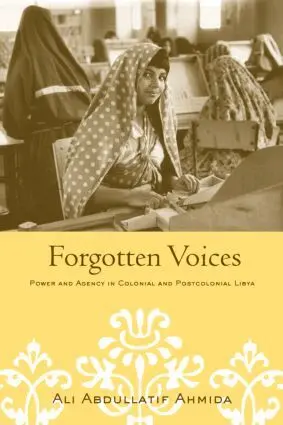
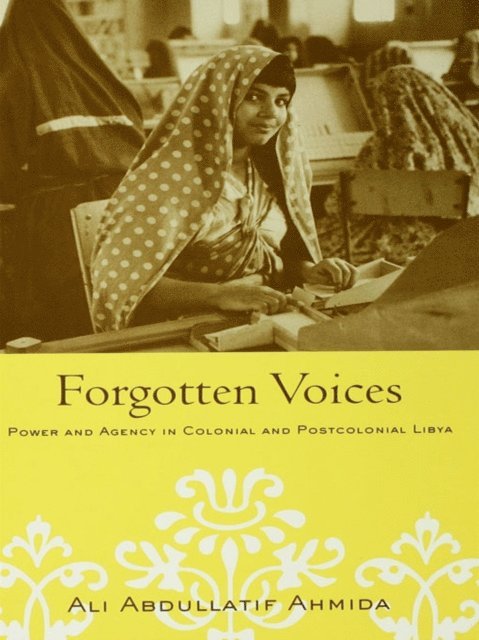
Forgotten Voices
Power and Agency in Colonial and Postcolonial Libya
Häftad, 2005
770 kr
Lägg i varukorg
In Forgotten Voices, Ali Abdullatif Ahmida employs archival research, oral interviews and comparative analysis to rethink the history of colonial and nationalist categories and analyses of modern Libya.
Genocide in Libya
Shar, a Hidden Colonial History
E-bok, 2020
678 kr
Lägg i varukorg
Winner of the L. Carl Brown AIMS Book Prize in North African Studies 2022 This original research on the forgotten Libyan genocide specifically recovers the hidden history of the fascist Italian concentration camps (1929–1934) through the oral testimonies of Libyan survivors. This book links the …
Genocide in Libya
Shar, a Hidden Colonial History
E-bok, 2020
678 kr
Lägg i varukorg
Winner of the L. Carl Brown AIMS Book Prize in North African Studies 2022 This original research on the forgotten Libyan genocide specifically recovers the hidden history of the fascist Italian concentration camps (1929–1934) through the oral testimonies of Libyan survivors. This book links the …
Forgotten Voices
Power and Agency in Colonial and Postcolonial Libya
E-bok, 2005
864 kr
Lägg i varukorg
In Forgotten Voices, Ali Abdullatif Ahmida employs archival research, oral interviews and comparative analysis to rethink the history of colonial and nationalist categories and analyses of modern Libya.
Forgotten Voices
Power and Agency in Colonial and Postcolonial Libya
E-bok, 2005
910 kr
Lägg i varukorg
In Forgotten Voices, Ali Abdullatif Ahmida employs archival research, oral interviews and comparative analysis to rethink the history of colonial and nationalist categories and analyses of modern Libya.
Making of Modern Libya
Inbunden, 2009
1144 kr
Tillfälligt slut
Second edition of the provocative study analyzing the social, cultural, and historical roots of modern Libya.The Making of Modern Libya is a thorough examination of the social, cultural, and historical background of modern Libya. Ali Abdullatif Ahmida examines the reaction of the ordinary Libyan …
Making of Modern Libya
Häftad, 2011
413 kr
Tillfälligt slut
Second edition of the provocative study analyzing the social, cultural, and historical roots of modern Libya.The Making of Modern Libya is a thorough examination of the social, cultural, and historical background of modern Libya. Ali Abdullatif Ahmida examines the reaction of the ordinary Libyan …