Alice Cunha - Böcker
Visar alla böcker från författaren Alice Cunha. Handla med fri frakt och snabb leverans.
4 produkter
4 produkter
1 749 kr
Skickas inom 7-10 vardagar
After World War II, with the triumph of multilateralism, several international organizations were created, including two which would be of special importance for the external funding of the Portuguese economy in the second half of the twentieth century and in the early twenty-first. The European Union and the International Monetary Fund have been responsible for providing large amounts of funding, both in periods of economic development and during times of financial crisis. This contributory volume provides a thorough analysis on specific case studies: the Marshall Plan (1949-1952); the three IMF interventions (in the seventies, eighties and the 2011 bailout); the implementation of the first EU funds Portugal received prior to accession; and the debate on the new framework for European funds for the period 2021-2027. These case study analyses provide an overview of the legal, economic and financial implications that such external funding has on the country at different times and in different economic contexts. Of particular import at all times is the public finance legal framework, and this is especially the case for the new European funding structures, which has attracted some criticism. And for any future IMF financial assistance and its political implementation implications. Portuguese Economic Development and External Funding in the Modern Era provides important insights into economic development, crisis management, financial assistance and European investment funds. While the work is Portuguese-centred, the topics investigated and the means of analysis adopted are applicable to other countries. This is the first book to address economic development and external funding, and it will inevitably be used as a template for future research.
1 276 kr
Skickas inom 10-15 vardagar
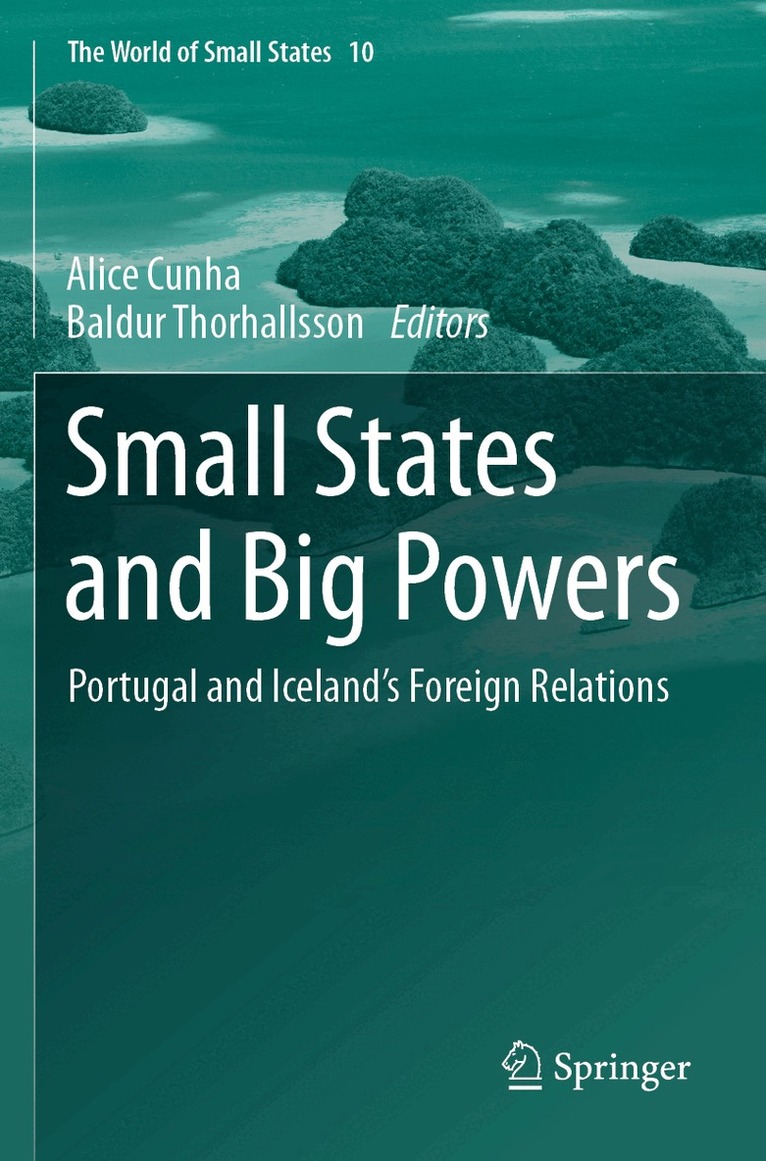
Foreign policy is one of the most complex policies of every state, and Portugal and Iceland are no exception. The “Small States and Big Powers: Portugal and Iceland’s Foreign Relations” book analyses the importance of relations with big powers or regional and international organisations from a shelter theory perspective, detailing the degree of political, economic and societal shelter that they have provided to Portugal and to Iceland over time.Despite having followed distinct paths, Portugal and Iceland have some important similarities in their foreign policy, namely in relation to the European and the Atlantic dimensions and their participation in regional organisations. The book examines their decisions to join or not to join regional organisations, and both countries’ bilateral relations with other important parts of the world, namely Africa, the Nordic states and China. This book compares the foreign policies of Portugal and Iceland considering their commonly identified status as small states and place them within the shelter theory framework, and its findings indicate that both countries need to balance their international relations with shelter provided by different actors. Their size and political and economic capabilities matter in their bilateral and multilateral relations. It is therefore in both countries’ interest to maintain strong cooperation not only with big powers, but also regional and international organisations, depending on their field of action, in order to flourish politically, economically and socially.
1 276 kr
Skickas inom 10-15 vardagar
Foreign policy is one of the most complex policies of every state, and Portugal and Iceland are no exception. The “Small States and Big Powers: Portugal and Iceland’s Foreign Relations” book analyses the importance of relations with big powers or regional and international organisations from a shelter theory perspective, detailing the degree of political, economic and societal shelter that they have provided to Portugal and to Iceland over time.Despite having followed distinct paths, Portugal and Iceland have some important similarities in their foreign policy, namely in relation to the European and the Atlantic dimensions and their participation in regional organisations. The book examines their decisions to join or not to join regional organisations, and both countries’ bilateral relations with other important parts of the world, namely Africa, the Nordic states and China. This book compares the foreign policies of Portugal and Iceland considering their commonly identified status as small states and place them within the shelter theory framework, and its findings indicate that both countries need to balance their international relations with shelter provided by different actors. Their size and political and economic capabilities matter in their bilateral and multilateral relations. It is therefore in both countries’ interest to maintain strong cooperation not only with big powers, but also regional and international organisations, depending on their field of action, in order to flourish politically, economically and socially.
Palgrave Handbook of European Union Enlargement and Pre-Accession Assistance
Inbunden, Engelska, 2026
1 848 kr
Skickas inom 10-15 vardagar
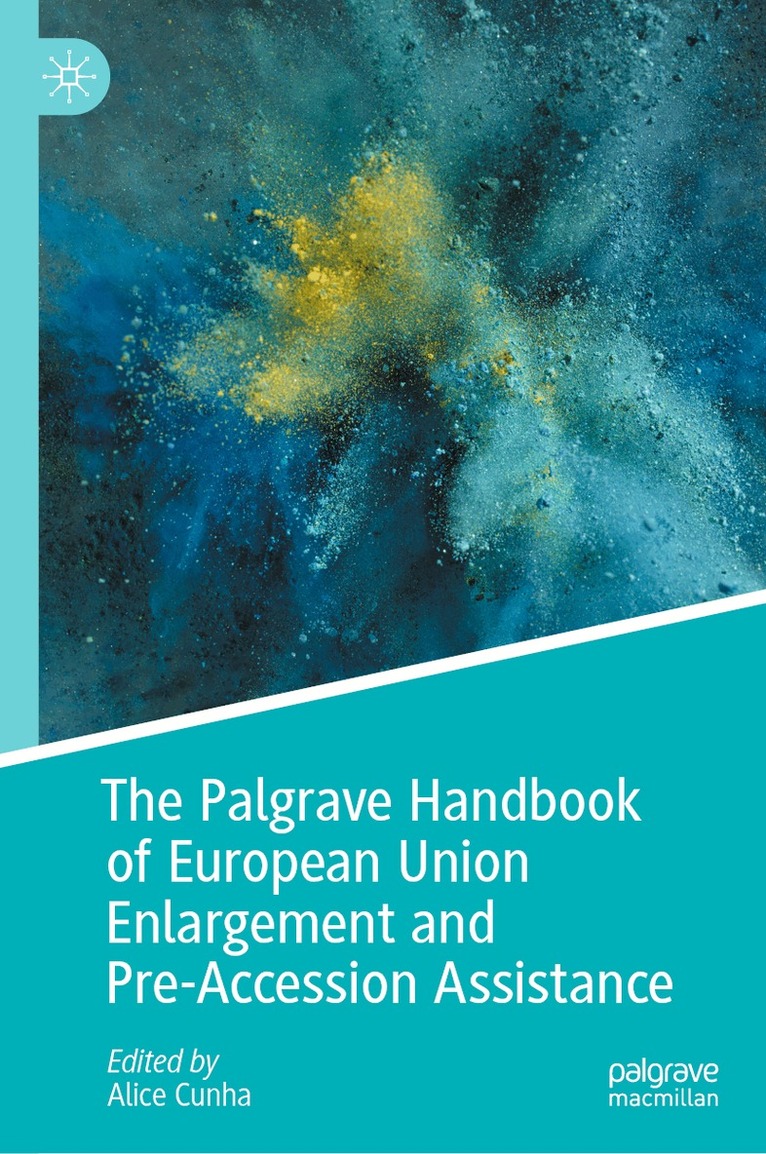
Within enlargement policy, a distinctive feature is pre-accession assistance funding. Although European funds originated at the very beginning of the European integration process, each enlargement round has prompted adaptations in European Union (EU) funding, whose history is closely intertwined with enlargement policy and new EU memberships.The Palgrave Handbook of European Union Enlargement and Pre-Accession Assistance explores the design, evolution, implementation, and outcomes of pre-accession assistance across multiple enlargement rounds and candidate countries, and offers a unique thematic focus on how pre-accession assistance functioned across time, countries, and political settings. This pioneering handbook is the first publication to compare past and present recipients of pre-accession assistance, highlighting both similarities and differences in each case study and enabling cross-country comparisons. It critically analyzes how pre-accession assistance instruments both reflected and shaped the broader EU policy architecture and influenced candidate countries’ political and developmental trajectories on their path to EU membership.