Alice Orchiston – författare
Visar alla böcker från författaren Alice Orchiston. Handla med fri frakt och snabb leverans.
3 produkter
3 produkter
E-bok
PDF, Engelska, 20201 228 kr
Läs direkt efter köp
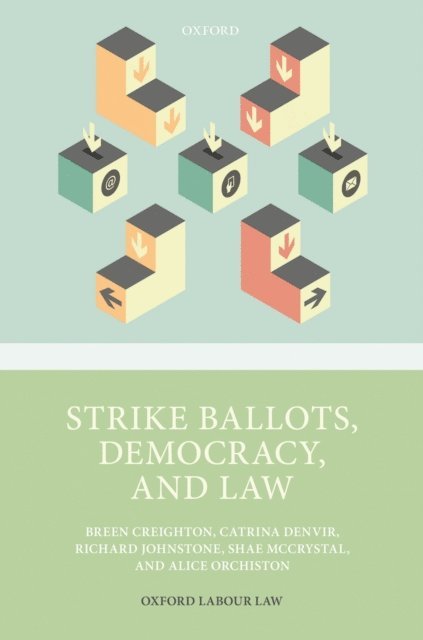
International law and most national legal systems recognize the right to strike as a fundamental human right. However, the most common qualification for a strike is that the action must first be approved by ballot. These types of requirements are often said to be necessary to protect the democratic rights of the workers - the so-called democratic imperative. But is that truly their aim?This book draws on detailed empirical study of the Australian legislative provisions for pre-strike ballots; a comparative analysis of law and practice in a range of countries including Canada, South Africa, the United States, and the United Kingdom; and the approaches of the supervisory bodies of the International Labour Organisation to evaluate the true purpose and effect of the ballot requirement. While in some cases the ballot requirement provided additional bargaining leverage for unions,overall, the study showed that the principle purpose of ballot requirements is to curtail strikes rather than vindicate the democratic imperative it claims to support.Exploring collective bargaining and union democracy, this is an essential title for those involved in or studying labour law. This book also demonstrates the fundamental shortcomings of ballot regimes, and provides and accessible exploration of the operation of said regimes, which makes this a helpful tool for unionists to understand their rights as workers. It also considers significant policy questions in the field and is relevant in the respect of the international labour lawregime.
E-bok
Engelska, 20201 217 kr
Läs direkt efter köp
International law and most national legal systems recognize the right to strike as a fundamental human right. However, the most common qualification for a strike is that the action must first be approved by ballot. These types of requirements are often said to be necessary to protect the democratic rights of the workers - the so-called democratic imperative. But is that truly their aim?This book draws on detailed empirical study of the Australian legislative provisions for pre-strike ballots; a comparative analysis of law and practice in a range of countries including Canada, South Africa, the United States, and the United Kingdom; and the approaches of the supervisory bodies of the International Labour Organisation to evaluate the true purpose and effect of the ballot requirement. While in some cases the ballot requirement provided additional bargaining leverage for unions,overall, the study showed that the principle purpose of ballot requirements is to curtail strikes rather than vindicate the democratic imperative it claims to support.Exploring collective bargaining and union democracy, this is an essential title for those involved in or studying labour law. This book also demonstrates the fundamental shortcomings of ballot regimes, and provides and accessible exploration of the operation of said regimes, which makes this a helpful tool for unionists to understand their rights as workers. It also considers significant policy questions in the field and is relevant in the respect of the international labour lawregime.
Inbunden, Engelska, 2020
1 404 kr
Skickas inom 5-8 vardagar
International law and most national legal systems recognize the right to strike as a fundamental human right. However, the most common qualification for a strike is that the action must first be approved by ballot. These types of requirements are often said to be necessary to protect the democratic rights of the workers - the so-called democratic imperative. But is that truly their aim?This book draws on detailed empirical study of the Australian legislative provisions for pre-strike ballots; a comparative analysis of law and practice in a range of countries including Canada, South Africa, the United States, and the United Kingdom; and the approaches of the supervisory bodies of the International Labour Organisation to evaluate the true purpose and effect of the ballot requirement. While in some cases the ballot requirement provided additional bargaining leverage for unions, overall, the study showed that the principle purpose of ballot requirements is to curtail strikes rather than vindicate the democratic imperative it claims to support. Exploring collective bargaining and union democracy, this is an essential title for those involved in or studying labour law. This book also demonstrates the fundamental shortcomings of ballot regimes, and provides and accessible exploration of the operation of said regimes, which makes this a helpful tool for unionists to understand their rights as workers. It also considers significant policy questions in the field and is relevant in the respect of the international labour law regime.