Alice P. Wright – författare
Visar alla böcker från författaren Alice P. Wright. Handla med fri frakt och snabb leverans.
5 produkter
5 produkter
E-bok
PDF, Engelska, 20131 336 kr
Läs direkt efter köp
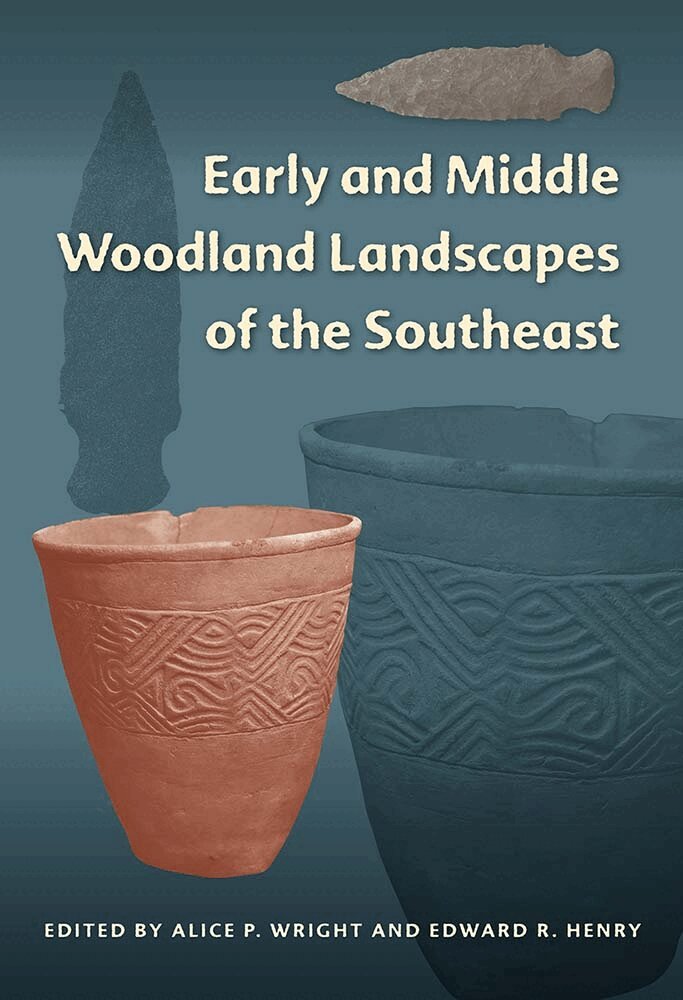
The Early and Middle Woodland periods (1000 BCE-500 CE) were remarkable for their level of culture contact and interaction in pre-Columbian North America. This volume, featuring case studies from Georgia, Florida, North Carolina, Mississippi, Kentucky, Alabama, and Tennessee, sheds new light on the various approaches to the study of the dynamic and complex social landscapes of these eras. Essays by well-known and up-and-coming scholars incorporate empirical data with social organizational concepts such as ritual, cultural, and social places, highlighting the variability and common themes in the relationships between people, landscapes, and the built environment that characterize this period of North American native life.
Häftad, Engelska, 2019
333 kr
Skickas inom 10-15 vardagar
Fourteen in-depth case studies incorporate empirical data with theoretical concepts such as ritual, aggregation, and place-making, highlighting the variability and common themes in the relationships between people, landscapes, and the built environment that characterize this period of North American native life in the Southeast.
E-bok
Engelska, 2019501 kr
Läs direkt efter köp
Fourteen in-depth case studies incorporate empirical data with theoretical concepts such as ritual, aggregation, and place-making, highlighting the variability and common themes in the relationships between people, landscapes, and the built environment that characterize this period of North American native life in the Southeast.
Inbunden, Engelska, 2019
622 kr
Skickas inom 5-8 vardagar
Presents archaeological data to explore the concept of glocalization as applied in the Hopewell world.Originally coined in the context of twentieth-century business affairs, the term glocalization describes how the global circulation of products, services, or ideas requires accommodations to local conditions, and, in turn, how local conditions can significantly impact global markets and relationships. Garden Creek: The Archaeology of Interaction in Middle Woodland Appalachia presents glocalization as a concept that can help explain the dynamics of cross-cultural interaction not only in the present but also in the deep past.Alice P. Wright uses the concept of glocalization as a framework for understanding the mutual contributions of large-scale and small-scale processes to prehistoric transformations. Using geophysical surveys, excavations, and artifact analysis, Wright shows how Middle Woodland cultural contact wrought changes in religious practices, such as mound building and the crafting of ritual objects for exchange or pilgrimage.Wright presents and interprets original archaeological data from the Garden Creek site in western North Carolina as part of a larger study of the Hopewell Interaction Sphere, a well-known but poorly understood episode of cross-cultural interaction that linked communities across eastern North America during the Middle Woodland period. Although Hopewellian culture contact did not encompass the entire planet, it may have been 'global' to those who experienced and created it, as it subsumed much of the world as Middle Woodland people knew it. Reimagining Hopewell as an episode of glocalization more fully accounts for the diverse communities, interests, and processes involved in this 'global' network.
E-bok
Engelska, 20191 005 kr
Läs direkt efter köp
A Dan Josselyn Memorial Publication Presents archaeological data to explore the concept of glocalization as applied in the Hopewell world Originally coined in the context of twentieth-century business affairs, the term glocalization describes how the global circulation of products, services, or ideas requires accommodations to local conditions, and, in turn, how local conditions can significantly impact global markets and relationships. Garden Creek: The Archaeology of Interaction in Middle Woodland Appalachia presents glocalization as a concept that can help explain the dynamics of cross-cultural interaction not only in the present but also in the deep past. Alice P. Wright uses the concept of glocalization as a framework for understanding the mutual contributions of large-scale and small-scale processes to prehistoric transformations. Using geophysical surveys, excavations, and artifact analysis, Wright shows how Middle Woodland cultural contact wrought changes in religious practices, such as mound building and the crafting of ritual objects for exchange or pilgrimage. Wright presents and interprets original archaeological data from the Garden Creek site in western North Carolina as part of a larger study of the Hopewell Interaction Sphere, a well-known but poorly understood episode of cross-cultural interaction that linked communities across eastern North America during the Middle Woodland period. Although Hopewellian culture contact did not encompass the entire planet, it may have been “global” to those who experienced and created it, as it subsumed much of the world as Middle Woodland people knew it. Reimagining Hopewell as an episode of glocalization more fully accounts for the diverse communities, interests, and processes involved in this “global” network.