Alina von Davier - Böcker
Visar alla böcker från författaren Alina von Davier. Handla med fri frakt och snabb leverans.
4 produkter
4 produkter
Research for Practical Issues and Solutions in Computerized Multistage Testing
Inbunden, Engelska, 2024
1 963 kr
Skickas inom 10-15 vardagar
This volume presents a comprehensive collection of the latest research findings supporting the current and future implementations and applications of computerized multistage testing (MST).As a sequel to the widely acclaimed Computerized Multistage Testing: Theory and Applications (2014) by Yan, von Davier, and Lewis, this volume delves into the experiences, considerations, challenges, and lessons learned over the past years. It also offers practical approaches and solutions to the issues encountered. The topics covered include purposeful MST designs, practical approaches for optimal design, assembly strategies for accuracy and efficiency, hybrid designs, MST with natural language processing, practical routing considerations and methodologies, item calibration and proficiency estimation methods, routing and classification accuracy, added value of process data, prediction and evaluation of MST performance, cognitive diagnostic MST, differential item functioning, robustness of statistical methods, simulations, test security, the new digital large-scale Scholastic Aptitude Test, software for practical assessment and simulations, artificial intelligence impact, and the future of adaptive MST.This volume is intended for students, faculty, researchers, practitioners, and education officers in the fields of educational measurement and evaluation in the United States and internationally.
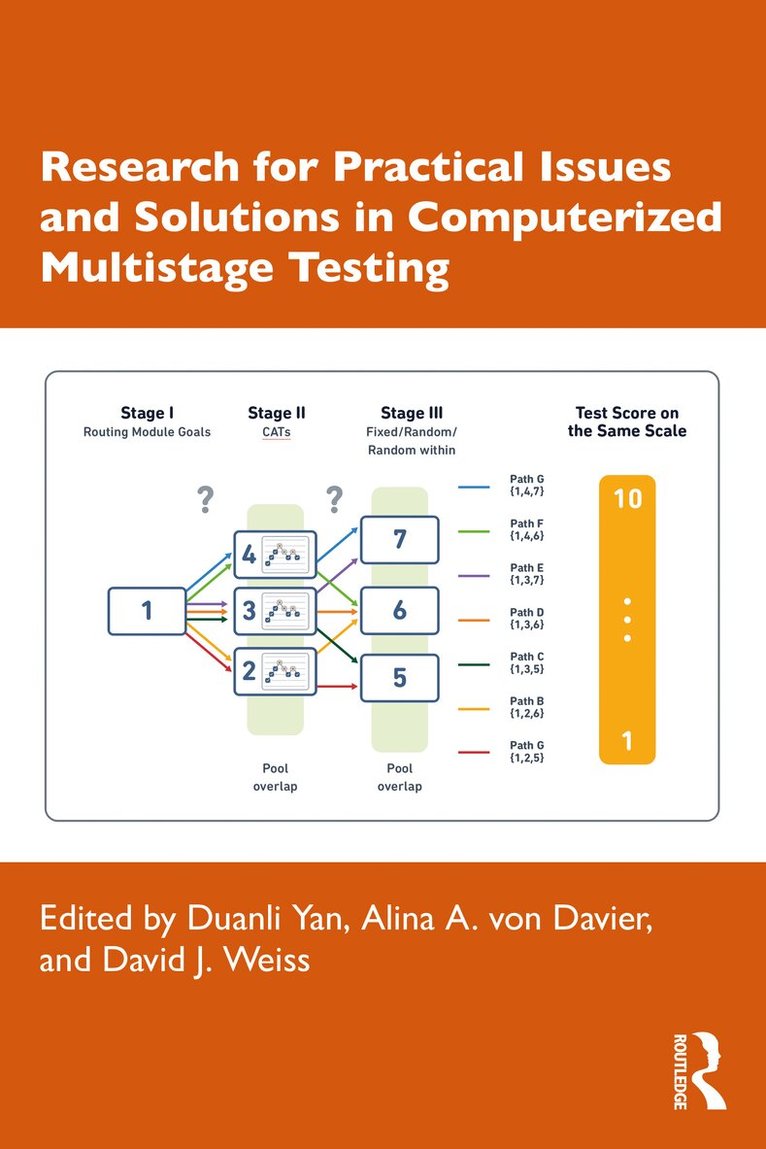
Research for Practical Issues and Solutions in Computerized Multistage Testing
Häftad, Engelska, 2024
688 kr
Skickas inom 10-15 vardagar
This volume presents a comprehensive collection of the latest research findings supporting the current and future implementations and applications of computerized multistage testing (MST).As a sequel to the widely acclaimed Computerized Multistage Testing: Theory and Applications (2014) by Yan, von Davier, and Lewis, this volume delves into the experiences, considerations, challenges, and lessons learned over the past years. It also offers practical approaches and solutions to the issues encountered. The topics covered include purposeful MST designs, practical approaches for optimal design, assembly strategies for accuracy and efficiency, hybrid designs, MST with natural language processing, practical routing considerations and methodologies, item calibration and proficiency estimation methods, routing and classification accuracy, added value of process data, prediction and evaluation of MST performance, cognitive diagnostic MST, differential item functioning, robustness of statistical methods, simulations, test security, the new digital large-scale Scholastic Aptitude Test, software for practical assessment and simulations, artificial intelligence impact, and the future of adaptive MST.This volume is intended for students, faculty, researchers, practitioners, and education officers in the fields of educational measurement and evaluation in the United States and internationally.
1 245 kr
Skickas inom 10-15 vardagar
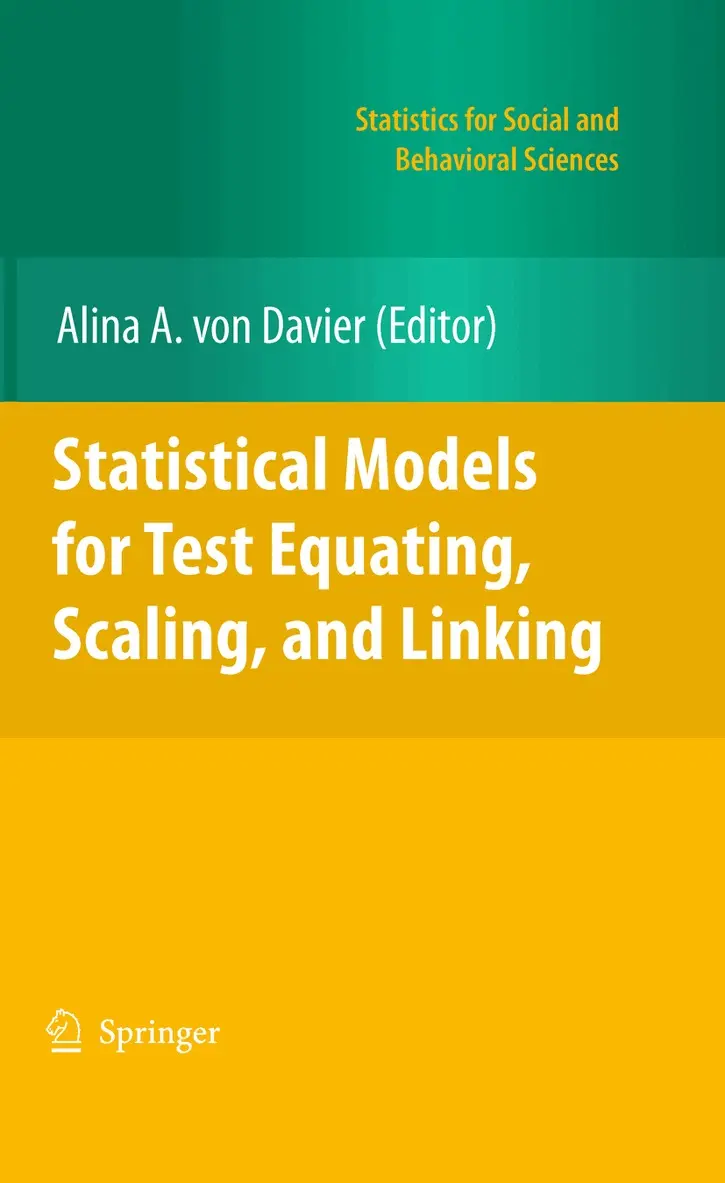
The goal of this book is to emphasize the formal statistical features of the practice of equating, linking, and scaling. The book encourages the view and discusses the quality of the equating results from the statistical perspective (new models, robustness, fit, testing hypotheses, statistical monitoring) as opposed to placing the focus on the policy and the implications, which although very important, represent a different side of the equating practice. The book contributes to establishing “equating” as a theoretical field, a view that has not been offered often before. The tradition in the practice of equating has been to present the knowledge and skills needed as a craft, which implies that only with years of experience under the guidance of a knowledgeable practitioner could one acquire the required skills. This book challenges this view by indicating how a good equating framework, a sound understanding of the assumptions that underlie the psychometric models, and the use of statistical tests and statistical process control tools can help the practitioner navigate the difficult decisions in choosing the final equating function. This book provides a valuable reference for several groups: (a) statisticians and psychometricians interested in the theory behind equating methods, in the use of model-based statistical methods for data smoothing, and in the evaluation of the equating results in applied work; (b) practitioners who need to equate tests, including those with these responsibilities in testing companies, state testing agencies, and school districts; and (c) instructors in psychometric, measurement, and psychology programs.
884 kr
Skickas inom 10-15 vardagar
The goal of this book is to emphasize the formal statistical features of the practice of equating, linking, and scaling. The book encourages the view and discusses the quality of the equating results from the statistical perspective (new models, robustness, fit, testing hypotheses, statistical monitoring) as opposed to placing the focus on the policy and the implications, which although very important, represent a different side of the equating practice. The book contributes to establishing “equating” as a theoretical field, a view that has not been offered often before. The tradition in the practice of equating has been to present the knowledge and skills needed as a craft, which implies that only with years of experience under the guidance of a knowledgeable practitioner could one acquire the required skills. This book challenges this view by indicating how a good equating framework, a sound understanding of the assumptions that underlie the psychometric models, and the use of statistical tests and statistical process control tools can help the practitioner navigate the difficult decisions in choosing the final equating function. This book provides a valuable reference for several groups: (a) statisticians and psychometricians interested in the theory behind equating methods, in the use of model-based statistical methods for data smoothing, and in the evaluation of the equating results in applied work; (b) practitioners who need to equate tests, including those with these responsibilities in testing companies, state testing agencies, and school districts; and (c) instructors in psychometric, measurement, and psychology programs.