Alison Bailey – författare
Visar alla böcker från författaren Alison Bailey. Handla med fri frakt och snabb leverans.
3 produkter
3 produkter
446 kr
Tillfälligt slut
In Posterity and Strategic Policy, a moral evaluation of current nuclear policy options, the author argues that policymakers have not paid enough attention to the moral questions that surround debate on the use of nuclear weapons. If we are to succeed in balancing our moral interest and our national interest, we must encourage the evaluation of nuclear issues from a humanitarian perspective. The author surveys three popular policy options and identifies the moral flaws of each. Contents: The Role of the Philosopher-as-Humanist in the Nuclear Debate; The Offensive Orientation of American Nuclear Weapons Policy; Morality, Risk, and Assured Destruction; The Foundations for a Strategic Policy in the Future; and Deterrence without Provocation: Implementing a Plan for Posterity.
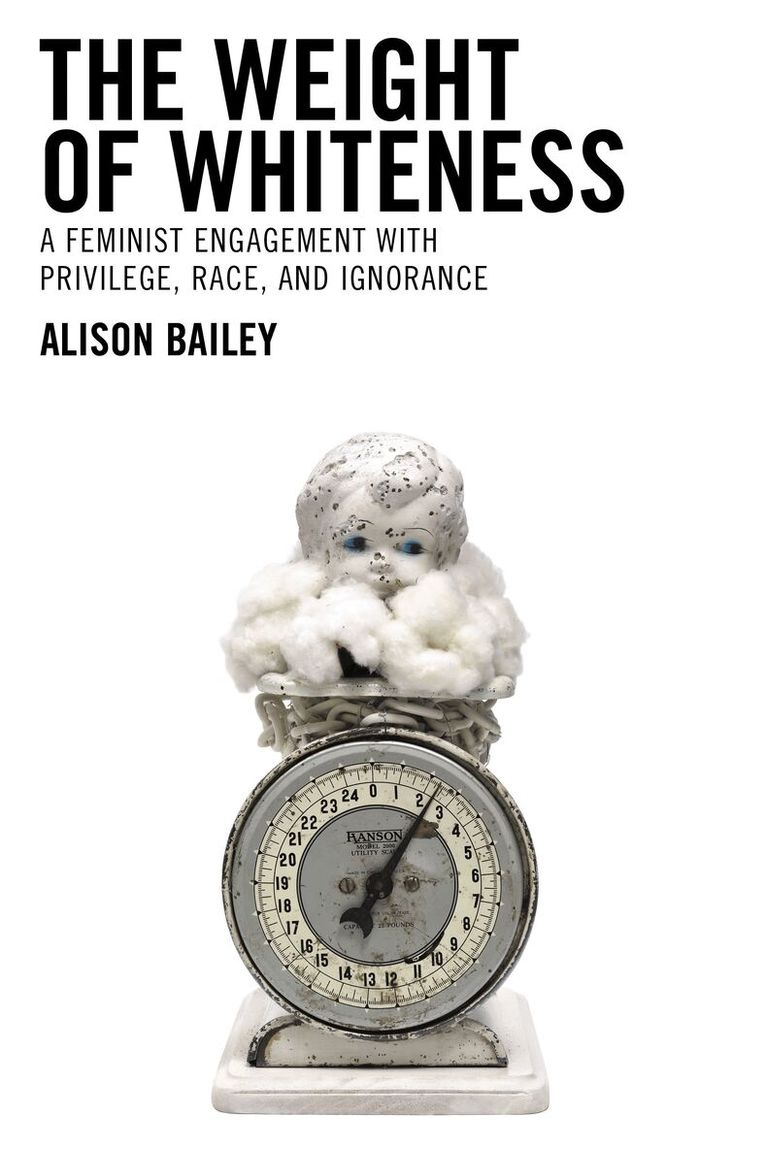
Weight of Whiteness
A Feminist Engagement with Privilege, Race, and Ignorance
Inbunden, Engelska, 2021
1 154 kr
Skickas inom 10-15 vardagar
“Check your privilege” is not a request for a simple favor. It asks white people to consider the painful dimensions of what they have been socialized to ignore. Alison Bailey’s The Weight of Whiteness: A Feminist Engagement with Privilege, Race, and Ignorance examines how whiteness misshapes our humanity, measuring the weight of whiteness in terms of its costs and losses to collective humanity. People of color feel the weight of whiteness daily. The resistant habits of whiteness and its attendant privileges, however, make it difficult for white people to feel the damage. White people are more comfortable thinking about white supremacy in terms of what privilege does for them, rather than feeling what it does to them. The first half of the book focuses on the overexposed side of white privilege, the side that works to make the invisible and intangible structures of power more visible and tangible. Bailey discusses the importance of understanding privileges intersectionally, the ignorance-preserving habits of “white talk,” and how privilege and ignorance circulate in educational settings. The second part invites white readers to explore the underexposed side of white dominance, the weightless side that they would rather not feel. The final chapters are powerfully autobiographical. Bailey engages readers with a deeply personal account of what it means to hold space with the painful weight of whiteness in her own life. She also offers a moving account of medicinal genealogies, which helps to engage the weight she inherits from her settler colonial ancestors. The book illustrates how the gravitational pull of white ignorance and comfort are stronger than the clean pain required for collective liberation. The stakes are high: Failure to hold the weight of whiteness ensures that white people will continue to blow the weight of historical trauma through communities of color.
439 kr
Skickas inom 10-15 vardagar
“Check your privilege” is not a request for a simple favor. It asks white people to consider the painful dimensions of what they have been socialized to ignore. Alison Bailey’s The Weight of Whiteness: A Feminist Engagement with Privilege, Race, and Ignorance examines how whiteness misshapes our humanity, measuring the weight of whiteness in terms of its costs and losses to collective humanity. People of color feel the weight of whiteness daily. The resistant habits of whiteness and its attendant privileges, however, make it difficult for white people to feel the damage. White people are more comfortable thinking about white supremacy in terms of what privilege does for them, rather than feeling what it does to them. The first half of the book focuses on the overexposed side of white privilege, the side that works to make the invisible and intangible structures of power more visible and tangible. Bailey discusses the importance of understanding privileges intersectionally, the ignorance-preserving habits of “white talk,” and how privilege and ignorance circulate in educational settings. The second part invites white readers to explore the underexposed side of white dominance, the weightless side that they would rather not feel. The final chapters are powerfully autobiographical. Bailey engages readers with a deeply personal account of what it means to hold space with the painful weight of whiteness in her own life. She also offers a moving account of medicinal genealogies, which helps to engage the weight she inherits from her settler colonial ancestors. The book illustrates how the gravitational pull of white ignorance and comfort are stronger than the clean pain required for collective liberation. The stakes are high: Failure to hold the weight of whiteness ensures that white people will continue to blow the weight of historical trauma through communities of color.