Alison DeSimone – författare
Visar alla böcker från författaren . Handla med fri frakt och snabb leverans.
6 produkter
6 produkter
Inbunden, Engelska, 2019
1 375 kr
Skickas inom 7-10 vardagar
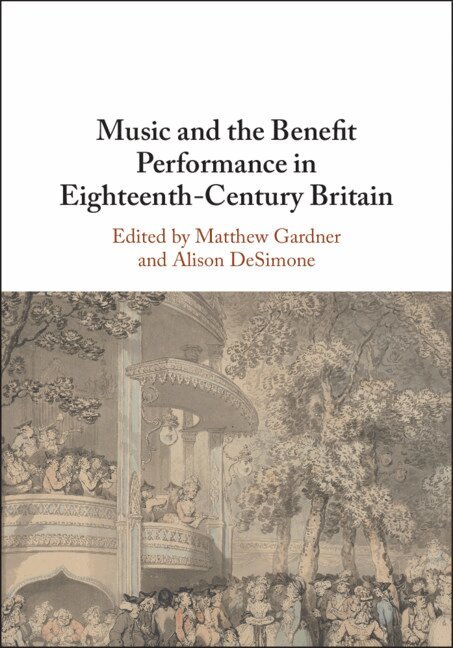
In the early eighteenth century, the benefit performance became an essential component of commercial music-making in Britain. Benefits, adapted from the spoken theatre, provided a new model from which instrumentalists, singers, and composers could reap financial and professional rewards. Benefits could be given as theatre pieces, concerts, or opera performances for the benefit of individual performers; or in aid of specific organizations. The benefit changed Britain's musico-theatrical landscape during this time and these special performances became a prototype for similar types of events in other European and American cities. Indeed, the charity benefit became a musical phenomenon in its own right, leading, for example, to the lasting success of Handel's Messiah. By examining benefits from a musical perspective - including performers, audiences, and institutions - the twelve chapters in this collection present the first study of the various ways in which music became associated with the benefit system in eighteenth-century Britain.
Häftad, Engelska, 2022
367 kr
Skickas inom 7-10 vardagar
In the early eighteenth century, the benefit performance became an essential component of commercial music-making in Britain. Benefits, adapted from the spoken theatre, provided a new model from which instrumentalists, singers, and composers could reap financial and professional rewards. Benefits could be given as theatre pieces, concerts, or opera performances for the benefit of individual performers; or in aid of specific organizations. The benefit changed Britain's musico-theatrical landscape during this time and these special performances became a prototype for similar types of events in other European and American cities. Indeed, the charity benefit became a musical phenomenon in its own right, leading, for example, to the lasting success of Handel's Messiah. By examining benefits from a musical perspective - including performers, audiences, and institutions - the twelve chapters in this collection present the first study of the various ways in which music became associated with the benefit system in eighteenth-century Britain.
E-bok
Engelska, 2019423 kr
Läs direkt efter köp
In the early eighteenth century, the benefit performance became an essential component of commercial music-making in Britain. Benefits, adapted from the spoken theatre, provided a new model from which instrumentalists, singers, and composers could reap financial and professional rewards. Benefits could be given as theatre pieces, concerts, or opera performances for the benefit of individual performers; or in aid of specific organizations. The benefit changed Britain''s musico-theatrical landscape during this time and these special performances became a prototype for similar types of events in other European and American cities. Indeed, the charity benefit became a musical phenomenon in its own right, leading, for example, to the lasting success of Handel''s Messiah. By examining benefits from a musical perspective - including performers, audiences, and institutions - the twelve chapters in this collection present the first study of the various ways in which music became associated with the benefit system in eighteenth-century Britain.
E-bok
PDF, Engelska, 2019423 kr
Läs direkt efter köp
In the early eighteenth century, the benefit performance became an essential component of commercial music-making in Britain. Benefits, adapted from the spoken theatre, provided a new model from which instrumentalists, singers, and composers could reap financial and professional rewards. Benefits could be given as theatre pieces, concerts, or opera performances for the benefit of individual performers; or in aid of specific organizations. The benefit changed Britain''s musico-theatrical landscape during this time and these special performances became a prototype for similar types of events in other European and American cities. Indeed, the charity benefit became a musical phenomenon in its own right, leading, for example, to the lasting success of Handel''s Messiah. By examining benefits from a musical perspective - including performers, audiences, and institutions - the twelve chapters in this collection present the first study of the various ways in which music became associated with the benefit system in eighteenth-century Britain.
Häftad, Engelska, 2025
732 kr
Skickas inom 5-8 vardagar
In eighteenth-century England, “variety” became a prized aesthetic in musical culture. Not only was variety—of counterpoint, harmony, melody, and orchestration—expected for good composition, but it also manifested in cultural mediums such as songbook anthologies, which compiled miscellaneous songs and styles in single volumes; pasticcio operas, which were cobbled together from excerpts from other operas; and public concerts, which offered a hodgepodge assortment of different types and styles of performance. I call this trend of producing music through the collection, assemblage, and juxtaposition of various smaller pieces as musical miscellany; like a jigsaw puzzle (also invented in the eighteenth century), the urge to construct a whole out of smaller, different parts reflected a growing desire to appeal to a quickly diversifying England. This book explores the phenomenon of musical miscellany in early eighteenth-century England both in performance culture and as an aesthetic. Chapters offer analyses of concert programming, early music criticism, the compilation of pasticcio operas and songbook miscellanies, and even the ways in which composers and performers shaped their freelancing careers. Musical miscellany, in its many forms, juxtaposed foreign and homegrown musical practices and styles in order to stimulate discourse surrounding English musical culture during a time of cosmopolitan transformation as the eighteenth century unfolded.
Inbunden, Engelska, 2021
2 072 kr
Skickas inom 5-8 vardagar
In eighteenth-century England, “variety” became a prized aesthetic in musical culture. Not only was variety—of counterpoint, harmony, melody, and orchestration—expected for good composition, but it also manifested in cultural mediums such as songbook anthologies, which compiled miscellaneous songs and styles in single volumes; pasticcio operas, which were cobbled together from excerpts from other operas; and public concerts, which offered a hodgepodge assortment of different types and styles of performance. I call this trend of producing music through the collection, assemblage, and juxtaposition of various smaller pieces as musical miscellany; like a jigsaw puzzle (also invented in the eighteenth century), the urge to construct a whole out of smaller, different parts reflected a growing desire to appeal to a quickly diversifying England. This book explores the phenomenon of musical miscellany in early eighteenth-century England both in performance culture and as an aesthetic. Chapters offer analyses of concert programming, early music criticism, the compilation of pasticcio operas and songbook miscellanies, and even the ways in which composers and performers shaped their freelancing careers. Musical miscellany, in its many forms, juxtaposed foreign and homegrown musical practices and styles in order to stimulate discourse surrounding English musical culture during a time of cosmopolitan transformation as the eighteenth century unfolded.