Alistair Boxall - Böcker
Visar alla böcker från författaren Alistair Boxall. Handla med fri frakt och snabb leverans.
3 produkter
3 produkter
1 144 kr
Skickas inom 7-10 vardagar
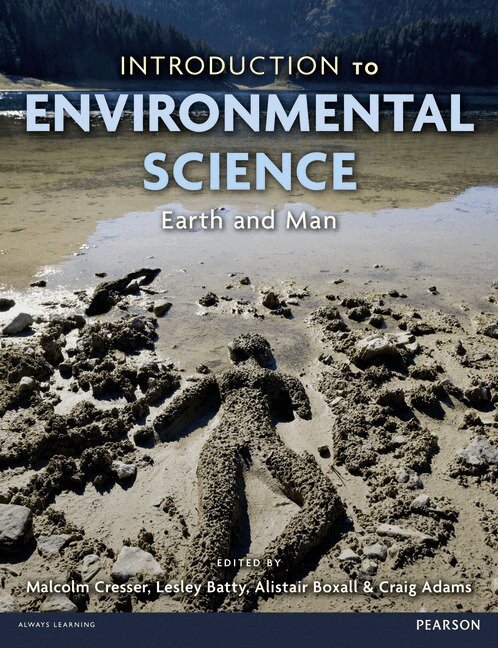
Introduction to Environmental Science: Earth and Man provides a comprehensive and fully integrated interdisciplinary introduction to our planet, covering the complex interactions between chemistry, physics, biology, geology, hydrology, climatology, social science and environmental policy. Written in a lively and engaging style, it aims to stimulate interest in this dynamic and important area, and facilitate new ways of thinking about how environmental problems should be critically evaluated and solved.
2 101 kr
Skickas inom 10-15 vardagar
Following release to the environment, synthetic chemicals may be degraded by biotic and abiotic processes. The degradation of the chemical can follow a plethora of pathways and a range of other substances can be formed via thesedifferentpathways(e.g.[1]).Anumberoftermshavebeenusedforthese substances including metabolites, degradates and transformation products - in this book we use the term transformation products. While we often know a lot about the environmental properties and effects of the parent synthetic chemical, we know much less about the transformationproducts. Transformationproductscanbehave very differently fromtheparent c- pound (e.g. [2]). For example, selected transformation products are much more persistent than their associated parent compound in soils, waters and sediments andsomemaybetransported aroundthelocal,regionalandglobal environmentstoadifferentextentthantheparentcompound.Transformation products can also have very different toxicities than the parent compound (e.g. [3]) and in some cases transformation products can be orders of mag- tude more toxic than their parent compound; although this situation is rare.The environmental risks of transformation products can therefore be very different than the risks of the parent compound. Thepotentialenvironmentalimpactsoftransformationproductsarerec- nised by many regulatory assessment schemes. For example, in the EU, pes- cideproducersarenotonlyrequiredtoassessthefateandeffectsoftheparent pesticide but are also required to assess the potential adverse effects of major metabolitesandminor metabolitesthat aredeemed tobeofconcern[4]. S- ilar requirements also exist for new human and veterinary pharmaceuticals and biocides (e.g. [5]). However, for many older substances and many other substance classes (e.g. industrial chemicals), data on the environmental risks of transformationproductscan be limited or non-existent.
2 101 kr
Skickas inom 10-15 vardagar
Following release to the environment, synthetic chemicals may be degraded by biotic and abiotic processes. The degradation of the chemical can follow a plethora of pathways and a range of other substances can be formed via thesedifferentpathways(e.g.[1]).Anumberoftermshavebeenusedforthese substances including metabolites, degradates and transformation products - in this book we use the term transformation products. While we often know a lot about the environmental properties and effects of the parent synthetic chemical, we know much less about the transformationproducts. Transformationproductscanbehave very differently fromtheparent c- pound (e.g. [2]). For example, selected transformation products are much more persistent than their associated parent compound in soils, waters and sediments andsomemaybetransported aroundthelocal,regionalandglobal environmentstoadifferentextentthantheparentcompound.Transformation products can also have very different toxicities than the parent compound (e.g. [3]) and in some cases transformation products can be orders of mag- tude more toxic than their parent compound; although this situation is rare.The environmental risks of transformation products can therefore be very different than the risks of the parent compound. Thepotentialenvironmentalimpactsoftransformationproductsarerec- nised by many regulatory assessment schemes. For example, in the EU, pes- cideproducersarenotonlyrequiredtoassessthefateandeffectsoftheparent pesticide but are also required to assess the potential adverse effects of major metabolitesandminor metabolitesthat aredeemed tobeofconcern[4]. S- ilar requirements also exist for new human and veterinary pharmaceuticals and biocides (e.g. [5]). However, for many older substances and many other substance classes (e.g. industrial chemicals), data on the environmental risks of transformationproductscan be limited or non-existent.