1 021 kr
Skickas inom 10-15 vardagar
1 021 kr
Skickas inom 10-15 vardagar
910 kr
Skickas inom 10-15 vardagar
1 067 kr
Läs direkt efter köp
This book represents the best of the first three years of the Society for Chaos Theory in Psychology conferences. While chaos theory has been a topic of considerable interest in the physical and biological sciences, its applications in psychology and related fields have been obscured until recently by its complexity. Nevertheless, a small but rapidly growing community of psychologists, neurobiologists, sociologists, mathematicians, and philosophers have been coming together to discuss its implications and explore its research possibilities. Chaos theory has been termed the first authentic paradigm shift since the advent of quantum physics. Whether this is true or not, it unquestionably bears profound implications for many fields of thought. These include the cognitive analysis of the mind, the nature of personality, the dynamics of psychotherapy and counseling, understanding brain events and behavioral records, the dynamics of social organization, and the psychology of prediction. To each of these topics, chaos theory brings the perspective of dynamic self-organizing processes of exquisite complexity. Behavior, the nervous system, and social processes exhibit many of the classical characteristics of chaotic systems -- they are deterministic and globally predictable and yet do not submit to precise predictability. This volume is the first to explore ideas from chaos theory in a broad, psychological perspective. Its introduction, by the prominent neuroscientist Walter Freeman, sets the tone for diverse discussions of the role of chaos theory in behavioral research, the study of personality, psychotherapy and counseling, mathematical cognitive psychology, social organization, systems philosophy, and the understanding of the brain.
1 067 kr
Läs direkt efter köp
This book represents the best of the first three years of the Society for Chaos Theory in Psychology conferences. While chaos theory has been a topic of considerable interest in the physical and biological sciences, its applications in psychology and related fields have been obscured until recently by its complexity. Nevertheless, a small but rapidly growing community of psychologists, neurobiologists, sociologists, mathematicians, and philosophers have been coming together to discuss its implications and explore its research possibilities. Chaos theory has been termed the first authentic paradigm shift since the advent of quantum physics. Whether this is true or not, it unquestionably bears profound implications for many fields of thought. These include the cognitive analysis of the mind, the nature of personality, the dynamics of psychotherapy and counseling, understanding brain events and behavioral records, the dynamics of social organization, and the psychology of prediction. To each of these topics, chaos theory brings the perspective of dynamic self-organizing processes of exquisite complexity. Behavior, the nervous system, and social processes exhibit many of the classical characteristics of chaotic systems -- they are deterministic and globally predictable and yet do not submit to precise predictability. This volume is the first to explore ideas from chaos theory in a broad, psychological perspective. Its introduction, by the prominent neuroscientist Walter Freeman, sets the tone for diverse discussions of the role of chaos theory in behavioral research, the study of personality, psychotherapy and counseling, mathematical cognitive psychology, social organization, systems philosophy, and the understanding of the brain.
374 kr
Skickas inom 7-10 vardagar
269 kr
Skickas inom 3-6 vardagar
872 kr
Skickas inom 10-15 vardagar
372 kr
Skickas inom 10-15 vardagar
117 kr
Läs direkt efter köp
1 120 kr
Tillfälligt slut
258 kr
Tillfälligt slut
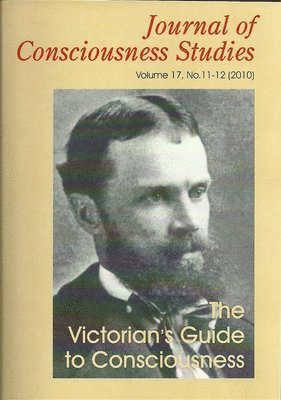
A special issue of the Journal of Consciousness Studies to mark the centenary of the death of the pioneer psychologist William James. Contents include an Editor's Foreword (by Allan Combs) and a Psychological Commentary on the Essays (by Eugene Taylor). The main papers included are: Nineteenth Century Pioneers in the Study of Dissociation: William James and Psychical Research (Carlos S. Alvarado & Stanley Krippner); The Ever-New Flow of Time: Henri Bergson's View of Consciousness (G. William Barnard); Consciousness Already There Waiting to be Uncovered: William James's Mystical Suggestion as Corroborated by Himself and his Contemporaries (Jonathan Bricklin); Neurology and the Mind at the Turn of the Century (Allan Combs); Is There Awareness Outside Attention? A Psychological Perspective (Combs, Krippner & Taylor); William James, Conversion, and Rapid, Radical Transformation (Arthur Hastings); William James and the Search for Scientific Evidence of Life After Death: Past, Present, and Possible Future (Gary E. Schwartz); Who Was Frederic William Henry Myers? (Eugene Taylor).
1 021 kr
Skickas inom 10-15 vardagar
910 kr
Skickas inom 10-15 vardagar
1 067 kr
Läs direkt efter köp
This book represents the best of the first three years of the Society for Chaos Theory in Psychology conferences. While chaos theory has been a topic of considerable interest in the physical and biological sciences, its applications in psychology and related fields have been obscured until recently by its complexity. Nevertheless, a small but rapidly growing community of psychologists, neurobiologists, sociologists, mathematicians, and philosophers have been coming together to discuss its implications and explore its research possibilities. Chaos theory has been termed the first authentic paradigm shift since the advent of quantum physics. Whether this is true or not, it unquestionably bears profound implications for many fields of thought. These include the cognitive analysis of the mind, the nature of personality, the dynamics of psychotherapy and counseling, understanding brain events and behavioral records, the dynamics of social organization, and the psychology of prediction. To each of these topics, chaos theory brings the perspective of dynamic self-organizing processes of exquisite complexity. Behavior, the nervous system, and social processes exhibit many of the classical characteristics of chaotic systems -- they are deterministic and globally predictable and yet do not submit to precise predictability. This volume is the first to explore ideas from chaos theory in a broad, psychological perspective. Its introduction, by the prominent neuroscientist Walter Freeman, sets the tone for diverse discussions of the role of chaos theory in behavioral research, the study of personality, psychotherapy and counseling, mathematical cognitive psychology, social organization, systems philosophy, and the understanding of the brain.
1 067 kr
Läs direkt efter köp
This book represents the best of the first three years of the Society for Chaos Theory in Psychology conferences. While chaos theory has been a topic of considerable interest in the physical and biological sciences, its applications in psychology and related fields have been obscured until recently by its complexity. Nevertheless, a small but rapidly growing community of psychologists, neurobiologists, sociologists, mathematicians, and philosophers have been coming together to discuss its implications and explore its research possibilities. Chaos theory has been termed the first authentic paradigm shift since the advent of quantum physics. Whether this is true or not, it unquestionably bears profound implications for many fields of thought. These include the cognitive analysis of the mind, the nature of personality, the dynamics of psychotherapy and counseling, understanding brain events and behavioral records, the dynamics of social organization, and the psychology of prediction. To each of these topics, chaos theory brings the perspective of dynamic self-organizing processes of exquisite complexity. Behavior, the nervous system, and social processes exhibit many of the classical characteristics of chaotic systems -- they are deterministic and globally predictable and yet do not submit to precise predictability. This volume is the first to explore ideas from chaos theory in a broad, psychological perspective. Its introduction, by the prominent neuroscientist Walter Freeman, sets the tone for diverse discussions of the role of chaos theory in behavioral research, the study of personality, psychotherapy and counseling, mathematical cognitive psychology, social organization, systems philosophy, and the understanding of the brain.
374 kr
Skickas inom 7-10 vardagar
269 kr
Skickas inom 3-6 vardagar
872 kr
Skickas inom 10-15 vardagar
372 kr
Skickas inom 10-15 vardagar
117 kr
Läs direkt efter köp
1 120 kr
Tillfälligt slut
258 kr
Tillfälligt slut
A special issue of the Journal of Consciousness Studies to mark the centenary of the death of the pioneer psychologist William James. Contents include an Editor's Foreword (by Allan Combs) and a Psychological Commentary on the Essays (by Eugene Taylor). The main papers included are: Nineteenth Century Pioneers in the Study of Dissociation: William James and Psychical Research (Carlos S. Alvarado & Stanley Krippner); The Ever-New Flow of Time: Henri Bergson's View of Consciousness (G. William Barnard); Consciousness Already There Waiting to be Uncovered: William James's Mystical Suggestion as Corroborated by Himself and his Contemporaries (Jonathan Bricklin); Neurology and the Mind at the Turn of the Century (Allan Combs); Is There Awareness Outside Attention? A Psychological Perspective (Combs, Krippner & Taylor); William James, Conversion, and Rapid, Radical Transformation (Arthur Hastings); William James and the Search for Scientific Evidence of Life After Death: Past, Present, and Possible Future (Gary E. Schwartz); Who Was Frederic William Henry Myers? (Eugene Taylor).