Altay Coskun – författare
Visar alla böcker från författaren . Handla med fri frakt och snabb leverans.
10 produkter
10 produkter
Inbunden, Engelska, 2024
926 kr
Skickas inom 3-6 vardagar
E-bok
Tyska, 2014544 kr
Läs direkt efter köp
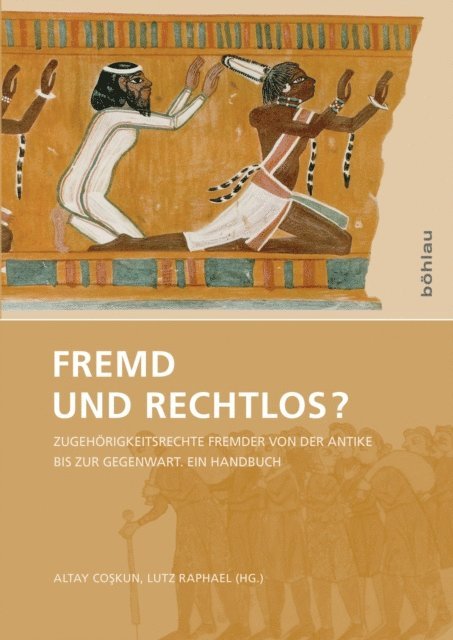
Der Band bietet einen Überblick über die Rechtsstellung von Fremdgruppen in Herrschaftsverbänden und Gesellschaftsordnungen der mediterran-europäischen Welt. Dargestellt werden die rechtlichen und politischen Regelungen von Teilhabe und Ausschluss Fremder von der Antike bis zur Gegenwart. Besondere Beachtung finden die Einflüsse, welche religiöse Vorstellungen, demographische Umstände, politische Verfassungen und die Semantiken von Fremdheit auf die Gleichstellung bzw. Andersbehandlung Fremder hatten. Geographisch legt das Handbuch einen Schwerpunkt auf den Mittelmeerraum sowie auf das westliche und mittlere Europa. Zeitlich spannen die Beiträge einen weiten Bogen vom Alten Ägypten bis zur Gegenwart. Das Handbuch ist gemeinsam von einem Autorenteam aus Historikerinnen und Historikern der unterschiedlichsten Epochen unter Beteiligung von beratenden Experten aus den Religions-, Politik- und Sozialwissenschaften im Rahmen des Trierer SFB 600 ''Fremdheit und Armut'' erarbeitet worden. Dieser Titel liegt auch als eBook für eReader, iPad und Kindle vor. Anmerkungen, Weblinks und ein dreizügiges Register sind interaktiv. Die wissenschaftliche Zitierfähigkeit wird durch die Kennzeichnung der Seitenzahlen der Printausgabe gewährleistet.
Inbunden, Tyska, 2014
719 kr
Skickas inom 11-20 vardagar
Inbunden, Engelska
965 kr
Skickas inom 3-6 vardagar
E-bok
PDF, Engelska, 2016828 kr
Läs direkt efter köp
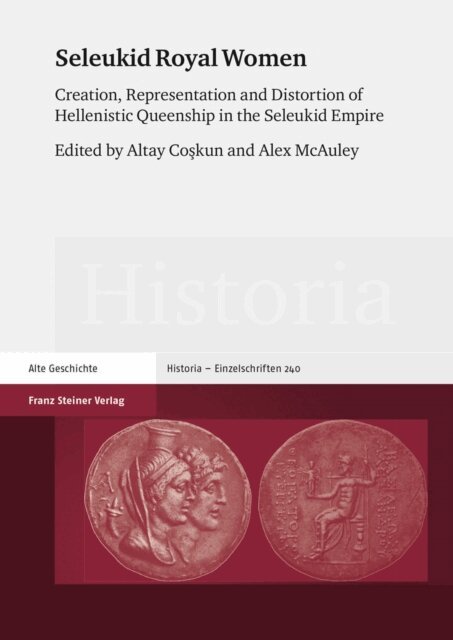
The study of royal women has been one of the most dynamic fields of inquiry into the Hellenistic world (ca. 336-30 BC) and has dramatically shifted our perceptions of gender, status, and influence in the ancient world. Amid numerous works on the Ptolemies, Antigonids, and Argeads, this volume is the first to examine the roles and representations of the women of the Seleukid dynasty and its clients. These royal women were born or married into a dynasty that ruled an empire spanning dozens of cultures and languages, encompassing territory from western Asia Minor to modern-day Afghanistan. As representatives of their family's prestige, they were highly influential in shaping the culture and legacy of this Empire that spanned East and West. The contributions of this volume offer a systematic scrutiny of the representation of female Seleukids in visual and textual media. Avoiding Eurocentric perspectives in favour of embracing the diversity of the Empire, these scholars examine the interaction of Seleukid women with royal traditions ranging from Persia, Bactria, and Judaea to their Hellenistic contemporaries. The result is a landmark achievement in the study of ancient women.
Häftad, Engelska
987 kr
Skickas inom 3-6 vardagar
E-bok
PDF, Engelska, 2020929 kr
Läs direkt efter köp
Ethnicity is a social construct within an ideological framework, ancient or modern. This wisdom has penetrated most scholarly disciplines, but its reception is delayed in Black Sea studies, where essentialist views still prevail. Nationalism, Rostovtzeff's culture-history and Marxist-Leninist materialism have cast longer shadows on this part of the ancient world. Likewise, the balance between documentary sources and ancient literature needs redressing. The latter has often been either accepted in a positivist manner or rejected due to perceived inconsistencies. More rewarding is to try to understand what exactly the ancient authors knew or intended. In this light, the contributors discuss the concept of Sarmatization, the implications of rural versus urban cults, ethnic hierarchies, interaction patterns in colonial settings, inversions of barbarian stereotypes, cultural affiliations of Bosporan kings, imperial policies of Pharnakes I and II, foreign princes on the Ara Pacis Augustae, the reorganization of Pontos under Pompey and Deiotaros, the sanctuary of Leukothea in Kolchis, Christian urbanism in Scythia Minor and crop selections of Anatolian farmers. Though selective, the e-book covers the four coastlines of the Black Sea, ranging from the archaic to the Byzantine periods.
E-bok
PDF, Engelska, 2023802 kr
Läs direkt efter köp
Seleukid Perspectives explore the largest successor kingdom to Alexander the Great's empire. Seleukid kings established their power on the battlefield but did not rely on coercion alone. They constructed an ideal of kingship to render their authority morally and religiously acceptable. For this, they considered the traditions and sensitivities of their soldiers, subjects, and neighbours, while facing the pretensions of their rivals. What was beneficial or tolerable varied dramatically from one polity to the next. This e-book examines local influence on and reactions to Seleukid claims by focusing on rituals, discourse, and creative moments in which ideological themes were shaped. Seleukos I (320-281 BCE) closely engaged with the imagery of Alexander and Macedonian rivals, borrowed from Near Eastern traditions, and courted sanctuaries of Apollo. Case studies for his descendants are drawn from Anatolia, Syria, Judaea, Babylonia, and Persia. Praise of the dynasty was more than flattery but part of a process in which subjects actively contributed to perpetuating, modifying, or undermining the royal image. The volume encourages new debates on the complexity and efficacy of Seleukid Ideology.
E-bok
PDF, Engelska, 2024802 kr
Läs direkt efter köp
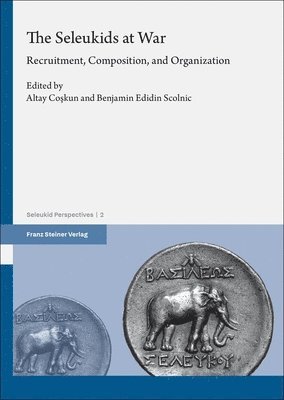
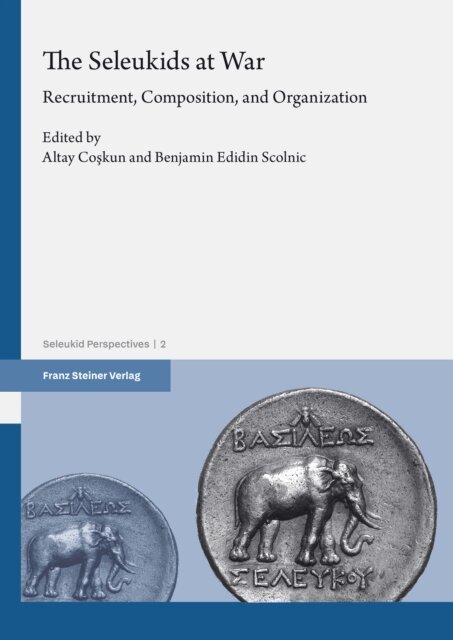
The largest kingdom to emerge from the conquests of Alexander the Great was founded by Seleukos I Nikator (the 'Conqueror'). His successors strove to defend the territories ranging from western Asia Minor to Arachosia in the east. The Syrian core transformed into a new Macedon, hosting myriads of veterans whose offspring became the next generations' phalangites. Babylonia added wealth and soldiers, Media provided cavalry. At the height of the kingdom's might, Antiochos III Megas was repelled from Greece by the Romans and lost Asia Minor at the Battle of Magnesia (190 BCE). The realm recovered and Antiochos IV nearly conquered Egypt before withdrawing at the behest of the Romans. His undiminished army was ostentatiously paraded at Daphne by Antioch on the Orontes (166 BCE). The narratives around key events are the prime sources for systematic inquiries into the sophisticated war machinery of the Seleukids, complemented by Greek and Akkadian inscriptions that attest to garrisons and settled veterans. The authors engage diverse sources and the latest scholarship to explain the tactics, manpower, and strategy of Seleukid warfare.
Del 14 - Inklusion/Exklusion
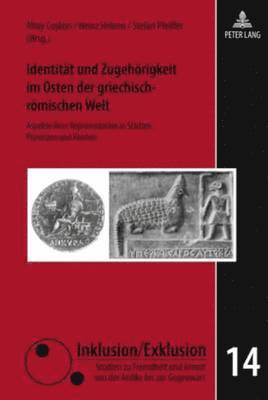
Identitaet Und Zugehoerigkeit Im Osten Der Griechisch-Roemischen Welt
Aspekte Ihrer Repraesentation in Staedten, Provinzen Und Reichen
Inbunden, Tyska, 2010
631 kr
Tillfälligt slut