
Alvar Ellegard – författare
Visar alla böcker från författaren Alvar Ellegard. Handla med fri frakt och snabb leverans.
2 produkter
2 produkter
Häftad, Engelska, 1990
414 kr
Skickas inom 5-8 vardagar
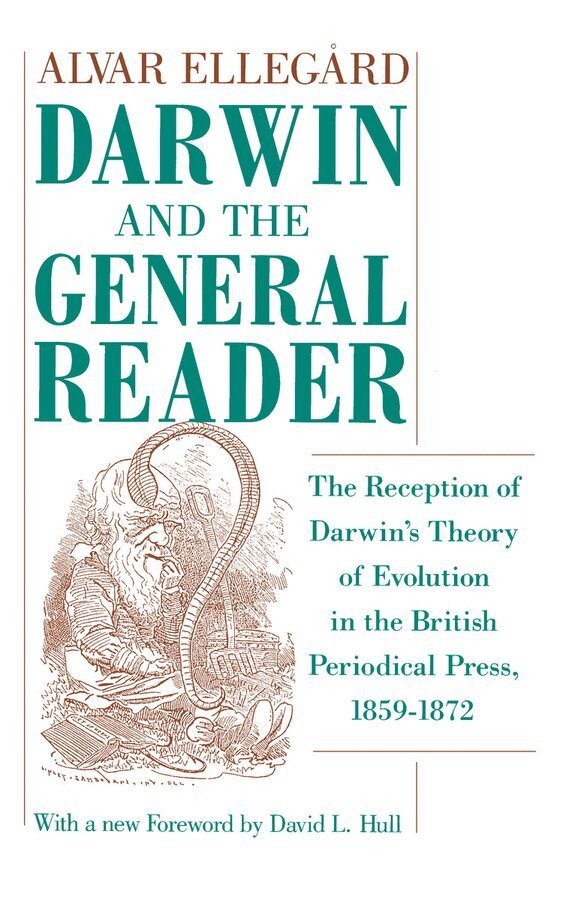
Drawing on his investigation of over one hundred mid-Victorian British newspapers and periodicals, Alvar Ellegård describes and analyzes the impact of Darwin's theory of evolution during the first dozen years after the publication of the Origin of Species. Although Darwin's book caused an immediate stir in literary and scientific periodicals, the popular press largely ignored it. Only after the work's implications for theology and the nature of man became evident did general publications feel compelled to react; each social group responded according to his own political and religious prejudices. Ellegård charts the impact of this revolution in science, maintaining that although the idea of evolution was generally accepted, Darwin's primary contribution, the theory of natural selection, was either ignored or rejected among the public.
E-bok
Engelska, 2011166 kr
Läs direkt efter köp
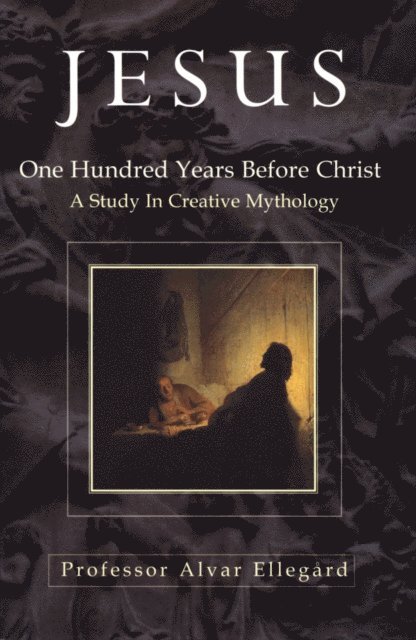
The starting point for the book is the following anomoly: If Jesus lived as has been supposed at the beginning of the 1st century AD, the only NT documents written by a near contemporary, the Epistles of St Paul, make no mention of him as an historical figure, neither do they record any of his sayings, but rather they talk of him as a vision or mystical experience of the risen Christ. Further, the same is true of the earliest Christian non-NT texts, such as the Epistles of St Clement, roughly contemporary with Paul. Furthermore, contemporary records of the region from non-Christian sources, such as those by the Jewish historian Josephus, fail to mention Jesus at all where we would expect them to; the mentions that there are have recently been shown to be later interpolations by medieval Christian apologists - the gospel accounts of Jesus and his millieu are inaccurate in all major respects e. g. the relative dates of Herod and Pilate, if contemporary Roman and Jewish historians, who had no theological axe to grind, are taken as measure. By comparative textual studies, the author shows that the gospel accounts of Jesus' life and sayings were written approximately 100 years after Jesus is supposed to have lived, and so 100 years later than alleged contemporaries such as Paul, Clement, Josephus etc.