Alvin W CZANDERNA – författare
Visar alla böcker från författaren Alvin W CZANDERNA. Handla med fri frakt och snabb leverans.
10 produkter
10 produkter
E-bok
PDF, Engelska, 20042 577 kr
Läs direkt efter köp
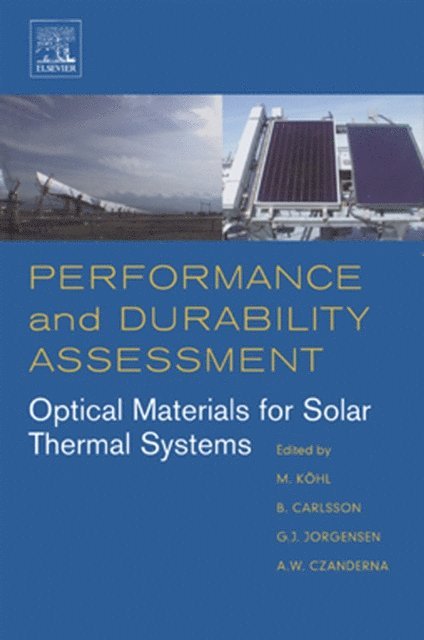
- 2 real examples demonstrate how to obtain the service life of solar collector systems- Durable, providing fundamentals that will continue to be valuable over the next 5-10 years- Lighting a pathway to the commercialisation of solar products Solar devices lose their performance over time. The rate of degradation controls the service life of these devices. The essential concepts used to assess durability and performance of two specific solar collector systems are described, enabling researchers to assess durability in other solar devices. The examples of modelling, testing and performance measurements give researchers a how-to approach to reach crucial service lifetime predictions.Achieving successful and sustainable commercialisation of solar products relies on the fulfilment of 2 further criteria and these are also discussed.The methodology of service lifetime predictions (SLP), which is explained in detail in the book, is crucially needed in other solar technologies and is generally applicable to a wide variety of materials, components and systems used in other solar, biomedical, aerospace, electronic and coatings technologies.- 2 real examples demonstrate how to obtain the service life of solar collector systems- Reassuringly durable, providing fundamentals that will continue to be valuable over the next 5-10 years- Lighting a pathway for the commercialisation of solar products
Inbunden, Engelska, 1991
859 kr
Skickas inom 10-15 vardagar
Determining the elemental composition of surfaces is an essential measurement in characterizing solid surfaces. Typically, atoms and molecules on the surface and in the near surface region may be excited by photons, electrons, ions, or neutrals, and the detected particles are emitted, ejected, or scattered ions or electrons.
Inbunden, Engelska, 1999
1 605 kr
Skickas inom 10-15 vardagar
This work is intended for professionals, researchers, technicians and students who are newcomers to the PR field as well as those with experience. The fields include those in surface science, electronic materials and processes, thin film deposition, surface compositional analysis and related topical areas such as corrosion, oxidation, reduction, adsorption, desorption, adhesion, epitaxial growth and contamination. The presentation uses a tutorial and pedagogical approach.
Inbunden, Engelska, 1998
1 605 kr
Skickas inom 10-15 vardagar
Many books are available that detail the basic principles of the different methods of surface characterization. On the other hand, the scientific literature provides a resource of how individual pieces of research are conducted by particular labo- tories. Between these two extremes the literature is thin but it is here that the present volume comfortably sits. Both the newcomer and the more mature scientist will find in these chapters a wealth of detail as well as advice and general guidance of the principal phenomena relevant to the study of real samples. In the analysis of samples, practical analysts have fairly simple models of how everything works. Superimposed on this ideal world is an understanding of how the parameters of the measurement method, the instrumentation, and the char- teristics of the sample distort this ideal world into something less precise, less controlled, and less understood. The guidance given in these chapters allows the scientist to understand how to obtain the most precise and understood measu- ments that are currently possible and, where there are inevitable problems, to have clear guidance as the extent of the problem and its likely behavior.
E-bok
PDF, Engelska, 20061 977 kr
Läs direkt efter köp
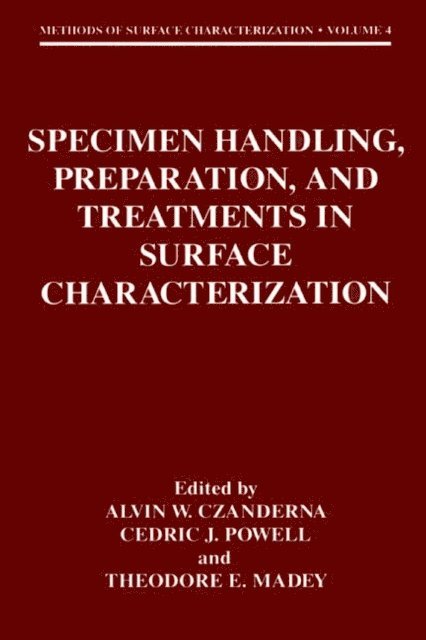
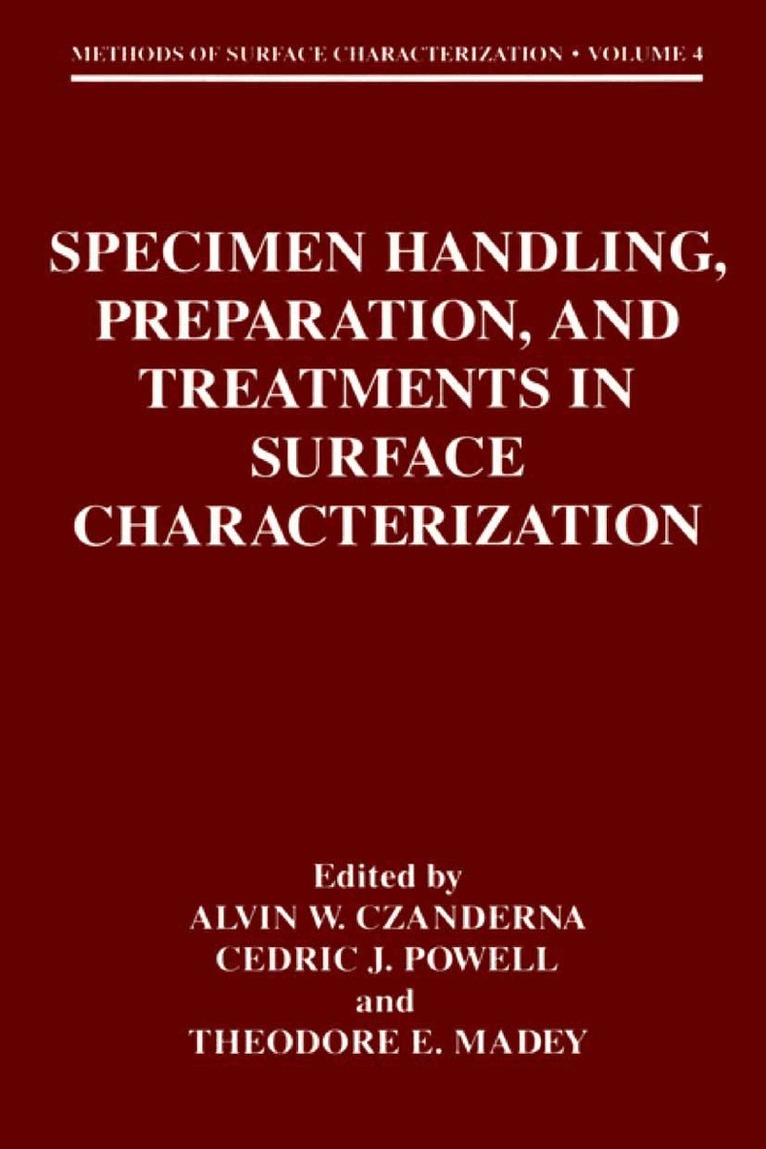
With the development in the 1960s of ultrahigh vacuum equipment and techniques and electron, X-ray, and ion beam techniques to determine the structure and composition of interfaces, activities in the field of surface science grew nearly exponentially. Today surface science impacts all major fields of study from physical to biological sciences, from physics to chemistry, and all engineering disciplines. The materials and phenomena characterized by surface science range from se- conductors, where the impact of surface science has been critical to progress, to metals and ceramics, where selected contributions have been important, to bio- terials, where contributions are just beginning to impact the field, to textiles, where the impact has been marginal. With such a range of fields and applications, questions about sample selection, preparation, treatment, and handling are difficult to cover completely in one review article or one chapter. Therefore, the editors of this book have assembled a range of experts with experience in the major fields impacted by surface characterization. It is the only book which treats the subject of sample handling, preparation, and treatment for surface characterization. It is full of tricks, cautions, and handy tips to make the laboratory scientist’s life easier. With respect to organization of the book, the topics range from discussion of vacuum to discussion of biological, organic, elemental or compound samples, to samples prepared ex situ or in situ to the vacuum, to deposition ofthin films. Generic considerations of sample preparation are also given.
E-bok
PDF, Engelska, 20061 977 kr
Läs direkt efter köp
Many books are available that detail the basic principles of the different methods of surface characterization. On the other hand, the scientific literature provides a resource of how individual pieces of research are conducted by particular labo- tories. Between these two extremes the literature is thin but it is here that the present volume comfortably sits. Both the newcomer and the more mature scientist will find in these chapters a wealth of detail as well as advice and general guidance of the principal phenomena relevant to the study of real samples. In the analysis of samples, practical analysts have fairly simple models of how everything works. Superimposed on this ideal world is an understanding of how the parameters of the measurement method, the instrumentation, and the char- teristics of the sample distort this ideal world into something less precise, less controlled, and less understood. The guidance given in these chapters allows the scientist to understand how to obtain the most precise and understood measu- ments that are currently possible and, where there are inevitable problems, to have clear guidance as the extent of the problem and its likely behavior.
Häftad, Engelska, 2010
1 619 kr
Skickas inom 10-15 vardagar
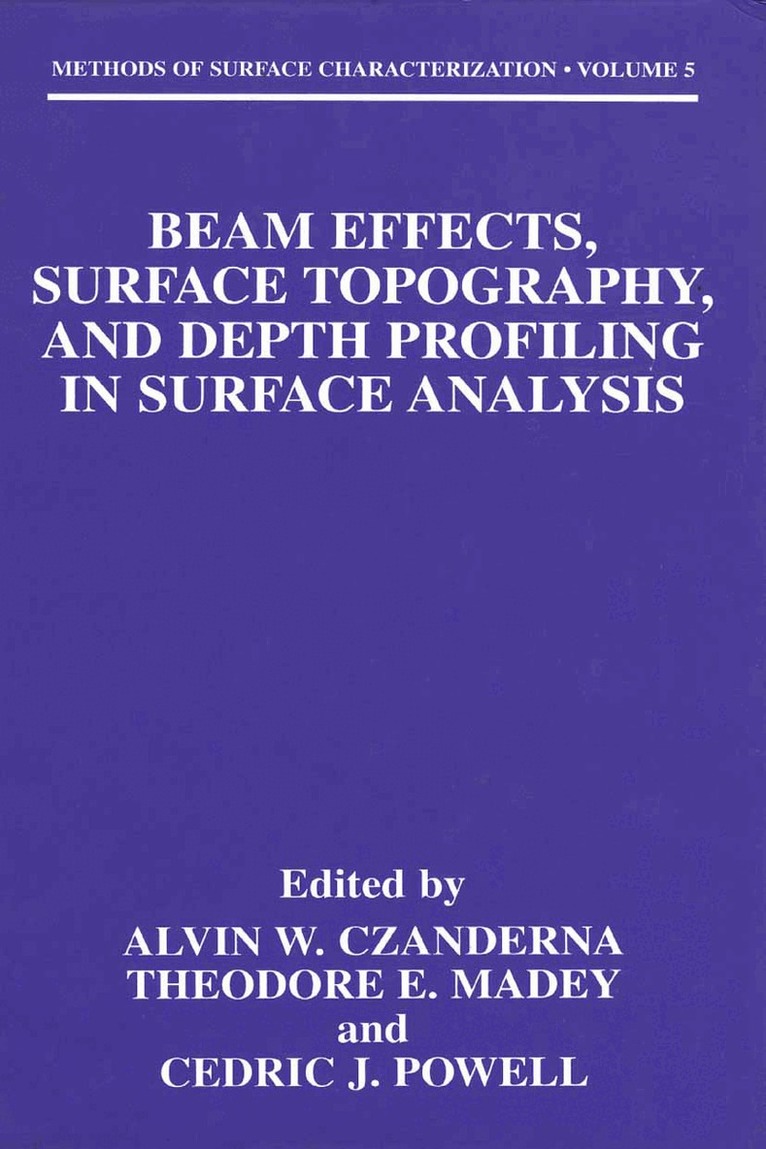
Written as a tutorial guide for newcomers to the field of surface analysis, this work is the first book ever published to feature photon, electron, and ion beam effects and beam damage to solids during surface and near-surface analysis and depth profiling. This introductory text describes the principles, techniques, and methods vital for efficient surface analysis. A wealth of practical information is assembled in this single volume, including summary tables, extensive references, and 251 illustrative figures.
Del 2 - Methods of Surface Characterization
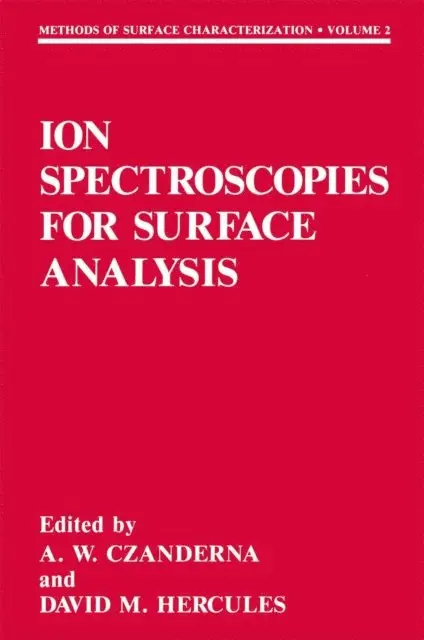
Ion Spectroscopies for Surface Analysis
Häftad, Engelska, 2012
544 kr
Skickas inom 10-15 vardagar
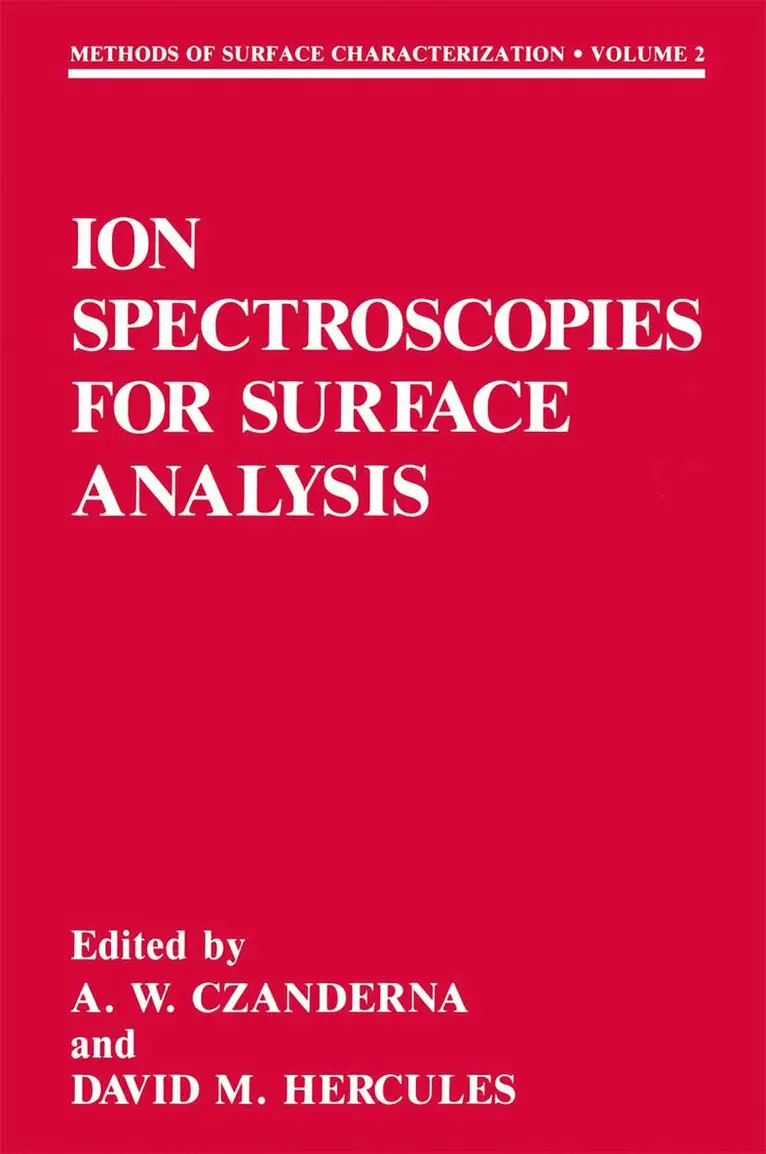
Determining the elemental composition of surfaces is an essential measurement in characterizing solid surfaces. At present, many ap proaches may be applied for measuring the elemental and molecular composition of a surface. Each method has particular strengths and limitations that often are directly connected to the physical processes involved. Typically, atoms and molecules on the surface and in the near surface region may be excited by photons, electrons, ions, or neutrals, and the detected particles are emitted, ejected, or scattered ions or electrons. The purpose of this book is to bring together a discussion of the surface compositional analysis that depends on detecting scattered or sputtered ions, and the methods emphasized are those where instruments are commercially available for carrying out the analysis. For each topic treated, the physical principles, instrumentation, qualitative analysis, artifacts, quantitative analysis, applications, opportunities, and limita tions are discussed. The first chapter provides an overview of the role of elemental composition in surface science; compositional depth profiling; stimulation by an electric field, electrons, neutrals, or photons and detection of ions; and then stimulation by ions, and detection of ions, electrons, photons, or neutrals.
E-bok
PDF, Engelska, 2012687 kr
Läs direkt efter köp
Determining the elemental composition of surfaces is an essential measurement in characterizing solid surfaces. At present, many ap proaches may be applied for measuring the elemental and molecular composition of a surface. Each method has particular strengths and limitations that often are directly connected to the physical processes involved. Typically, atoms and molecules on the surface and in the near surface region may be excited by photons, electrons, ions, or neutrals, and the detected particles are emitted, ejected, or scattered ions or electrons. The purpose of this book is to bring together a discussion of the surface compositional analysis that depends on detecting scattered or sputtered ions, and the methods emphasized are those where instruments are commercially available for carrying out the analysis. For each topic treated, the physical principles, instrumentation, qualitative analysis, artifacts, quantitative analysis, applications, opportunities, and limita tions are discussed. The first chapter provides an overview of the role of elemental composition in surface science; compositional depth profiling; stimulation by an electric field, electrons, neutrals, or photons and detection of ions; and then stimulation by ions, and detection of ions, electrons, photons, or neutrals.
Häftad, Engelska, 2013
1 619 kr
Skickas inom 10-15 vardagar
With the development in the 1960s of ultrahigh vacuum equipment and techniques and electron, X-ray, and ion beam techniques to determine the structure and composition of interfaces, activities in the field of surface science grew nearly exponentially. Today surface science impacts all major fields of study from physical to biological sciences, from physics to chemistry, and all engineering disciplines. The materials and phenomena characterized by surface science range from se- conductors, where the impact of surface science has been critical to progress, to metals and ceramics, where selected contributions have been important, to bio- terials, where contributions are just beginning to impact the field, to textiles, where the impact has been marginal. With such a range of fields and applications, questions about sample selection, preparation, treatment, and handling are difficult to cover completely in one review article or one chapter. Therefore, the editors of this book have assembled a range of experts with experience in the major fields impacted by surface characterization. It is the only book which treats the subject of sample handling, preparation, and treatment for surface characterization. It is full of tricks, cautions, and handy tips to make the laboratory scientist’s life easier. With respect to organization of the book, the topics range from discussion of vacuum to discussion of biological, organic, elemental or compound samples, to samples prepared ex situ or in situ to the vacuum, to deposition ofthin films. Generic considerations of sample preparation are also given.