Amador Vega - Böcker
Visar alla böcker från författaren Amador Vega. Handla med fri frakt och snabb leverans.
2 produkter
2 produkter
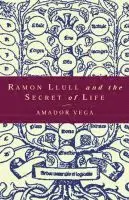
Ramon Llull and the Secret of Life
An Introduction to the Philosophy of the Human Person
Häftad, Engelska, 2003
443 kr
Skickas inom 3-6 vardagar
Ramon Llull and the Secret of Life describes the enigmatic life of the celebrated medieval philosopher, mystic, and visionary who left behind more than 300 books in Catalan, Latin, and Arabic. He traveled throughout Europe, the eastern Mediterranean, and North Africa to share his discovery of the combinatory art, a new language with parallels in Jewish Mysticism and Sufism. Though widely misunderstood in Llull's own day, philosophers of the Renaissance to more recent scholars who see it as a forerunner of computer languages. This book sets out to show the inner affinities between Llull's theory of mystical contemplation and his extraordinary religious experiences, and to elaborate the varieties of linguistic models he used to express himself. It concludes with selections from his most representative writings.
522 kr
Skickas inom 7-10 vardagar
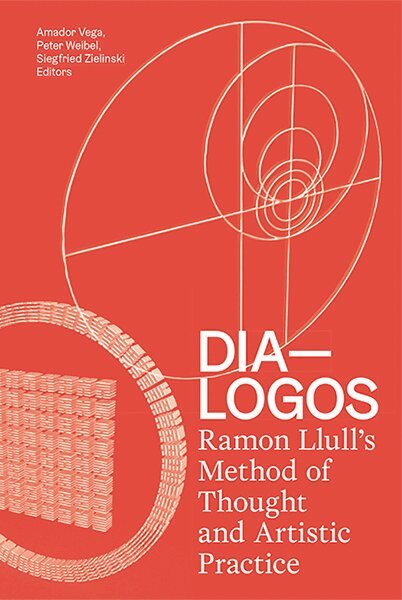
The life and work of the outstanding Catalan-Majorcan philosopher, logician, and mystic Ramon Llull continues to fascinate thinkers, artists, and scholars worldwideIn this book, international experts from Europe and the United States address Lullism as a remarkable and distinctive method of thinking and experimenting. The origins and impact of Ramon Llull’s oeuvre as a modern thinker are presented, and their interdisciplinary and intercultural implications, which continue to this day, are explored. Ars combinatoria, generative and permutative generation of texts, the epistemic and poetic power of algorithmic systems, plus the principle of unconditional dialogue between cultural groups and their individual members, are the most important coordinates of this combinatorial–dialogical media and communication theory, which appeared very early in the history of science, technology, and art. It was developed in the work of Ramon Llull during the transition from the thirteenth to the fourteenth century when Arab-Islamic, Jewish, and Christian cultures intersected. The legacy of Lullism lives on in poetry and in the visual and electronic-based arts, as well as in research on the history of informatics, formal logic, and media archaeology. The primary idea of Llull’s teachings-to enable rational and therefore trustworthy dialogue between cultures and religions through a universally valid system of symbols-is today still topical and of great relevance, especially in the tensions prevailing in globalized spaces of possibility.Contributors: Miquel Bassols, Florian Cramer, Salvador DalÍ, Fernando DomÍnguez Reboiras, Diane Doucet-Rosenstein, Jordi GayÀ, Jonathan Gray, Daniel Irrgang, David Link, SebastiÁn Moro Tornese, Josep E. Rubio, Henning Schmidgen, Wilhelm Schmidt-Biggemann, Gianni Vattimo, Janet Zweig.