Amalia Levanoni – författare
Visar alla böcker från författaren Amalia Levanoni. Handla med fri frakt och snabb leverans.
3 produkter
3 produkter
Del 51 - Medieval Mediterranean
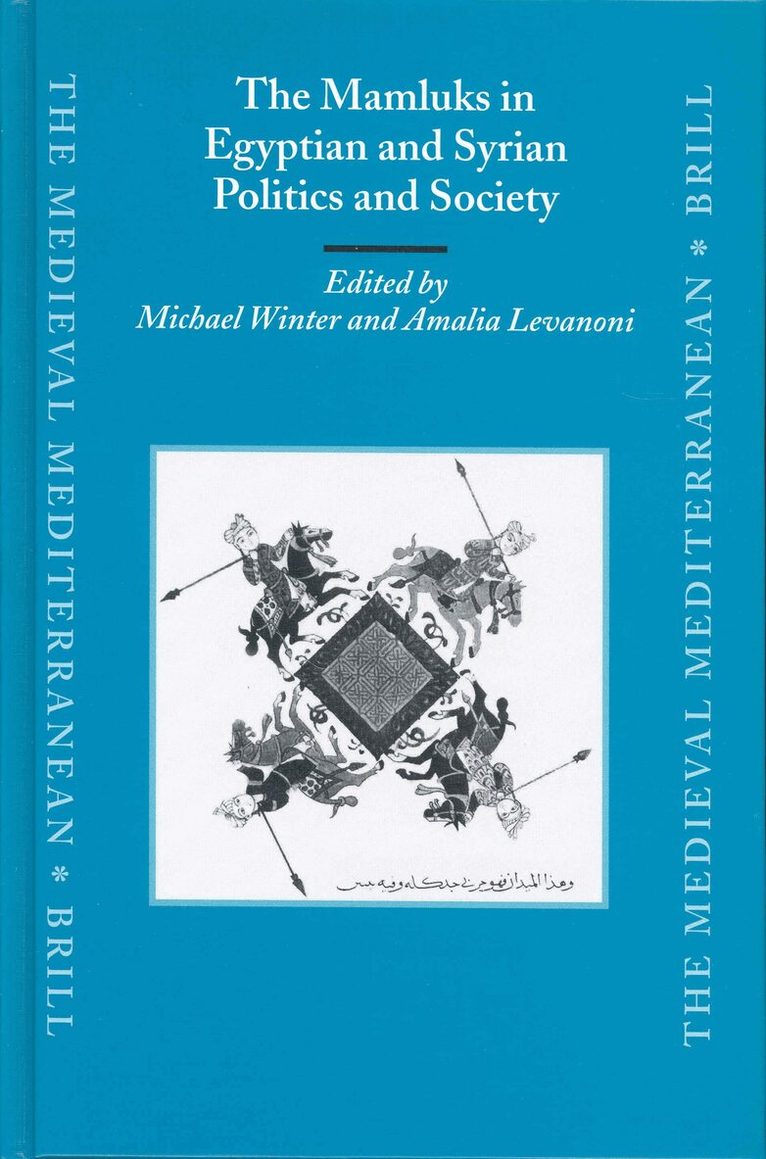
Mamluks in Egyptian and Syrian Politics and Society
Inbunden, Engelska, 2003
3 260 kr
Skickas inom 5-8 vardagar
This volume consists of 19 studies by leading historians of the Mamluks. Drawing on primary Arabic sources, the studies discuss central political, military, urban, social, administrative, economic, financial and religious aspects of the Mamluk Empire that was established in 1250 by Mamluks (manumitted military slaves, mostly Turks and Circassians). It was a Sunni orthodox state that had a formidable military, a developed and sophisticated economy, a centralized Arab bureaucracy and prestigious religious and educational institutions. There are special articles about Cairo, Damascus, Jerusalem, Safed and Acre. The last part of the volume describes the Mamluk military class that survived in Egypt (although in a transformed form) under the Ottoman suzerainty after the Empire annexed Egypt and Syria in 1517.With contributions by Reuven Aharoni, Reuven Amitai, Frederic Bauden, Jonathan Berkey, Daniel Crecelius, Joseph Drory, Jane Hathaway, Robert Irwin, Donald Little, Nimrod Luz, Carl Petry, Thomas Philipp, Yossef Rapoport, André Raymond, Donald S. Richards, Warren Schultz and Hannah Taragan.
Del 181 - Islamic History and Civilization
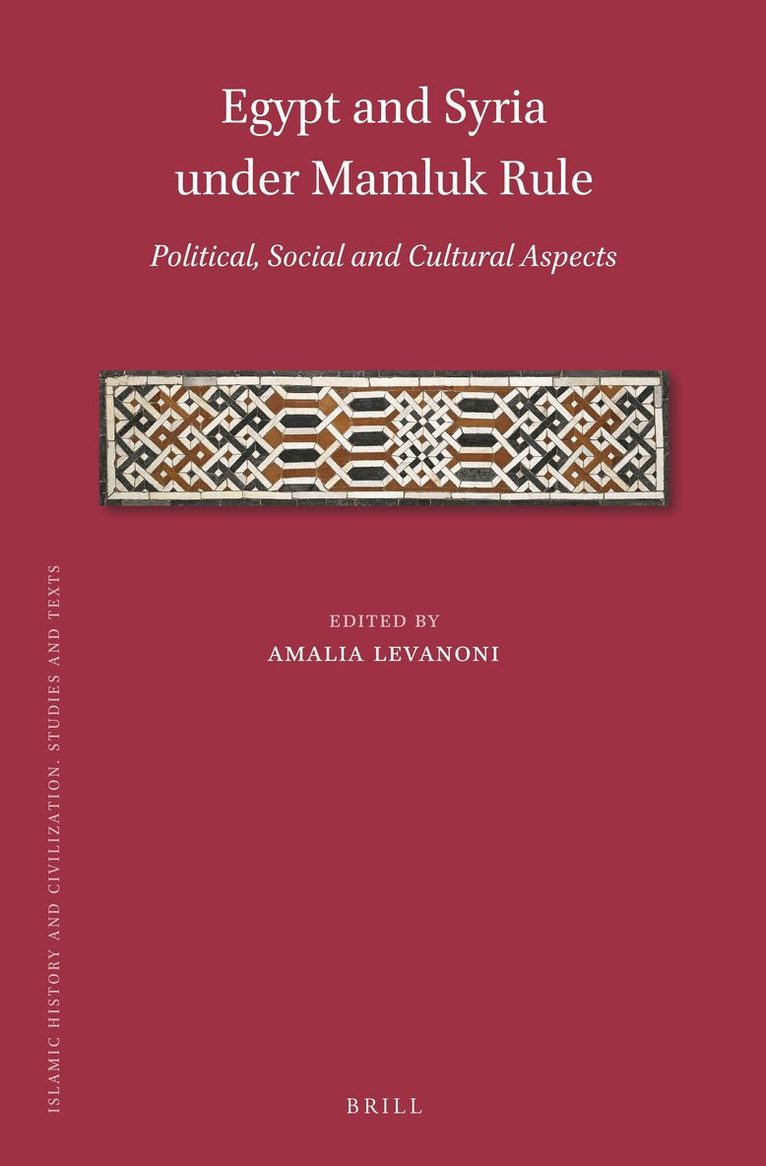
Egypt and Syria under Mamluk Rule
Political, Social and Cultural Aspects
Inbunden, Engelska, 2021
2 329 kr
Skickas inom 5-8 vardagar
The studies in this volume explore central topics characterizing the political, social and economic systems of Egypt and Syria under Mamluk rule (1250-1517). Drawing on Arabic sources including archival material, poetry and chronicles as well as modern research literature, twelve leading scholars in the field analyze a vast range of issues in Mamluk history and provide new perspectives on pivotal features such as European-Mamluk diplomacy, social relationships and identity in Mamluk society, rural and urban economy and water management in late medieval Egypt and Syria, reflecting major research trends in Mamluk history over the last four decades.With contributions by Frédéric Bauden, Stuart J. Borsch, Joseph Drory, Kurt Franz, Yehosua Frenkel, Daisuke Igarashi, Yaacov Lev, Amalia Levanoni, Li Guo, Carl F. Petry, Jo Van Steenbergen, Koby Yosef.
E-bok
PDF, Engelska, 20212 435 kr
Läs direkt efter köp
A Turning Point in Mamluk History deals with the process of decline of the Mamluk state (1250-1517). Its main thesis is that the origins of this process are to be found in the third reign of al-Nasir Muhammad Ibn Qalawun, more specifically in the changes he effected in the Mamluk system.The Mamluk army was the first to be confronted with these changes, whose impact on the social and political life of the Mamluk elite was already felt during al-Nasir's own lifetime. The author follows their course of development to the end of autonomous Mamluk rule and reveals the transformation they wrought in the Mamluk code of values and political concepts.A final chapter deals with the overall economic decline of the Mamluk state and establishes the link of its various causes-demographic decline, monetary crises, the collapse of agriculture and industry-with Mamluk government misrule. Here it is al-Nasir's expenditure policy and its repercussions on the economy which reveal his reign as a point of no return.