Amie L. Thomasson – författare
Visar alla böcker från författaren Amie L. Thomasson. Handla med fri frakt och snabb leverans.
9 produkter
9 produkter
E-bok
PDF, Engelska, 2020267 kr
Läs direkt efter köp
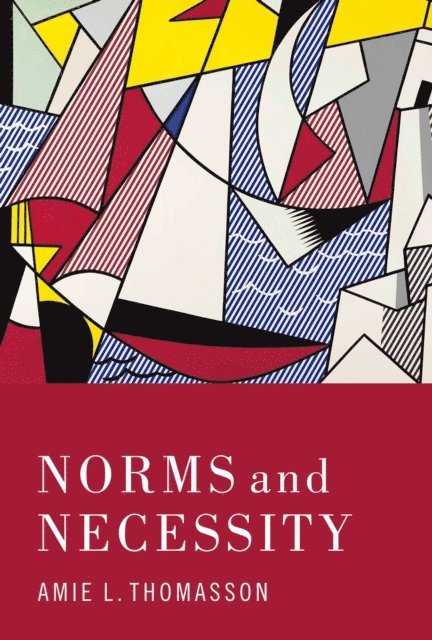
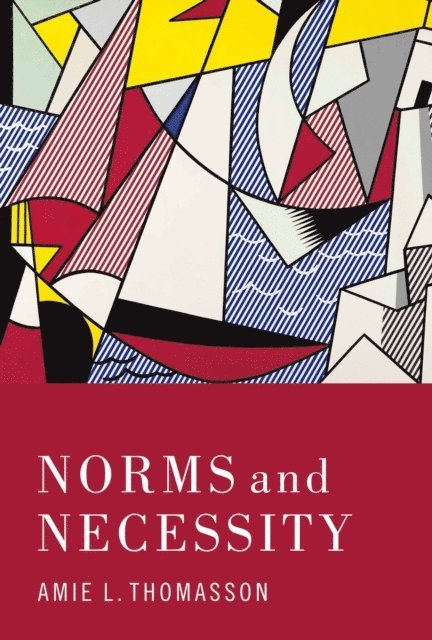
Claims about what is metaphysically necessary or possible have long played a central role in metaphysics and other areas of philosophy. Such claims are traditionally thought of as aiming to describe a special kind of modal fact or property, or perhaps facts about other possible worlds. But that assumption leads to difficult ontological, epistemological, and methodological puzzles. Should we accept that there are modal facts or properties, or other possible worlds? If so, what could these things be? How could we come to know what the modal facts or properties are? How can we resolve philosophical debates about what is metaphysically necessary or possible?Norms and Necessity develops a new approach to understanding our claims about metaphysical possibility and necessity: Modal Normativism. The Normativist rejects the assumption that modal claims aim to describe modal features or possible worlds, arguing instead that they serve as useful ways of conveying, reasoning with, and renegotiating semantic rules and their consequences. By dropping the descriptivist assumption, the Normativist is able to unravel the notorious ontological problems of modality, and provide a clear and plausible story about how we can come to know what is metaphysically necessary or possible. Most importantly, this approach helps demystify philosophical methodology. It reveals that resolving metaphysical modal questions does not require a special form of philosophical insight or intuition. Instead, it requires nothing more mysterious than empirical knowledge, conceptual mastery, and an ability to explicitly convey and renegotiate semantic rules.
E-bok
Engelska, 2020267 kr
Läs direkt efter köp
Claims about what is metaphysically necessary or possible have long played a central role in metaphysics and other areas of philosophy. Such claims are traditionally thought of as aiming to describe a special kind of modal fact or property, or perhaps facts about other possible worlds. But that assumption leads to difficult ontological, epistemological, and methodological puzzles. Should we accept that there are modal facts or properties, or other possible worlds? If so, what could these things be? How could we come to know what the modal facts or properties are? How can we resolve philosophical debates about what is metaphysically necessary or possible?Norms and Necessity develops a new approach to understanding our claims about metaphysical possibility and necessity: Modal Normativism. The Normativist rejects the assumption that modal claims aim to describe modal features or possible worlds, arguing instead that they serve as useful ways of conveying, reasoning with, and renegotiating semantic rules and their consequences. By dropping the descriptivist assumption, the Normativist is able to unravel the notorious ontological problems of modality, and provide a clear and plausible story about how we can come to know what is metaphysically necessary or possible. Most importantly, this approach helps demystify philosophical methodology. It reveals that resolving metaphysical modal questions does not require a special form of philosophical insight or intuition. Instead, it requires nothing more mysterious than empirical knowledge, conceptual mastery, and an ability to explicitly convey and renegotiate semantic rules.
Inbunden, Engelska, 2005
1 928 kr
Skickas inom 5-8 vardagar
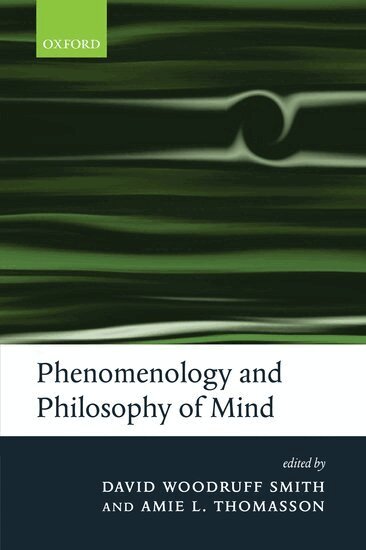
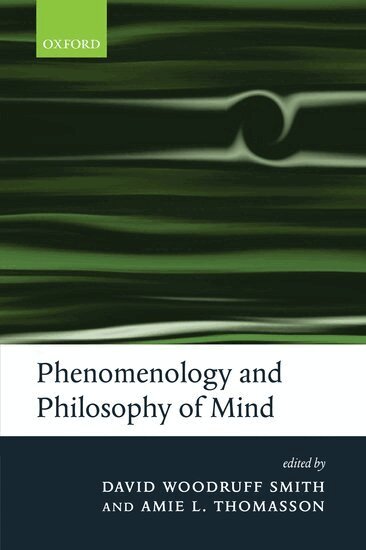
Philosophical work on the mind flowed in two streams through the 20th century: phenomenology and analytic philosophy. The phenomenological tradition began with Brentano and was developed by such great European philosophers as Husserl, Heidegger, Sartre, and Merleau-Ponty. As the century advanced, Anglophone philosophers increasingly developed their own distinct styles and methods of studying the mind, and a gulf seemed to open up between the two traditions. This volume aims to bring them together again, by demonstrating how work in phenomenology may lead to significant progress on problems central to current analytic research, and how analytical philosophy of mind may shed light on phenomenological concerns. Leading figures from both traditions contribute specially written essays on such central topics as consciousness, intentionality, perception, action, self-knowledge, temporal awareness, and mental content. Phenomenology and Philosophy of Mind demonstrates that these different approaches to the mind should not stand in opposition to each other, but can be mutually illuminating.
Häftad, Engelska, 2005
805 kr
Skickas inom 5-8 vardagar
Philosophical work on the mind flowed in two streams through the 20th century: phenomenology and analytic philosophy. The phenomenological tradition began with Brentano and was developed by such great European philosophers as Husserl, Heidegger, Sartre, and Merleau-Ponty. As the century advanced, Anglophone philosophers increasingly developed their own distinct styles and methods of studying the mind, and a gulf seemed to open up between the two traditions. This volume aims to bring them together again, by demonstrating how work in phenomenology may lead to significant progress on problems central to current analytic research, and how analytical philosophy of mind may shed light on phenomenological concerns. Leading figures from both traditions contribute specially written essays on such central topics as consciousness, intentionality, perception, action, self-knowledge, temporal awareness, and mental content. Phenomenology and Philosophy of Mind demonstrates that these different approaches to the mind should not stand in opposition to each other, but can be mutually illuminating.
Inbunden, Engelska, 2015
1 047 kr
Skickas inom 5-8 vardagar
In the decades following Quine, debates about existence have taken center stage in the metaphysics. But neo-Quinean ontology has reached a crisis point, given the endless proliferation of positions and lack of any clear idea of how to resolve debates. The most prominent challenge to mainstream ontological debates has come from the idea that disputants can be seen as using the quantifier with different meanings, leaving the dispute merely verbal. Nearly all of the work in defense of hard ontology has gone into arguing against quantifier variance. This volume argues that hard ontology faces an entirely different challenge, which remains even if the threat of quantifier variance can be avoided. The challenge comes from the 'easy approach to ontology': a view that is arguably the heir to Carnap's own position. The idea of the easy approach is that many ontological questions can be answered by undertaking trivial inferences from uncontroversial premises, making prolonged disputes about the questions out of place. This book aims to develop the easy approach to ontology, showing how it leads to both a first-order simple realism about the disputed entities and a form of meta-ontological deflationism that takes ontological disputes themselves to be misguided, since existence questions may be answered by straightforward conceptual and/or empirical work. It also aims to defend the easy approach against a range of arguments wielded against it and to show it to be a viable and attractive alternative to the quagmire of hard ontology.
E-bok
PDF, Engelska, 2014499 kr
Läs direkt efter köp
In the decades following Quine, debates about existence have taken center stage in the metaphysics. But neo-Quinean ontology has reached a crisis point, given the endless proliferation of positions and lack of any clear idea of how to resolve debates. The most prominent challenge to mainstream ontological debates has come from the idea that disputants can be seen as using the quantifier with different meanings, leaving the dispute merely verbal. Nearly all of the work in defense of hard ontology has gone into arguing against quantifier variance.This volume argues that hard ontology faces an entirely different challenge, which remains even if the threat of quantifier variance can be avoided. The challenge comes from the ''easy approach to ontology'': a view that is arguably the heir to Carnap''s own position. The idea of the easy approach is that many ontological questions can be answered by undertaking trivial inferences from uncontroversial premises, making prolonged disputes about the questions out of place. This book aims to develop the easy approach to ontology, showing how it leads to both a first-order simple realism about the disputed entities and a form of meta-ontological deflationism that takes ontological disputes themselves to be misguided, since existence questions may be answered by straightforward conceptual and/or empirical work. It also aims to defend the easy approach against a range of arguments wielded against it and to show it to be a viable and attractive alternative to the quagmire of hard ontology.
Häftad, Engelska, 2008
552 kr
Skickas inom 7-10 vardagar
This challenging study places fiction squarely at the centre of the discussion of metaphysics. Philosophers have traditionally treated fiction as involving a set of narrow problems in logic or the philosophy of language. By contrast Amie Thomasson argues that fiction has far-reaching implications for central problems of metaphysics. The book develops an 'artifactual' theory of fiction, whereby fictional characters are abstract artifacts as ordinary as laws or symphonies or works of literature. By understanding fictional characters we come to understand how other cultural and social objects are established on the basis of the independent physical world and the mental states of human beings.
Inbunden, Engelska, 1998
1 433 kr
Skickas inom 7-10 vardagar
This challenging study places fiction squarely at the centre of the discussion of metaphysics. Philosophers have traditionally treated fiction as involving a set of narrow problems in logic or the philosophy of language. By contrast Amie Thomasson argues that fiction has far-reaching implications for central problems of metaphysics. The book develops an 'artifactual' theory of fiction, whereby fictional characters are abstract artifacts as ordinary as laws or symphonies or works of literature. By understanding fictional characters we come to understand how other cultural and social objects are established on the basis of the independent physical world and the mental states of human beings.
Häftad, Franska, 2011
257 kr
Skickas inom 5-8 vardagar