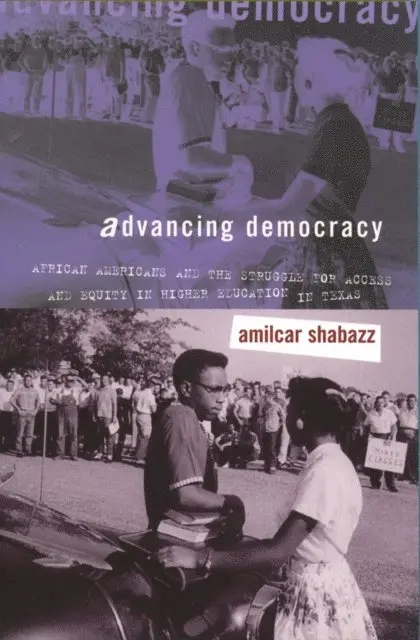
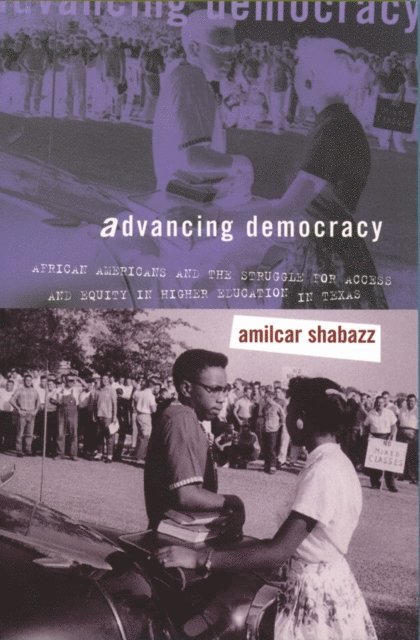
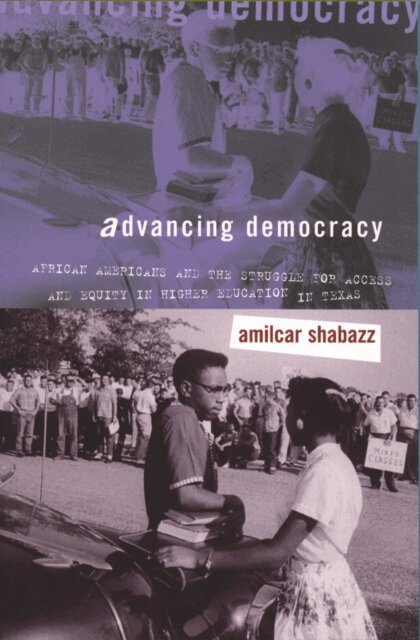
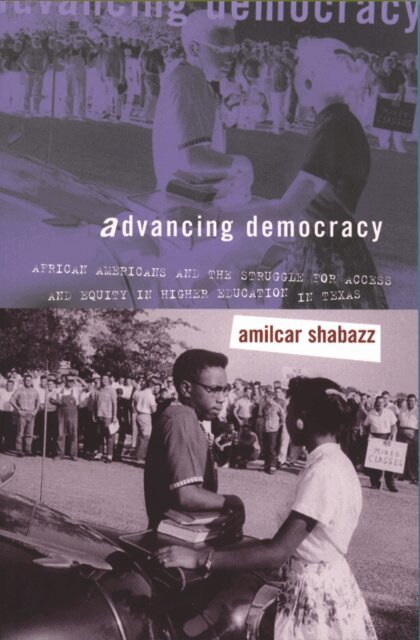
As we approach the fiftieth anniversary of Brown v. Board of Education (1954), it is important to consider the historical struggles that led to this groundbreaking decision. Four years earlier in Texas, the Sweatt v. Painter decision allowed blacks access to the University of Texas's law school for the first time. Amilcar Shabazz shows that the development of black higher education in Texas--which has historically had one of the largest state college and university systems in the South--played a pivotal role in the challenge to Jim Crow education. Shabazz begins with the creation of the Texas University Movement in the 1880s to lobby for equal access to the full range of graduate and professional education through a first-class university for African Americans. He traces the philosophical, legal, and grassroots components of the later campaign to open all Texas colleges and universities to black students, showing the complex range of strategies and the diversity of ideology and methodology on the part of black activists and intellectuals working to promote educational equality. Shabazz credits the efforts of blacks who fought for change by demanding better resources for segregated black colleges in the years before Brown , showing how crucial groundwork for nationwide desegregation was laid in the state of Texas. |Shabazz reveals that the development of black higher education in Texas played a pivotal role in the challenge to Jim Crow education nationwide. He details the creation of the Texas University Movement in the 1880s and credits the efforts of blacks who fought for better resources for segregated black colleges in the years before Brown v. Board of Education.
As we approach the fiftieth anniversary of Brown v. Board of Education (1954), it is important to consider the historical struggles that led to this groundbreaking decision. Four years earlier in Texas, the Sweatt v. Painter decision allowed blacks access to the University of Texas''s law school for the first time. Amilcar Shabazz shows that the development of black higher education in Texas--which has historically had one of the largest state college and university systems in the South--played a pivotal role in the challenge to Jim Crow education.Shabazz begins with the creation of the Texas University Movement in the 1880s to lobby for equal access to the full range of graduate and professional education through a first-class university for African Americans. He traces the philosophical, legal, and grassroots components of the later campaign to open all Texas colleges and universities to black students, showing the complex range of strategies and the diversity of ideology and methodology on the part of black activists and intellectuals working to promote educational equality. Shabazz credits the efforts of blacks who fought for change by demanding better resources for segregated black colleges in the years before Brown, showing how crucial groundwork for nationwide desegregation was laid in the state of Texas.
In Defiance is a corrective. American history has historically suffered from the systematic effort of many in power to suppress the stories of those whose lives serve as models for those who came after - models of conscience, activism, and dedication to the cause of the abolition of enslavement. Following an introduction to the history of enslavement in the Americas, twenty people's lives, Black and white, men and women, are profiled in order to convey the monumental commitment - its source and its expression - they carried with them throughout their lives. Those people - and the circumstances that influenced, inspired, and motivated them to risk their well-being and their lives for the freedom and equality of enslaved people - are conveyed in vivid vignettes, often including their own words. Their stories are an antidote to the numerous attempts being made to deny, suppress, erase, and whitewash the actual people and events that occurred and that, in the telling, can cause discomfort. These stories need to be shared and recounted in classrooms. They are intended 'to afflict the comfortable and comfort the afflicted' as Black and white people will experience them differently, a significant reason for the authors' choice to write the book together. The book's other primary purpose is to inspire and embolden readers to make John Lewis's 'good trouble' and Drew Gilpin-Faust's 'necessary trouble' in the face of on-going racism, now 160 years after the proclamation that accomplished at least some of the defiant quest of the men and women whose stories the book contains. The authors bring their life experiences and activism into the telling of the stories and into the decisions about what to focus upon in the telling. It is their hope that readers will benefit from the two voices and see the importance of having such stories resonate with all people, regardless of race. As you read, consider the obstacles faced by the people profiled and then imagine what it will take for you to become an advocate for racial justice. Then take whatever action you deem necessary and remember those who came before.
As we approach the fiftieth anniversary of Brown v. Board of Education (1954), it is important to consider the historical struggles that led to this groundbreaking decision. Four years earlier in Texas, the Sweatt v. Painter decision allowed blacks access to the University of Texas''s law school for the first time. Amilcar Shabazz shows that the development of black higher education in Texas--which has historically had one of the largest state college and university systems in the South--played a pivotal role in the challenge to Jim Crow education.Shabazz begins with the creation of the Texas University Movement in the 1880s to lobby for equal access to the full range of graduate and professional education through a first-class university for African Americans. He traces the philosophical, legal, and grassroots components of the later campaign to open all Texas colleges and universities to black students, showing the complex range of strategies and the diversity of ideology and methodology on the part of black activists and intellectuals working to promote educational equality. Shabazz credits the efforts of blacks who fought for change by demanding better resources for segregated black colleges in the years before Brown, showing how crucial groundwork for nationwide desegregation was laid in the state of Texas.
As we approach the fiftieth anniversary of Brown v. Board of Education (1954), it is important to consider the historical struggles that led to this groundbreaking decision. Four years earlier in Texas, the Sweatt v. Painter decision allowed blacks access to the University of Texass law school for the first time. Amilcar Shabazz shows that the development of black higher education in Texas which has historically had one of the largest state college and university systems in the South played a pivotal role in the challenge to Jim Crow education.Shabazz begins with the creation of the Texas University Movement in the 1880s to lobby for equal access to the full range of graduate and professional education through a first-class university for African Americans. He traces the philosophical, legal, and grassroots components of the later campaign to open all Texas colleges and universities to black students, showing the complex range of strategies and the diversity of ideology and methodology on the part of black activists and intellectuals working to promote educational equality. Shabazz credits the efforts of blacks who fought for change by demanding better resources for segregated black colleges in the years before Brown, showing how crucial groundwork for nationwide desegregation was laid in the state of Texas.