
Amineh Ahmed – författare
Visar alla böcker från författaren Amineh Ahmed. Handla med fri frakt och snabb leverans.
2 produkter
2 produkter
Del 63 - University of Cambridge Oriental Publications
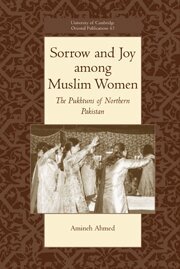
Sorrow and Joy among Muslim Women
The Pukhtuns of Northern Pakistan
Häftad, Engelska, 2008
613 kr
Skickas inom 7-10 vardagar
The Pukhtuns are numerically and politically one of the most significant ethno-linguistic groups in Pakistan and Afghanistan. This important study of Pukhtun society concentrates on the lives, thoughts and gham-khadi (funerals-weddings) ceremonies of the women, especially of the elite, wealthy and educated women (Bibiane) who have largely been overlooked in previous studies. Contesting their conventional representation as idle, it illustrates their commitment to various forms of work within familial and social contexts. It challenges the commonly assumed models of contemporary Pakistan society, which make a simplistic divide between rural and urban, Punjab and non-Punjab, and feudal and non-feudal spaces and peoples. It also contributes to broader debates about the nature and expression of elite cultures and issues of sociality, funerals and marriage, custom and religion, space and gender, morality and reason, and social role and personhood within the contexts of Islam in the Middle East and South Asia.
Del 63 - University of Cambridge Oriental Publications
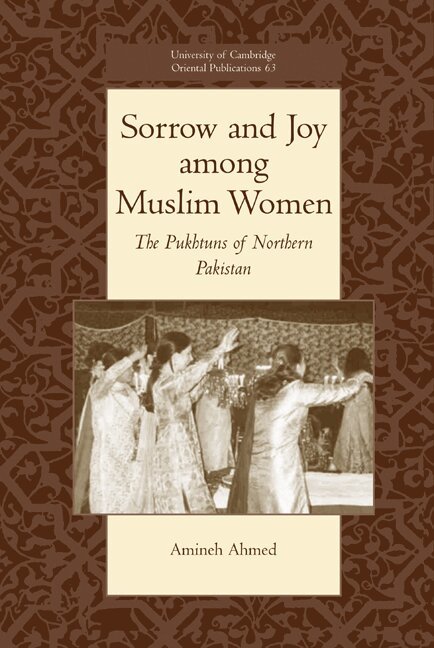
Sorrow and Joy among Muslim Women
The Pukhtuns of Northern Pakistan
Inbunden, Engelska, 2006
1 192 kr
Skickas inom 7-10 vardagar
The Pukhtuns are numerically and politically one of the most significant ethno-linguistic groups in Pakistan and Afghanistan. This important study of Pukhtun society concentrates on the lives, thoughts and gham-khadi (funerals-weddings) ceremonies of the women, especially of the elite, wealthy and educated women (Bibiane) who have largely been overlooked in previous studies. Contesting their conventional representation as idle, it illustrates their commitment to various forms of work within familial and social contexts. It challenges the commonly assumed models of contemporary Pakistan society, which make a simplistic divide between rural and urban, Punjab and non-Punjab, and feudal and non-feudal spaces and peoples. It also contributes to broader debates about the nature and expression of elite cultures and issues of sociality, funerals and marriage, custom and religion, space and gender, morality and reason, and social role and personhood within the contexts of Islam in the Middle East and South Asia.