Amir Hosein Pourjavady – författare
Visar alla böcker från författaren Amir Hosein Pourjavady. Handla med fri frakt och snabb leverans.
3 produkter
3 produkter
Inbunden, Engelska, 2023
1 912 kr
Skickas inom 3-6 vardagar
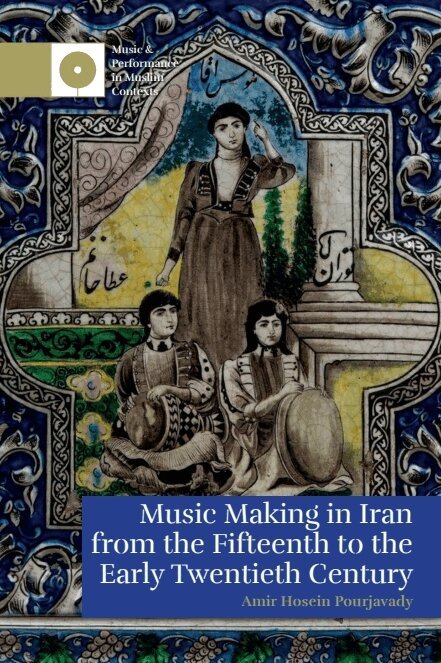
This book comprises a study of music in Iran from the Timurid period in the fifteenth century up until the end of the Qajar period at the beginning of the twentieth century. It examines many aspects of music making in this span of time including centres of musical patronage, the role of patrons, music theorists, music treatises, the social organization of musicians, courtesan and concubine culture, and performance contexts. It also compares descriptions of musical sessions and performance formats from different periods and considers Western influence, socio-political developments, and contact with other musical cultures. Music Making in Iran also scrutinizes the emergence and evolution of modal entities, rules for modulation, the formation of court repertoires, the development of rhythmic structures, vocal and instrumental genres, and forms of composition.
Häftad, Engelska, 2025
741 kr
Skickas inom 3-6 vardagar
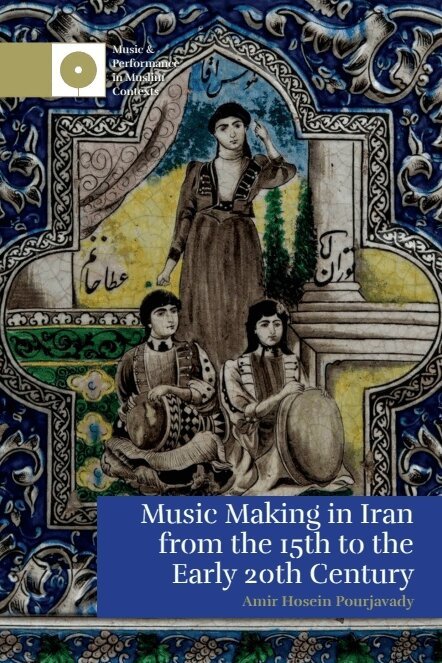
Music Making in Iran from the 15th to the Early 20th Century looks at the change and evolution of music in Iran from both social and theoretical perspectives. Amir Hosein Pourjavady scrutinises the emergence and development of modal entities, rules for modulation, the formation of court repertoires, the progress of rhythmic structures, vocal and instrumental genres and forms of composition. Through this lens, Hosein investigates how Iranian music has been impacted by Western influence, socio-political developments and contact with other musical cultures.
Del 30 - Iran Studies
Music in the Safavid Era (1501-1736)
nsFour Texts and Their Translations
Inbunden, Engelska, 2026
2 541 kr
Skickas inom 3-6 vardagar
This volume presents four Persian musical texts from 16th- and 17th-century Iran, each offering invaluable insights into the musical norms and repertoire of the Safavid court. Their well-established dates of composition and places of origin further allow us to trace the trajectory of musical development over nearly two centuries. The first text, Resāla-ye Karāmiya, is an important musical treatise written by Dawra Beg Karāmi in the 1580s in Herat. The second was authored by Mir Ṣadr al-Din Moḥammad Qazvini (d. 1599), a distinguished court music theorist and composer active in the latter half of the 16th century. The third treatise, Zamzama-ye vaḥdat, was penned by Bāqiyā Nāʾini (d. c. 1658), a renowned composer who initially trained in Iran before relocating to India, where he completed his work in 1654 and dedicated it to Shāhjahān (r. 1628-1658). The final text in this collection is the Codex of Amir Khān Gorji, a Georgian court composer in Isfahan during the second half of the 17th century. This codex also includes the musical treatise and song-text collection of Āqā Moʾmen Moṣannef. While the first three texts focus exclusively on music theory, Amir Khān’s codex stands out for its diverse collection of song texts composed by Safavid musicians throughout the 17th century.