Amira Bojadzija-Dan - Böcker
Visar alla böcker från författaren Amira Bojadzija-Dan. Handla med fri frakt och snabb leverans.
4 produkter
4 produkter
1 230 kr
Skickas inom 10-15 vardagar
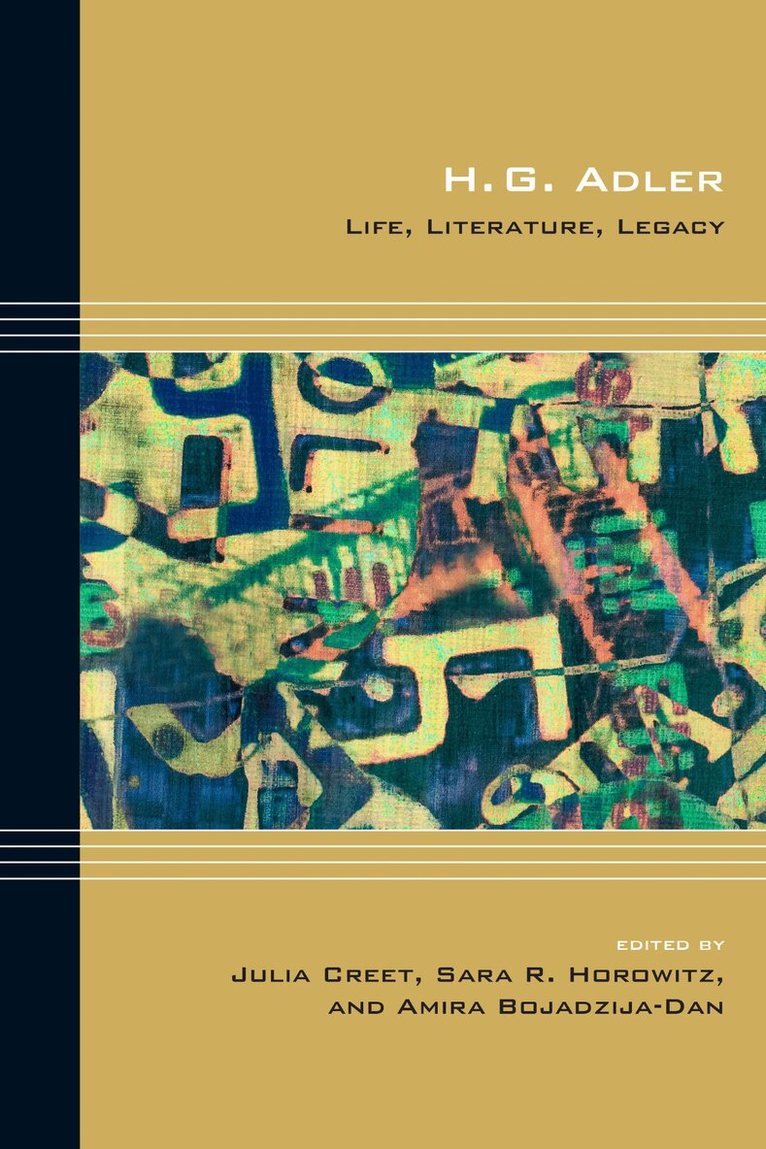
H. G. Adler: Life, Literature, Legacy is the first collection of essays in English dedicated to the life and work of German-language author H. G. Adler. Among the international scholars of German, Jewish, and Holocaust literature and history who reveal the range of Adler’s legacy across genres are Adler’s son, Jeremy Adler, and Peter Filkins, translator of Adler’s trilogy, Panorama (The Journey).Together, the essays examine Adler’s writing in relation to his life, especially his memory as a survivor of the Nazi death camps and his posthumous recognition for having produced a Gesamkunstwerk, an aesthetic synthesis of the Shoah. The book carries the moral charge of Adler’s work, moving beyond testimony to a complex dialectic between fact and fiction, exploring Adler’s experiments with voice and the ethical work of literary engagement with the Shoah.
457 kr
Skickas inom 11-20 vardagar
H.G. Adler: Life, Literature, Legacy is the first collection of essays in English dedicated to the life and work of German-language author H. G. Adler. Among the international scholars of German, Jewish, and Holocaust literature and history who reveal the range of Adler’s legacy across genres are Adler’s son, Jeremy Adler, and Peter Filkins, translator of Adler’s trilogy, Panorama (The Journey).Together, the essays examine Adler’s writing in relation to his life, especially his memory as a survivor of the Nazi death camps and his posthumous recognition for having produced a Gesamkunstwerk, an aesthetic synthesis of the Shoah. The book carries the moral charge of Adler’s work, moving beyond testimony to a complex dialectic between fact and fiction, exploring Adler’s experiments with voice and the ethical work of literary engagement with the Shoah.
1 674 kr
Skickas inom 3-6 vardagar
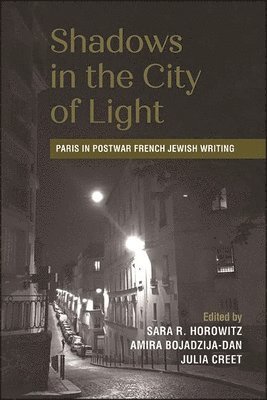
Examines the place of Paris in French Jewish literary memory, a memory that, of necessity, grapples with the aftermath of the Holocaust.The essays in Shadows in the City of Light explore the significance of Paris in the writing of five influential French writers-Sarah Kofman, Patrick Modiano, George Perec, Henri Raczymow, and Irene Nemirovsky-whose novels and memoirs capture and probe the absences of deported Paris Jews. These writers move their readers through wartime and postwar cityscapes of Paris, walking them through streets and arrondissments where Jews once resided, looking for traces of the disappeared. The city functions as more than a backdrop or setting. Its streets and buildings and monuments remind us of the exhilarating promise of the French Revolution and what it meant for Jews dreaming of equality. But the dynamic space of Paris also reminds us of the Holocaust and its aftermath. The shadowed paths traced by these writers raise complicated questions about ambivalence, absence, memory, secularity, and citizenship. In their writing, the urban landscape itself bears witness to the absent Jews, and what happened to them.For the writers treated in this volume, neither their Frenchness nor their Jewishness is a fixed point. Focusing on Paris's dual role as both a cultural hub and a powerful symbol of hope and conflict in Jewish memory, the contributors address intersections and departures among these writers. Their complexity of thought, artistry, and depth of vision shape a new understanding of the impact of the Holocaust on Jewish and French identity, on literature and literary forms, and on the development of Jewish secular culture in Western Europe.
651 kr
Skickas inom 3-6 vardagar
Examines the place of Paris in French Jewish literary memory, a memory that, of necessity, grapples with the aftermath of the Holocaust.The essays in Shadows in the City of Light explore the significance of Paris in the writing of five influential French writers-Sarah Kofman, Patrick Modiano, George Perec, Henri Raczymow, and Irene Nemirovsky-whose novels and memoirs capture and probe the absences of deported Paris Jews. These writers move their readers through wartime and postwar cityscapes of Paris, walking them through streets and arrondissments where Jews once resided, looking for traces of the disappeared. The city functions as more than a backdrop or setting. Its streets and buildings and monuments remind us of the exhilarating promise of the French Revolution and what it meant for Jews dreaming of equality. But the dynamic space of Paris also reminds us of the Holocaust and its aftermath. The shadowed paths traced by these writers raise complicated questions about ambivalence, absence, memory, secularity, and citizenship. In their writing, the urban landscape itself bears witness to the absent Jews, and what happened to them.For the writers treated in this volume, neither their Frenchness nor their Jewishness is a fixed point. Focusing on Paris's dual role as both a cultural hub and a powerful symbol of hope and conflict in Jewish memory, the contributors address intersections and departures among these writers. Their complexity of thought, artistry, and depth of vision shape a new understanding of the impact of the Holocaust on Jewish and French identity, on literature and literary forms, and on the development of Jewish secular culture in Western Europe.