Amita Shastri – författare
Visar alla böcker från författaren Amita Shastri. Handla med fri frakt och snabb leverans.
6 produkter
6 produkter
Inbunden, Engelska, 2018
862 kr
Skickas inom 3-6 vardagar
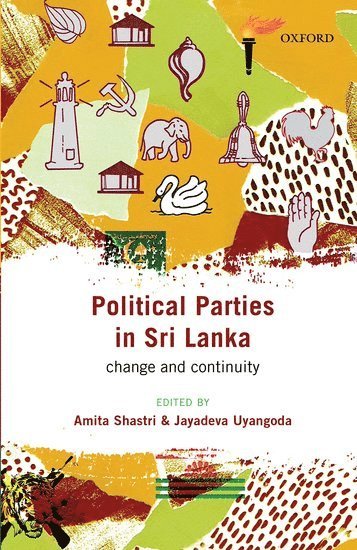
Having survived a tumultuous period in its political history, the island state of Sri Lanka has one of the longest and most active traditions of political parties in South Asia. The survival of democratic politics here despite repeated youth insurgencies, a protracted ethnic conflict, and a long and bloody civil war makes it pertinent for us to explore the patterns of change and continuity that characterize party politics in Sri Lanka. While the first and second phases of the history of its parties and party system--the last period of colonial rule, followed by the postcolonial years of 1947-70--unfolded in a context of relative social peace, the third phase, from 1970 to the present, has seen continuing social unrest, rebellion, political violence, and a deepening crisis in the experience of democracy. This volume analyses the changing role and impact of political parties in contemporary Sri Lanka. It examines their functioning in a context of severe ethnic conflict, transformations of the political structure, changes in the electoral system, rapid social change, and globalization. It also covers the crucial presidential and parliamentary elections of 2015 and reflects on the experience of individual political parties as well as Sri Lanka's party system as a whole.
Inbunden, Engelska, 2001
1 020 kr
Skickas inom 10-15 vardagar
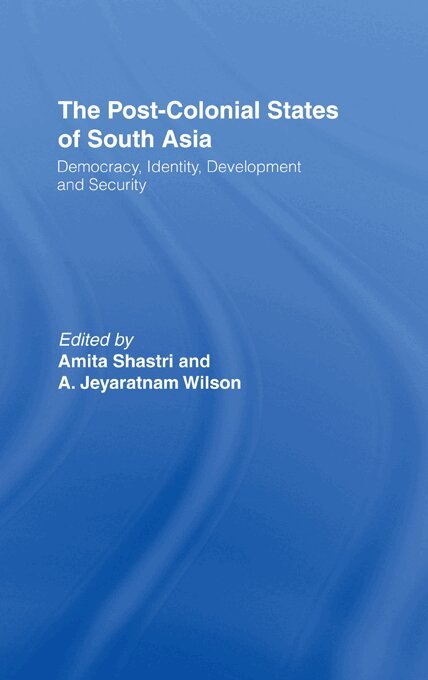
The chapters in this volume analyse issues relating to political governance, national identity, economic development and regional security that have preoccupied the states of South Asia in the fifty years following independence. India has been faced with the challenge of developing effective democratic structures in the world's most diverse and populous society. It confronts tensions in its efforts to carry out economic reforms in a competitive resource-scarce context, and to maintain its commitment to secularism in the face of the growing influence of Hindu nationalism. The role of the military and of religion have complicated the task of stabilising democratic structures and socio-economic development in Pakistan and Bangladesh. Sri Lanka's political problems have escalated due to the failures of its leadership, unsuccessful constitutional experiments, and unresolved ethnic differences. The transition of Nepal from a centralised monarchy to a participatory political system has generated stresses in its traditional social relations and group rankings. The essays by an international groups of scholars explore these themes with a view to highlighting the complex processes of political change and development that are underway in the South Asian states.
Inbunden, Engelska, 2001
2 321 kr
Skickas inom 10-15 vardagar
This text discusses the principal political and constitutional questions that have arisen in the states of Bangladesh, India, Pakistan and Sri Lanka following fifty years of independence. In Sri Lanka the pressing problems have been around the inter-ethnic civil war, experiments with constitutional designs, widespread prevalence of corruption and the recrudescence of Buddhist militancy. In India it has been corruption, Hindu nationalism and general political instability. In Bangladesh and Pakistan it has been the role of the military, the state and religion. A general theme is an analysis of the malaise that is prevalent and how and why this was inherited, despite the colonial legacy of parliamentary democracy, the steel framework of a trained bureaucracy, the independence of the judiciary and the rule of law.
E-bok
PDF, Engelska, 2013758 kr
Läs direkt efter köp
This text discusses the principal political and constitutional questions that have arisen in the states of Bangladesh, India, Pakistan and Sri Lanka following fifty years of independence. In Sri Lanka the pressing problems have been around the inter-ethnic civil war, experiments with constitutional designs, widespread prevalence of corruption and the recrudescence of Buddhist militancy. In India it has been corruption, Hindu nationalism and general political instability. In Bangladesh and Pakistan it has been the role of the military, the state and religion. A general theme is an analysis of the malaise that is prevalent and how and why this was inherited, despite the colonial legacy of parliamentary democracy, the steel framework of a trained bureaucracy, the independence of the judiciary and the rule of law.
E-bok
Engelska, 2013758 kr
Läs direkt efter köp
This text discusses the principal political and constitutional questions that have arisen in the states of Bangladesh, India, Pakistan and Sri Lanka following fifty years of independence. In Sri Lanka the pressing problems have been around the inter-ethnic civil war, experiments with constitutional designs, widespread prevalence of corruption and the recrudescence of Buddhist militancy. In India it has been corruption, Hindu nationalism and general political instability. In Bangladesh and Pakistan it has been the role of the military, the state and religion. A general theme is an analysis of the malaise that is prevalent and how and why this was inherited, despite the colonial legacy of parliamentary democracy, the steel framework of a trained bureaucracy, the independence of the judiciary and the rule of law.
Häftad, Engelska, 2015
716 kr
Skickas inom 10-15 vardagar
This text discusses the principal political and constitutional questions that have arisen in the states of Bangladesh, India, Pakistan and Sri Lanka following fifty years of independence. In Sri Lanka the pressing problems have been around the inter-ethnic civil war, experiments with constitutional designs, widespread prevalence of corruption and the recrudescence of Buddhist militancy. In India it has been corruption, Hindu nationalism and general political instability. In Bangladesh and Pakistan it has been the role of the military, the state and religion. A general theme is an analysis of the malaise that is prevalent and how and why this was inherited, despite the colonial legacy of parliamentary democracy, the steel framework of a trained bureaucracy, the independence of the judiciary and the rule of law.