Amnon Aran - Böcker
Visar alla böcker från författaren Amnon Aran. Handla med fri frakt och snabb leverans.
6 produkter
6 produkter
Del 61 - Cambridge Middle East Studies
Israeli Foreign Policy since the End of the Cold War
Inbunden, Engelska, 2020
1 282 kr
Skickas inom 7-10 vardagar
This is the first study of Israeli foreign policy towards the Middle East and selected world powers including China, India, the European Union and the United States since the end of the Cold War. It provides an integrated account of these foreign policy spheres and serves as an essential historical context for the domestic political scene during these pivotal decades. The book demonstrates how foreign policy is shaped by domestic factors, which are represented as three concentric circles of decision-makers, the security network and Israeli national identity. Told from this perspective, Amnon Aran highlights the contributions of the central individuals, societal actors, domestic institutions, and political parties that have informed and shaped Israeli foreign policy decisions, implementation, and outcomes. Aran demonstrates that Israel has pursued three foreign policy stances since the end of the Cold War - entrenchment, engagement and unilateralism - and explains why.
Del 61 - Cambridge Middle East Studies
Israeli Foreign Policy since the End of the Cold War
Häftad, Engelska, 2022
415 kr
Skickas inom 7-10 vardagar
This is the first study of Israeli foreign policy towards the Middle East and selected world powers including China, India, the European Union and the United States since the end of the Cold War. It provides an integrated account of these foreign policy spheres and serves as an essential historical context for the domestic political scene during these pivotal decades. The book demonstrates how foreign policy is shaped by domestic factors, which are represented as three concentric circles of decision-makers, the security network and Israeli national identity. Told from this perspective, Amnon Aran highlights the contributions of the central individuals, societal actors, domestic institutions, and political parties that have informed and shaped Israeli foreign policy decisions, implementation, and outcomes. Aran demonstrates that Israel has pursued three foreign policy stances since the end of the Cold War - entrenchment, engagement and unilateralism - and explains why.
2 693 kr
Skickas inom 10-15 vardagar
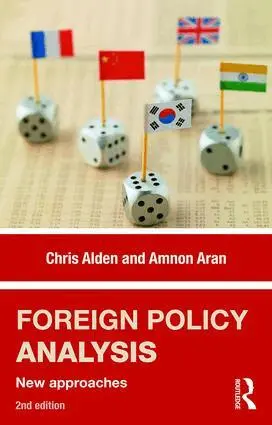
Building on the success of the first edition, this revised volume re-invigorates the conversation between foreign policy analysis and international relations. It opens up the discussion, situating existing debates in foreign policy in relation to contemporary concerns in international relations, and provides a concise and accessible account of key areas in foreign policy analysis that are often ignored. Focusing on how foreign policy decision making affects the conduct of states in the international system, and analysing the relationship between policy, agency and actors, the volume examines:foreign policy and bureaucraciesdomestic sources of foreign policyforeign policy and the stateforeign policy and globalizationforeign policy and change.Features of the second edition include:a wider range of contemporary case studies and examples from around the globeanalysis of new directions in foreign policy analysis including foreign policy implementation and the changing media landscapefully updated material across all chapters to reflect the evolving research agenda in the area.This second edition builds on and expands the theoretical canvas of foreign policy analysis, shaping its ongoing dialogue with international relations and offering an important introduction to the field. It is essential reading for all students of foreign policy and international relations.
685 kr
Skickas inom 10-15 vardagar
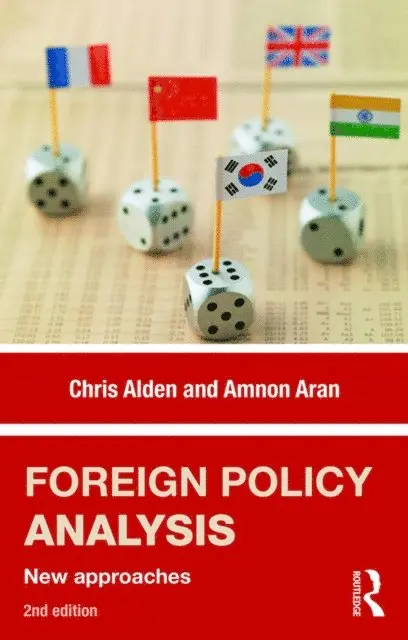
Building on the success of the first edition, this revised volume re-invigorates the conversation between foreign policy analysis and international relations. It opens up the discussion, situating existing debates in foreign policy in relation to contemporary concerns in international relations, and provides a concise and accessible account of key areas in foreign policy analysis that are often ignored. Focusing on how foreign policy decision making affects the conduct of states in the international system, and analysing the relationship between policy, agency and actors, the volume examines:foreign policy and bureaucraciesdomestic sources of foreign policyforeign policy and the stateforeign policy and globalizationforeign policy and change.Features of the second edition include:a wider range of contemporary case studies and examples from around the globeanalysis of new directions in foreign policy analysis including foreign policy implementation and the changing media landscapefully updated material across all chapters to reflect the evolving research agenda in the area.This second edition builds on and expands the theoretical canvas of foreign policy analysis, shaping its ongoing dialogue with international relations and offering an important introduction to the field. It is essential reading for all students of foreign policy and international relations.
1 691 kr
Skickas inom 7-10 vardagar
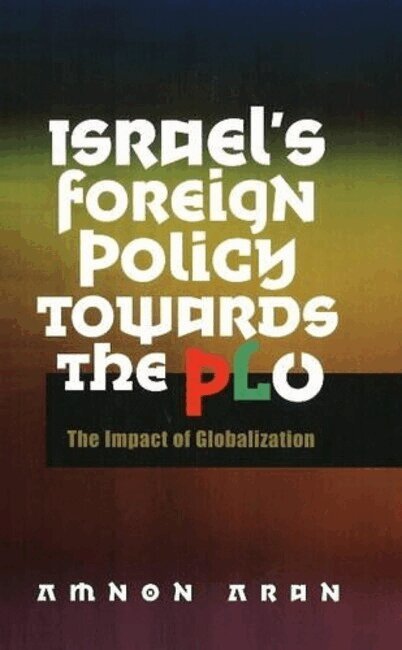
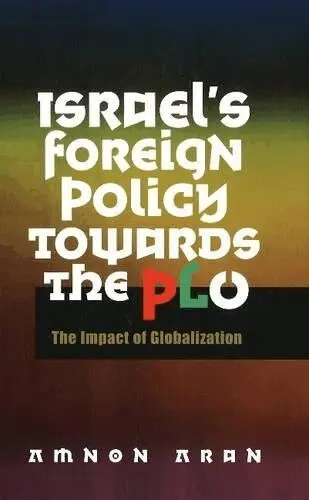
This detailed examination of Israeli foreign policy towards the Palestinian Liberation Organization (PLO) between the 1967 war and the 2005 withdrawal from the Gaza Strip focuses on the impact and process of globalisation on the Israeli state's politics, economy, society and culture. In order to determine how interfacing developed between foreign policy and globalisation a theoretical framework is presented that brings together two established approaches that hitherto have advanced in parallel: foreign policy analysis and globalisation theory. This is the first attempt within the discipline of International Relations to theorise the relationships between foreign policy and globalisation. Causal relationships underpinning Israeli foreign policy -- involving government, the state, the economy, social stratification, and the media -- are linked to globalisation by specific example. Conventional accounts of this relationship strip military and political factors of any significance in terms of the conceptualisation of globalisation and its causes, in favour of spatio-temporal and economic dimensions. The state is viewed as being compelled to transform in response to the pressures of globalisation. But in the case of Israel the state acted proactively by using foreign policy towards the PLO as a key site of action to capture the opportunities and cope with the challenges presented by globalisation. To date there have been only partial historical accounts of Israeli foreign policy towards the PLO in the context of globalisation. It is generally understood that foreign policy towards the PLO became entangled with globalisation due to the socio-economic and cultural globalisation of Israel in the mid-1980s, but this study shows that the increasing impact of military and political globalisation during the Cold War on the Arab-Israeli conflict resulted in Israeli foreign policy towards the PLO, and globalisation effects in Israel, becoming entwined from the early 1970s.
431 kr
Skickas inom 7-10 vardagar
This detailed examination of Israeli foreign policy towards the Palestinian Liberation Organization (PLO) between the 1967 war and the 2005 withdrawal from the Gaza Strip focuses on the impact and process of globalisation on the Israeli state's politics, economy, society and culture. In order to determine how interfacing developed between foreign policy and globalisation a theoretical framework is presented that brings together two established approaches that hitherto have advanced in parallel: foreign policy analysis and globalisation theory. This is the first attempt within the discipline of International Relations to theorise the relationships between foreign policy and globalisation. Causal relationships underpinning Israeli foreign policy -- involving government, the state, the economy, social stratification, and the media -- are linked to globalisation by specific example. Conventional accounts of this relationship strip military and political factors of any significance in terms of the conceptualisation of globalisation and its causes, in favour of spatio-temporal and economic dimensions. The state is viewed as being compelled to transform in response to the pressures of globalisation. But in the case of Israel the state acted proactively by using foreign policy towards the PLO as a key site of action to capture the opportunities and cope with the challenges presented by globalisation. To date there have been only partial historical accounts of Israeli foreign policy towards the PLO in the context of globalisation. It is generally understood that foreign policy towards the PLO became entangled with globalisation due to the socio-economic and cultural globalisation of Israel in the mid-1980s, but this study shows that the increasing impact of military and political globalisation during the Cold War on the Arab-Israeli conflict resulted in Israeli foreign policy towards the PLO, and globalisation effects in Israel, becoming entwined from the early 1970s.