Amory Starr - Böcker
Visar alla böcker från författaren Amory Starr. Handla med fri frakt och snabb leverans.
4 produkter
4 produkter
Shutting Down the Streets
Political Violence and Social Control in the Global Era
Inbunden, Engelska, 2011
914 kr
Skickas inom 10-15 vardagar
Recently, a wall was built in eastern Germany. Made of steel and cement blocks, topped with razor barbed wire, and reinforced with video monitors and movement sensors, this wall was not put up to protect a prison or a military base, but rather to guard a three-day meeting of the finance ministers of the Group of Eight (G8). The wall manifested a level of security that is increasingly commonplace at meetings regarding the global economy. The authors of Shutting Down the Streets have directly observed and participated in more than 20 mass actions against global in North America and Europe, beginning with the watershed 1999 WTO meetings in Seattle and including the 2007 G8 protests in Heiligendamm. Shutting Down the Streets is the first book to conceptualize the social control of dissent in the era of alterglobalization. Based on direct observation of more than 20 global summits, the book demonstrates that social control is not only global, but also preemptive, and that it relegates dissent to the realm of criminality. The charge is insurrection, but the accused have no weapons. The authors document in detail how social control forecloses the spaces through which social movements nurture the development of dissent and effect disruptive challenges.
Shutting Down the Streets
Political Violence and Social Control in the Global Era
Häftad, Engelska, 2011
362 kr
Skickas inom 7-10 vardagar
Recently, a wall was built in eastern Germany. Made of steel and cement blocks, topped with razor barbed wire, and reinforced with video monitors and movement sensors, this wall was not put up to protect a prison or a military base, but rather to guard a three-day meeting of the finance ministers of the Group of Eight (G8). The wall manifested a level of security that is increasingly commonplace at meetings regarding the global economy. The authors of Shutting Down the Streets have directly observed and participated in more than 20 mass actions against global in North America and Europe, beginning with the watershed 1999 WTO meetings in Seattle and including the 2007 G8 protests in Heiligendamm. Shutting Down the Streets is the first book to conceptualize the social control of dissent in the era of alterglobalization. Based on direct observation of more than 20 global summits, the book demonstrates that social control is not only global, but also preemptive, and that it relegates dissent to the realm of criminality. The charge is insurrection, but the accused have no weapons. The authors document in detail how social control forecloses the spaces through which social movements nurture the development of dissent and effect disruptive challenges.
515 kr
Skickas inom 10-15 vardagar
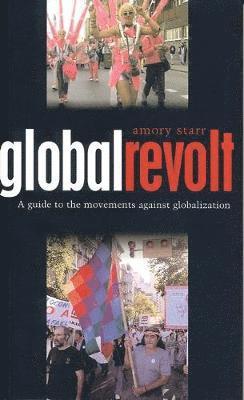
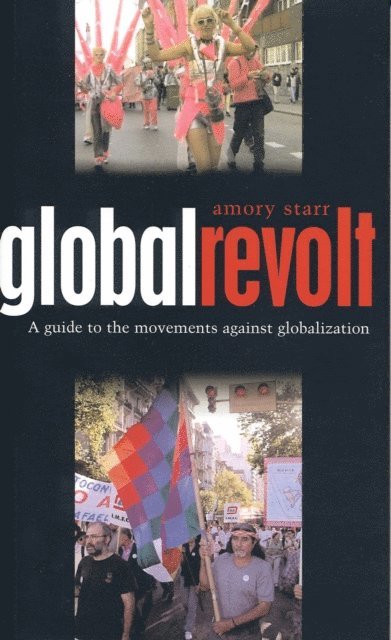
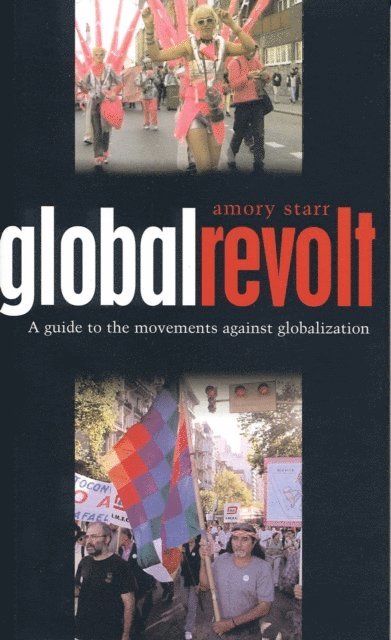
'Don't Owe! Won't Pay!', 'Get Rid of them All!', 'No Patents on Life!', 'Food Sovereignty', 'Another World is Possible!' ... The struggles against corporate power and the institutions of globalization grow more courageous and confident year by year.Millions of people have already become active in rejecting corporate globalization and developing alternatives to it. Millions more know that something is terribly wrong and are ready to begin taking action. This book is for them.Amory Starr is author of Naming the Enemy, a book that foresaw the emergent anti-globalization network nearly a decade ago. Here she provides, in concise and engaging style and with activist insight:A history of the movements' emergence.An outline of their analyses and aims.A digest of the ongoing controversies and dilemmas.An inspiring compendium of popular tactics.
515 kr
Skickas inom 10-15 vardagar
A new movement of 'anti-globalists', in Time Magazine's words (24 April 2000), now 'oppose corporate dominion over the planet's poor and disfranchised'. Naming the Enemy is the first systematic documentation of this international resistance to transnational corporations and globalization which has so recently burst into the public gaze with the street protests in Seattle, Washington, London and Prague.A wide and heterogeneous range of social movements now oppose the very fundamentals of market capitalism. Their challenge is beginning, Amory Starr shows, to amount to a sweeping critique of its purposes and practice. She explains how these movements understand their enemies and what sort of future they envision. There are, she suggests, three basic types:Movements trying to constrain corporate power through democratic institutions and direct action;Movements attempting a completely different kind of 'globalization from below' in which corporations will be reshaped in the service of new international democratic structures that will be populist, participatory and just;Movements seeking to delink their localities and communities from the global economy and rebuild instead small-scale socieites in which large corporations have no role at all.This new phenomenon has received scant media or scholarly attention. But it is likely to become much more important politically as the globalized economy dominated by giant corporations and institutions like the World Bank and IMF fails to deliver on jobs, social justice, Third World development and the environment. The course of this new kind of political struggle will have huge implications for human welfare and civil liberties.This unique and important book is relevant to activists as well as students and scholars of globalization, new social movements and political economy.