Amos Kiewe - Böcker
Visar alla böcker från författaren Amos Kiewe. Handla med fri frakt och snabb leverans.
11 produkter
11 produkter
1 177 kr
Skickas inom 5-8 vardagar
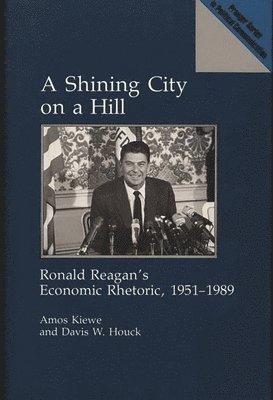
This rhetorical criticism of spoken discourse examines Ronald Reagan's polished attempts to persuade the public on economic matters. Amos Kiewe and Davis Houck examine the substance, style, and developmental pattern of Reagan's rhetoric on economic matters and discuss how that rhetoric informed the president's views on other issues. This book demonstrates how rhetorical forces can play a significant role in shaping and selling economic policy.Kiewe and Houck employ a variety of theoretical perspectives for their longitudinal study of Ronald Reagan's economic discourse, beginning with the former actor/President's Hollywood years. Their analysis of close to a hundred speeches provides a chronological account of the character and development of Reagan's economic rhetoric (as opposed to a critique of its effectiveness). Synthesizing the strategies, self-contradictions, shifts, influences, and patterns in Reagan's economic discourse, Kiewe and Houck conclude that Reagan's economic discourse heavily influenced his views and rhetoric on foreign policy, national defense, the environment, and other issues--Reagan saw the world through economic lenses. This study is valuable to political scientists, economists, and scholars of rhetoric.
1 009 kr
Skickas inom 10-15 vardagar
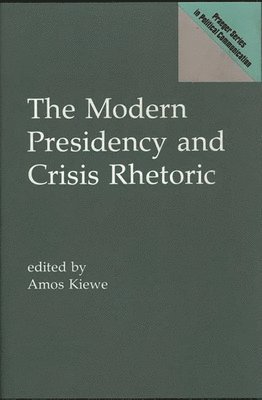
This volume examines how presidents from Truman to Bush rhetorically approached and managed political, military, judicial, legislative, and economic crises during their presidencies. Editor Amos Kiewe assembles new essays by communications scholars who look at rhetoric initiated during national crises, and account for various rhetorical developments affected by crises, changes in presidential rhetoric, and rhetorical and situational crisis constraints. Their studies suggest similarities in rhetoric in different types of crises, and yield resources for postulating patterns of crisis rhetoric.Each chapter's author presents a crisis rhetoric case study, analyzing initial strategies and tactics, shifts in rhetorical tactics, adjustments of discourse to particular phases in the crises, and unique rhetorical approaches designed to accommodate unexpected turns of events. The contributors discuss how presidents use rhetorical inventions, flip-flops, face-saving posturing, and even silence to diffuse crises. Specific topics include Eisenhower's response to the constitutional crisis in Little Rock, Kennedy and the Berlin Wall crisis, Johnson and the Kennedy assassination, Nixon and Watergate, and Bush and the Persian Gulf Crisis. Recommended for political scientists and communication theorists.
1 007 kr
Skickas inom 10-15 vardagar
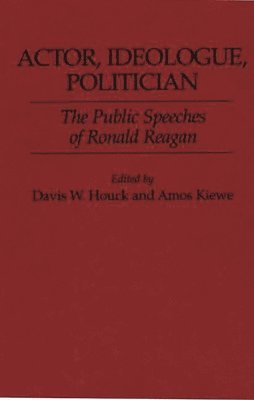
This new anthology rounds out Ronald Reagan's rhetorical persona and fills a major gap in the literature about the man by offering an unbiased and a multi-dimensional picture of his public speeches during all phases of his political life. The 52 speech texts are arranged, with short introductions, into six topical chapters covering his Hollywood years, his eight years as governor of California, his presidential campaigns of 1976 and 1980, and his two terms as president. This compact reference will be handy for professionals and students at all levels who are looking for a well-rounded collection of both obscure and well-known speeches which offers Reagan's views on major issues at different times throughout his career. The short volume is suitable for college, university, professional, and public libraries.This representative collection shows Ronald Reagan speaking as an actor, an ideologue, and a pragmatic politician, illustrating his diverse communication styles. The anthology contains both good and bad speeches--some that are famous and others that are little-known--and includes patriotic messages, views on citizenship, politics, and governance and on important issues at different stages in his career. This handy reference is uncompromising in its impartial selection of speeches. A short bibliography points to major sources and important studies, and a full index makes the reference completely accessible.
359 kr
Skickas inom 7-10 vardagar
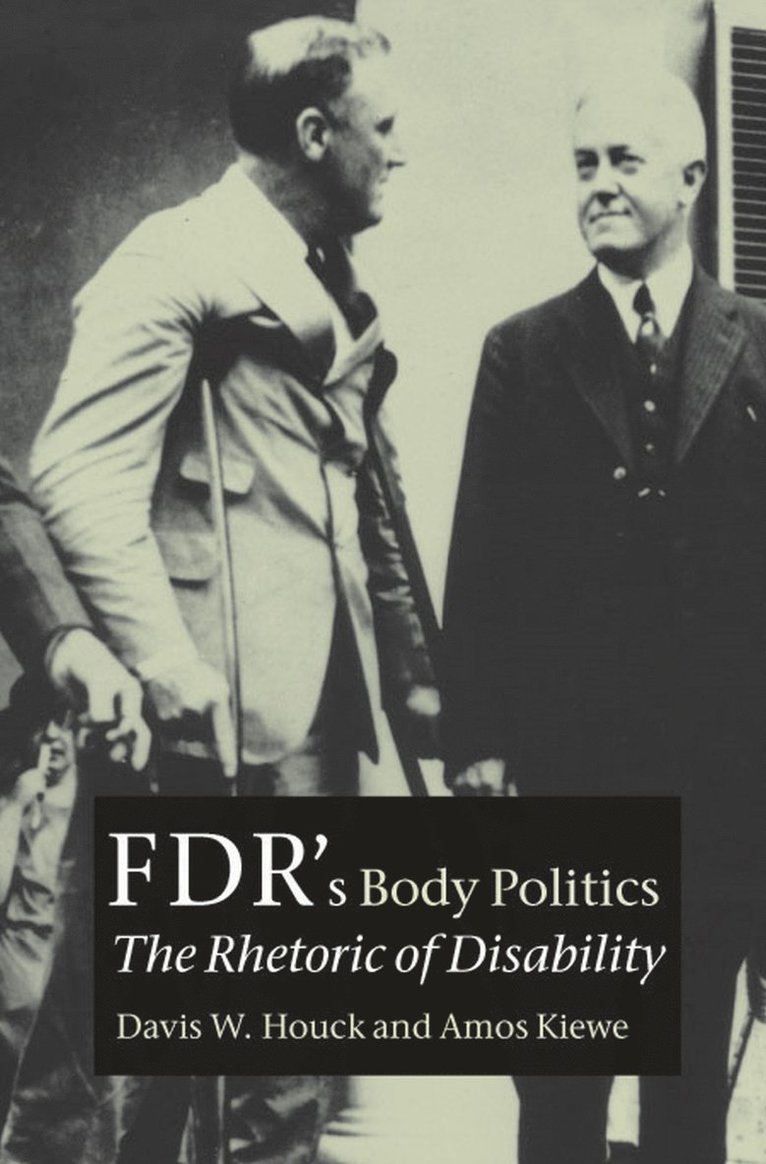
Franklin Roosevelt instinctively understood that a politician of his era who was unable to control his own body would be perceived as unable to control the body politic. He therefore took great care to hide his polio-induced lameness both visually and verbally. In FDR's Body Politics. Davis W. Houck and Amos Kiewe draw on never-before-used primary sources to analyze the silences surrounding Roosevelt's disability, the words he chose to portray himself and his policies as powerful and health-giving, and the methods he used to maximize the appearance of physical strength. They examine his broad strategies, as well as the speeches Roosevelt delivered during his political comeback after polio struck, to understand how he overcame the whispering campaign against him in 1928 and 1932. Ultimately, this is a story of triumph and courage that reveals a master politician's understanding of the body politic in the most fundamental of ways.
178 kr
Skickas inom 7-10 vardagar
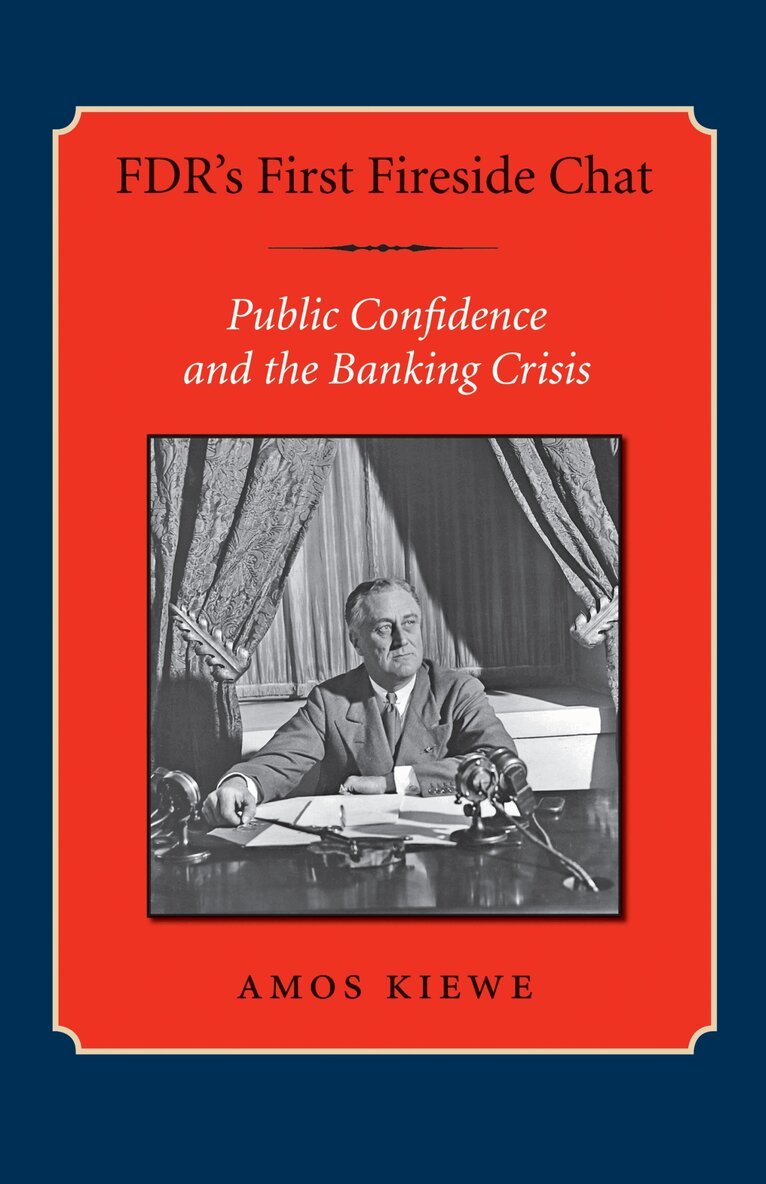
I want to talk for a few minutes with the people of the United States... Thus began not only the first of Franklin Roosevelt's celebrated radio addresses, collectively called Fireside Chats, but also the birth of the media era of the rhetorical presidency. Humorist Will Rogers later said that the president took ""such a dry subject as banking and made everyone understand it, even the bankers."" Roosevelt also took a giant step toward restoring confidence in the nation's banks and, eventually, in its economy. Amos Kiewe tells the story of the First Fireside Chat, the context in which it was constructed, the events leading to the radio address, and the impact it had on the American people and the nation's economy. Roosevelt told America, ""The success of our whole national program depends, of course, on the cooperation of the public - on its intelligent support and its use of a reliable system."" Kiewe succinctly demonstrates how the rhetoric of the soon-to-be-famous First Fireside Chat laid the groundwork for that support and the recovery of American capitalism.
743 kr
Skickas inom 10-15 vardagar
The Effects of Rhetoric and the Rhetoric of Effects tackles one of the thorniest and longest-standing issues in the discipline of rhetoric - the issue of effects. While the field’s founders valued the assessment of a speech’s effects, later scholars moved away from it, privileging textual analysis, symbols, and meaning. Though situated and strategic oral rhetoric is created for instrumental ends, its study has been limited in recent decades. Editors Amos Kiewe and Davis W. Houck seek to resurrect the study of effects and consider it as the cornerstone of the rhetorical critic’s enterprise - what rhetoric actually does.In 1925, when Herbert Wichelns essentially created the field of rhetorical criticism, he founded it on the cornerstone of effect: what did oral rhetoric do to an observable audience? Wichelns’s founding statement held sway for decades, even as rhetorical critics struggled doggedly to determine “causes” to rhetoric’s effects. As the speech discipline matured and cast off the ghost of Aristotelian criticism and its seeming obsession with effect, critics eventually adopted the study of symbol systems as a guiding thematic. That thematic, while enormously productive, never resolved larger questions of what these symbol systems might be doing - beyond their incipient meaning.In this volume scholars across several subfields of rhetorical criticism return to the study of effect in a world impossibly different from pre–World War II era scholarship. With the rhetorical revolution and the linguistic turn across the humanities and social sciences, effects can and should be reconceptualized to engage the myriad ways that rhetoric matters to audiences - whether in the form of listening to a speech or reading an online script for a documentary. Rhetoricians have always known that rhetoric matters; this volume asks how and how we might demonstrate that.
474 kr
Skickas inom 10-15 vardagar
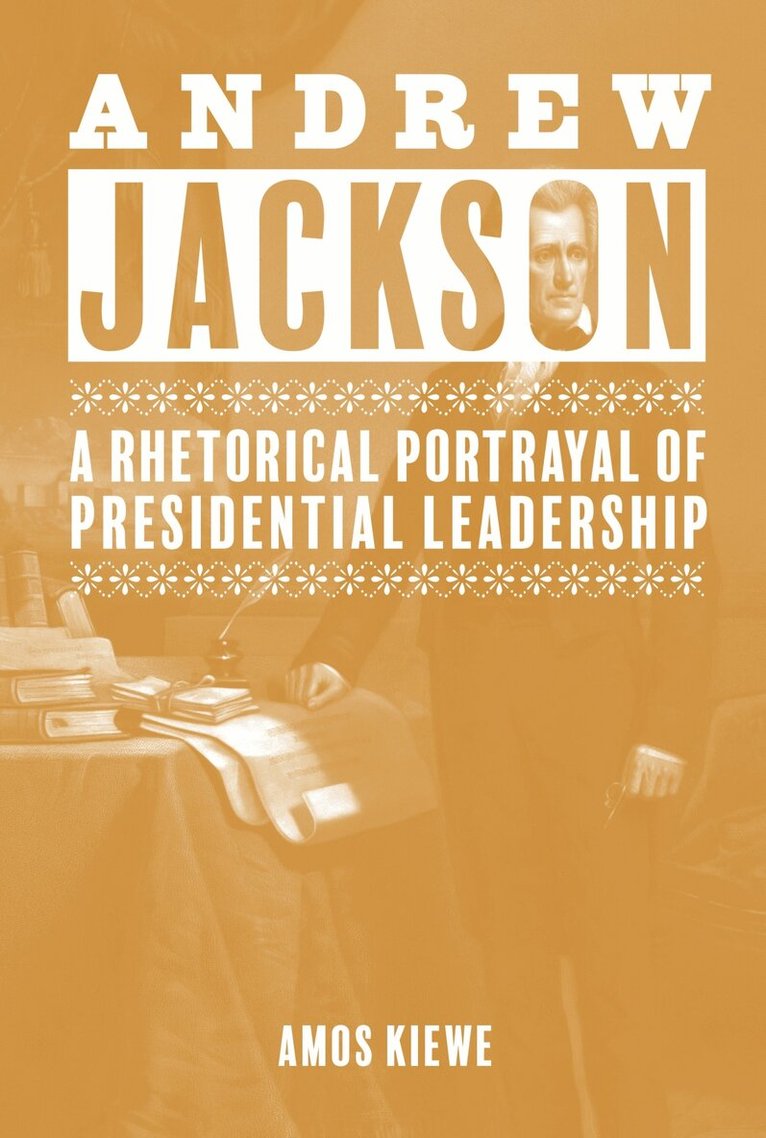
Andrew Jackson’s presidency and legacy have been the subject of much study. His career and life, particularly his actions as America’s seventh president, still reverberate in our culture today. Yet Amos Kiewe mounts a groundbreaking intervention into Jackson studies by focusing his critical lens on a little-studied aspect of the populist leader’s 1828 campaign and subsequent presidency: his creative use of the press. Jackson was a force for reinvention, cannily directing his speeches — like no previous candidate — to the public at large, and garnering unprecedented newspaper coverage throughout his campaign and time in office. By focusing on public addresses, Kiewe is able to trace Jackson’s rhetorical political manoeuvring through his early campaign and the major trials of his presidency.With nuance and deep examination of Jackson’s rhetoric, Kiewe dispels the myth that Jackson was not an articulate writer, thereby clarifying historical perceptions of his presidency and relationship to the public at large. Tracing Jackson’s initial plans for the presidency through his campaign and early time in office, Kiewe sheds light on Jackson’s ambitions, viewpoints, and strategies and deepens the scholarship on the Tennessee soldier and statesman.Andrew Jackson: A Rhetorical Portrayal of Presidential Leadership offers significant insight into one of America’s most famous—and infamous—presidents, and adds new and critical information to the study of rhetoric and politics in the United States.
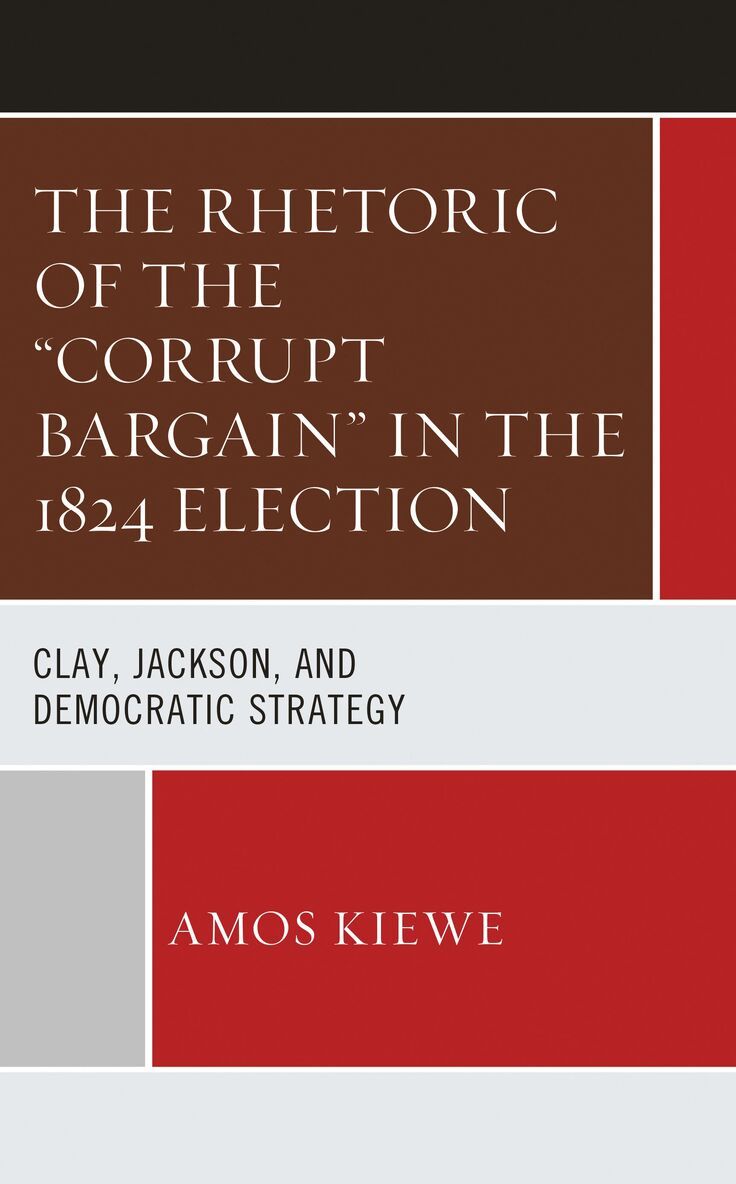
Rhetoric of the "Corrupt Bargain" in the 1824 Election
Clay, Jackson, and Democratic Strategy
Inbunden, Engelska, 2022
1 076 kr
Skickas inom 10-15 vardagar
In The Rhetoric of the “Corrupt Bargain” in the 1824 Election: Clay, Jackson, and Democratic Strategy, Amos Kiewe explores the story of the 1824 presidential election, when the House of Representatives elected the president after no candidate won outright the majority of the Electoral College. Though most in the nation assumed that Andrew Jackson, who won the popular vote and the plurality of the Electoral College, would be elected the presidency by the House, Kiewe demonstrates how maneuvering, vote trading, and special favors dictated a different outcome. Through inspecting speeches, statements, private letters, and published accounts, Kiewe simultaneously intersects rhetoric, history, and politics to tell the story of the 1824 presidential election. Scholars of communication, political science, and history will find this book of particular interest.
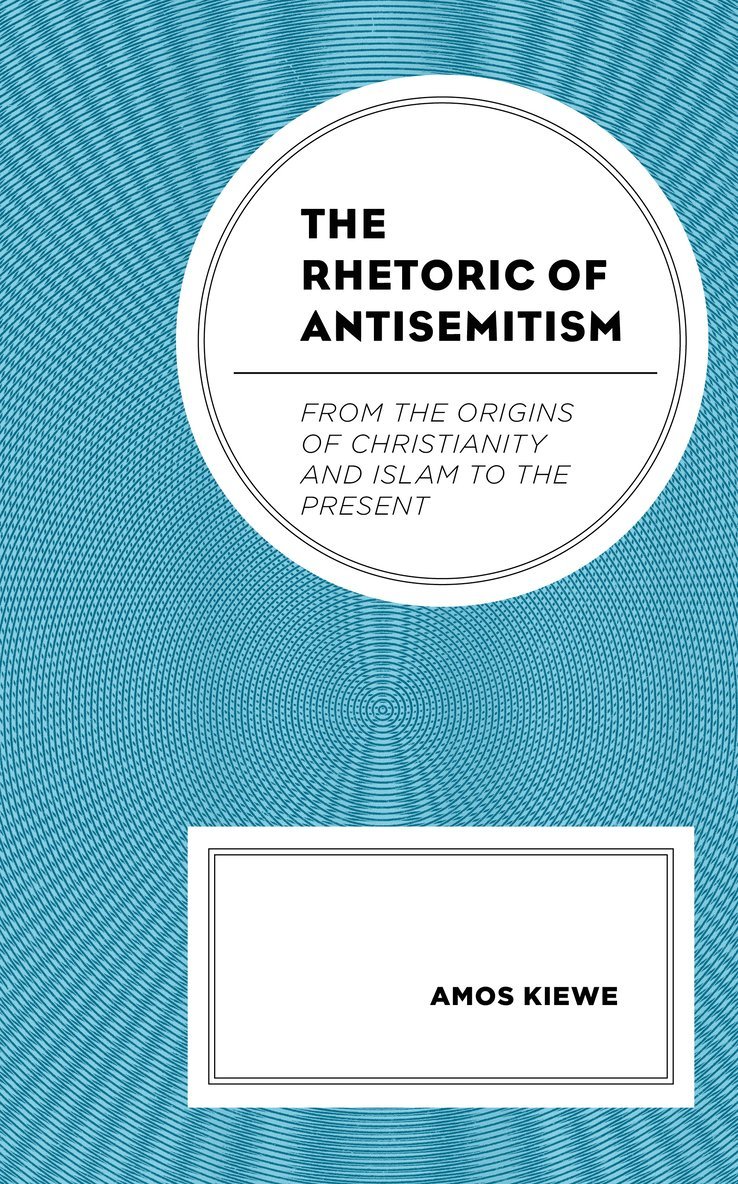
Rhetoric of Antisemitism
From the Origins of Christianity and Islam to the Present
Inbunden, Engelska, 2020
1 142 kr
Skickas inom 10-15 vardagar
The Rhetoric of Antisemitism focuses on the initial struggle Christianity experienced with Judaism, intensifying a hatred thereof, and settling on a religious dogma of eternal guilt meant to perpetuate antisemitism for eternity. Kiewe tackles the similar approach Islam has taken in its tension with Judaism and how it was turned centuries later into the Arab-Israeli conflict, significantly with the help of Nazi-antisemitism and propaganda. This book discusses the significant rise of antisemitism in the 19th and 20th centuries, including the forgery pamphlet The Protocols of the Elders of Zion that promoted the charge of Jewish world domination, and the more recent Durban Conference (2001) as a major turning point in conflating antisemitism and anti-Zionism, including the linguistic games used to merge antisemitism with anti-Israelism. Scholars of religious studies, history, and rhetorical studies will find this book particularly useful.
182 kr
Skickas inom 11-20 vardagar
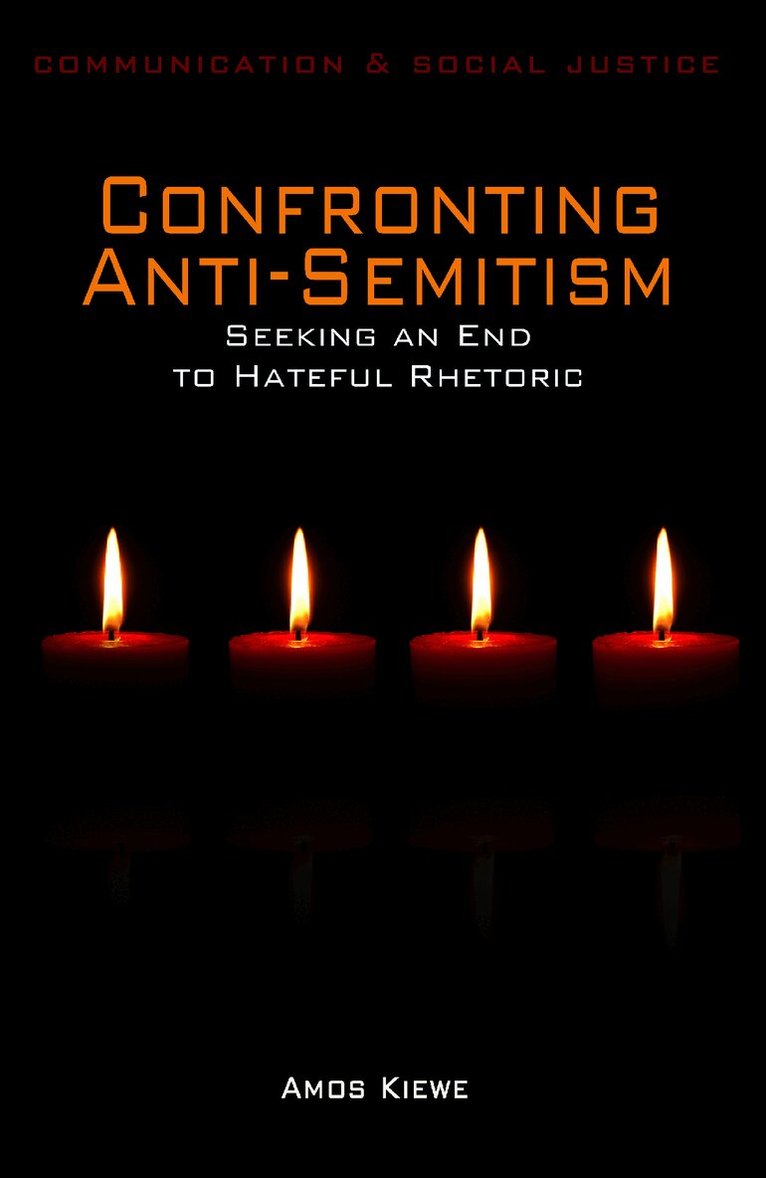
From antiquity to the modern era, anti-Semitism has reared its ugly head despite changing times, locations, language and circumstances. For each outburst of anti-Semitism a reason has been forwarded such as religious, economic, social or racial theorizing. Yet, anti-Semitism has remained consistent despite the changing circumstances and causes assigned. This constancy ought to indicate that a profound cause must exist – this is the thesis this author has pursued in writing this book. The conclusion offered here is that the religious accusation, that of killing Christ for Christians and that of seeking to kill Muhammad for Islam, is foundational to anti-Semitism and that all other causes and reasons identified are inherently religiously based.This thesis is explored by focusing first on the religious context that caused the division between Judaism and Christianity in antiquity. The theoretical grounding offered here is that Christian anti-Semitism was brought on by the co-option of Judaism and the subsequent guilt of such co-option. Similarly, but a lesser degree, Islam has co-opted Judaism and that anti-Semitism is the result of the guilt of such co-option. The author then analyzes several case studies of anti-Semitism including the role of the Messianic idea in promoting anti-Semitism, the hateful rhetoric of St. Chrysostom, an early Church Father, the persuasive strength of the forged Protocols of the Elder of Zion, the Pariah accusation that Jews bring anti-Semitism on themselves, the 2001 Durban conference as an exemplar of Islamist anti-Semitism, and the consistency of the visualization of anti-Semitism via depictions of the diabolic Jew. The book ends by exploring attempts to end anti-Semitism and the efforts of Vatican II in 1965 to admit the Catholic Church’s responsibility over centuries of anti-Semitism.
346 kr
Skickas inom 10-15 vardagar
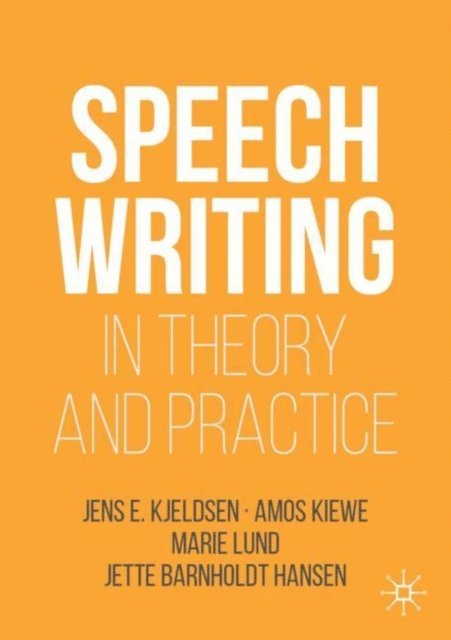
This book provides students, researchers, and practitioners of speechwriting with a unique insight in the theory, history, and practice of speechwriting.