Amrita Chakrabarti Myers - Böcker
Visar alla böcker från författaren Amrita Chakrabarti Myers. Handla med fri frakt och snabb leverans.
3 produkter
3 produkter
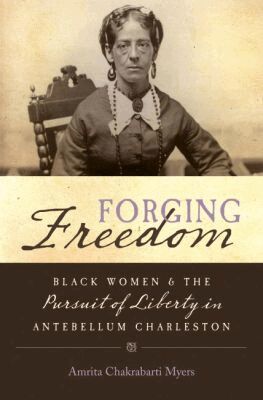
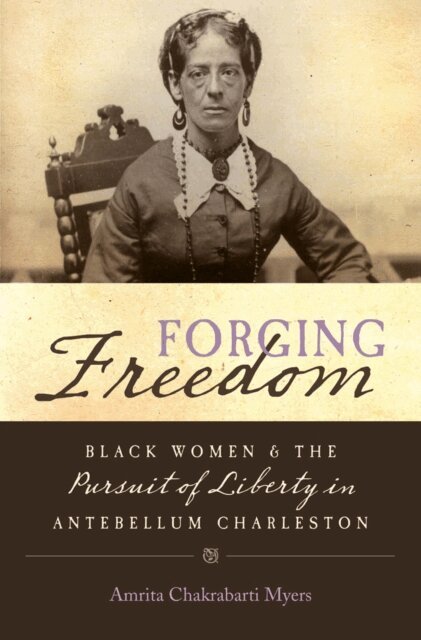
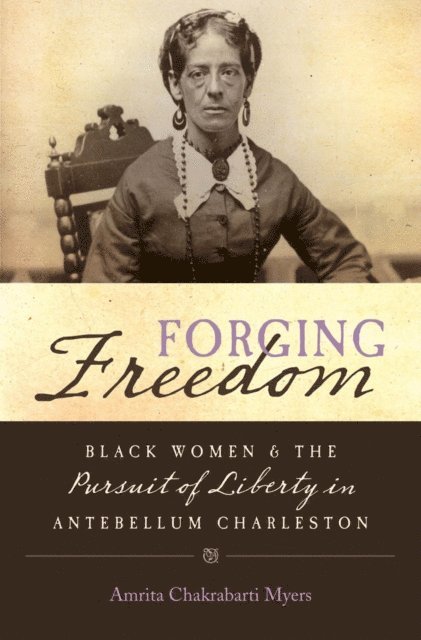
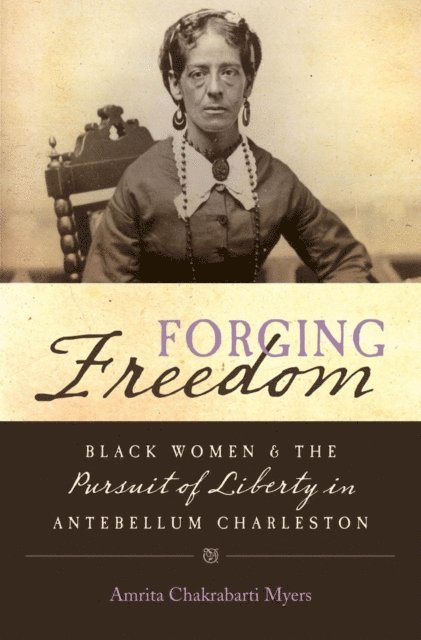
Forging Freedom
Black Women and the Pursuit of Liberty in Antebellum Charleston
Häftad, Engelska, 2014
431 kr
Skickas inom 10-15 vardagar
For black women in antebellum Charleston, freedom was not a static legal category but a fragile and contingent experience. In this deeply researched social history, Amrita Chakrabarti Myers analyzes the ways in which black women in Charleston acquired, defined, and defended their own vision of freedom. Drawing on legislative and judicial materials, probate data, tax lists, church records, family papers, and more, Myers creates detailed portraits of individual women while exploring how black female Charlestonians sought to create a fuller freedom by improving their financial, social, and legal standing. Examining both those who were officially manumitted and those who lived as free persons but lacked official documentation, Myers reveals that free black women filed lawsuits and petitions, acquired property (including slaves), entered into contracts, paid taxes, earned wages, attended schools, and formed familial alliances with wealthy and powerful men, black and white - all in an effort to solidify and expand their freedom. Never fully free, black women had to depend on their skills of negotiation in a society dedicated to upholding both slavery and patriarchy. Forging Freedom examines the many ways in which Charleston's black women crafted a freedom of their own design instead of accepting the limited existence imagined for them by white Southerners.
345 kr
Skickas inom 3-6 vardagar
Award-winning historian Amrita Chakrabarti Myers has recovered the riveting, troubling, and complicated story of Julia Ann Chinn (ca. 1796–1833), the enslaved mixed-race wife of Richard Mentor Johnson, owner of Blue Spring Farm, veteran of the War of 1812, and US vice president under Martin Van Buren. Johnson never freed Chinn, but during his frequent absences from his estate, he delegated to her management of his property, including Choctaw Academy, a boarding school for Indigenous men and boys. This meant that Chinn, while enslaved, had substantial control over economic, social, financial, and personal affairs within the couple's world, including overseeing Blue Spring's enslaved labor force. Chinn's relationship with Johnson was unlikely a consensual one since she was never manumitted. What makes Chinn's life exceptional is the power that Johnson invested in her, the opportunities the couple's relationship afforded her and her daughters, and their community's tacit acceptance of the family—up to a point. When the family left their farm, they faced steep limits: pews at the rear of church, burial in separate graveyards, exclusion from town dances, and more. Outliving Chinn, Johnson was ruined politically by his relationship with her, and Myers compellingly demonstrates that it wasn't interracial sex that led to his downfall but his refusal to keep it—and Julia Chinn—behind closed doors.
250 kr
Skickas inom 7-10 vardagar
Award-winning historian Amrita Chakrabarti Myers has recovered the riveting, troubling, and complicated story of Julia Ann Chinn (ca. 1779 – 1833), the enslaved wife of Richard Mentor Johnson, owner of Blue Spring Farm, veteran of the War of 1812, and US vice president under Martin Van Buren. Johnson never freed Chinn, but during his frequent absences from his estate, he delegated to her the management of his property, including Choctaw Academy, a boarding school for Indigenous men and boys on the grounds of the estate. This meant that Chinn, although enslaved herself, oversaw Blue Spring's slave labor force and had substantial control over economic, social, financial, and personal affairs within the couple's world. Chinn's relationship with Johnson was unlikely to have been consensual since she was never manumitted. What makes Chinn's life exceptional is the power that Johnson invested in her, the opportunities the couple's relationship afforded her and her daughters, and their community's tacit acceptance of the family—up to a point. When the family left their farm, they faced steep limits: pews at the rear of the church, burial in separate graveyards, exclusion from town dances, and more. Johnson's relationship with Chinn ruined his political career and Myers compellingly demonstrates that it wasn't interracial sex that led to his downfall but his refusal to keep it—and Julia Chinn—behind closed doors.