
Amy E. Slaton – författare
Visar alla böcker från författaren Amy E. Slaton. Handla med fri frakt och snabb leverans.
3 produkter
3 produkter

Race, Rigor, and Selectivity in U.S. Engineering
The History of an Occupational Color Line
Inbunden, Engelska, 2010
618 kr
Skickas inom 10-15 vardagar
Despite the educational and professional advances made by minorities in recent decades, African Americans remain woefully underrepresented in the fields of science, technology, mathematics, and engineering. Even at its peak, in 2000, African American representation in engineering careers reached only 5.7 percent, while blacks made up 15 percent of the U.S. population. Some forty-five years after the Civil Rights Act sought to eliminate racial differences in education and employment, what do we make of an occupational pattern that perpetually follows the lines of race?Race, Rigor, and Selectivity in U.S. Engineering pursues this question and its ramifications through historical case studies. Focusing on engineering programs in three settings—in Maryland, Illinois, and Texas, from the 1940s through the 1990s—Amy E. Slaton examines efforts to expand black opportunities in engineering as well as obstacles to those reforms. Her study reveals aspects of admissions criteria and curricular emphases that work against proportionate black involvement in many engineering programs. Slaton exposes the negative impact of conservative ideologies in engineering, and of specific institutional processes—ideas and practices that are as limiting for the field of engineering as they are for the goal of greater racial parity in the profession.

544 kr
Tillfälligt slut
Examining the proliferation of reinforced-concrete construction in the United States after 1900, historian Amy E. Slaton considers how scientific approaches and occupations displaced traditionally skilled labor. The technology of concrete buildings-little studied by historians of engineering, architecture, or industry-offers a remarkable case study in the modernization of American production. The use of concrete brought to construction the new procedures and priorities of mass production. These included a comprehensive application of science to commercial enterprise and vast redistributions of skills, opportunities, credit, and risk in the workplace. Reinforced concrete also changed the American landscape as building buyers embraced the architectural uniformity and simplicity to which the technology was best suited.Based on a wealth of data that includes university curricula, laboratory and company records, organizational proceedings, blueprints, and promotional materials as well as a rich body of physical evidence such as tools, instruments, building materials, and surviving reinforced-concrete buildings, this book tests the thesis that modern mass production in the United States came about not simply in answer to manufacturers' search for profits, but as a result of a complex of occupational and cultural agendas.
271 kr
Skickas inom 3-6 vardagar
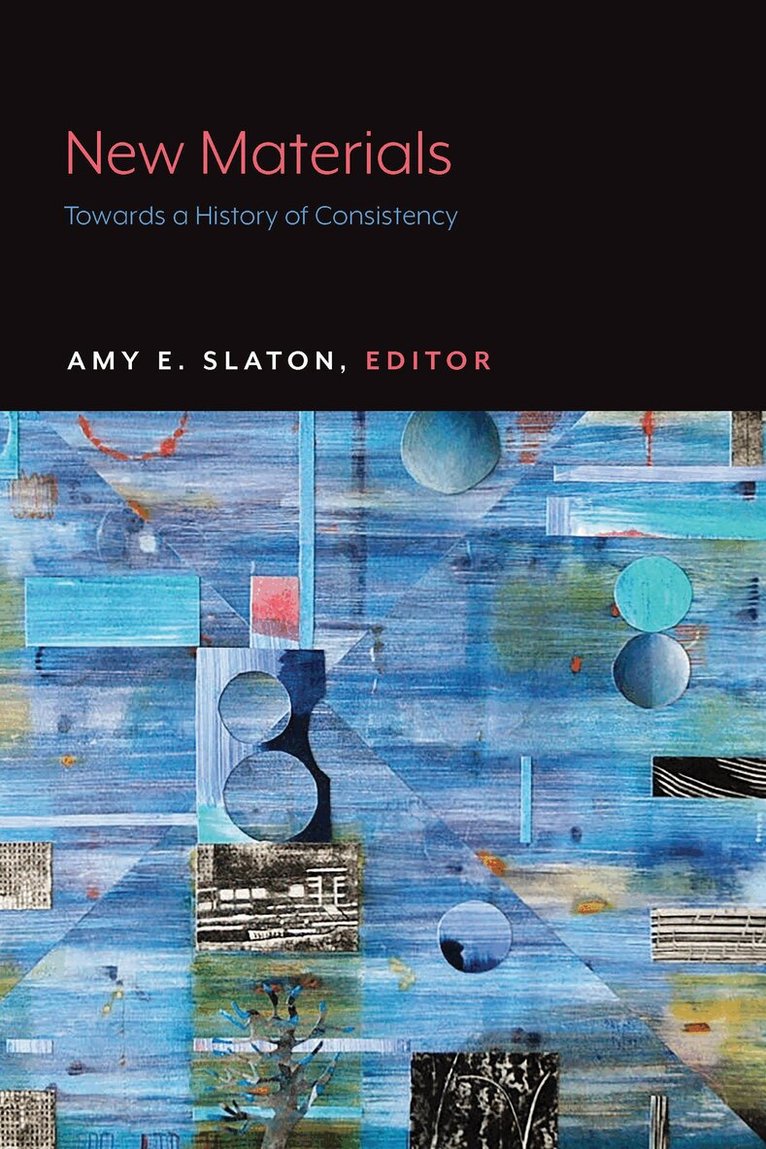
This edited volume gathers eight cases of industrial materials development, broadly conceived, from North America, Europe and Asia over the last 200 years. Whether given utility as building parts, fabrics, pharmaceuticals, or foodstuffs, whether seen by their proponents as human-made or “found in nature,” materials result from the designation of some matter as both knowable and worth knowing about. In following these determinations we learn that the production of physical novelty under industrial, imperial and other cultural conditions has historically accomplished a huge range of social effects, from accruals of status and wealth to demarcations of bodies and geographies. Among other cases, New Materials traces the beneficent self-identity of Quaker asylum planners who devised soundless metal cell locks in the early 19th century, and the inculcation of national pride attending Taiwanese carbon-fiber bicycle parts in the 21st; the racialized labor organizations promoted by California orange breeders in the 1910s, and bureaucratized distributions of blame for deadly high-rise fires a century later. Across eras and global regions New Materials reflects circumstances not made clear when technological innovation is explained solely as a by-product of modernizing impulses or critiqued simply as a craving for profit. Whether establishing the efficacy of nano-scale pharmaceuticals or the tastiness of farmed catfish, proponents of new materials enact complex political ideologies. In highlighting their actors’ conceptions of efficiency, certainty, safety, pleasure, pain, faith and identity, the authors reveal that to produce a “new material” is invariably to preserve other things, to sustain existing values and social structures.