Ana Maria Ferreira da Silva – författare
749 kr
Skickas inom 10-15 vardagar
4 542 kr
Läs direkt efter köp
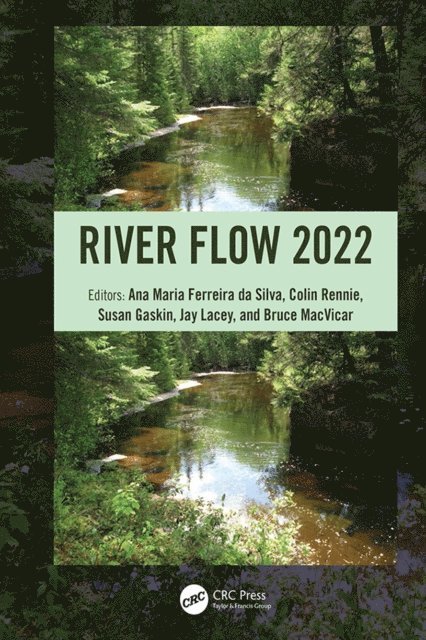
River Flow 2022 includes the keynote lecture and contributed papers presented at River Flow 2022, the 11th International Conference on Fluvial Hydraulics (8-10 November 2022, Kingston and Ottawa, Canada; held virtually).
River Flow 2022 provides an overview of the latest experimental, theoretical and computational findings on fundamental river flow and transport processes, river morphology and morphodynamics, while covering also issues related to the effects of hydraulic structures on flow regime, river morphology and ecology; sustainable river engineering practices (including stream restoration and re-naturalization); and effects of climate change including extreme flood events. The book presents the state-of-the-art in river research and engineering, and is aimed at academics and practitioners in hydraulics, hydrology and environmental engineering.
4 542 kr
Läs direkt efter köp
River Flow 2022 includes the keynote lecture and contributed papers presented at River Flow 2022, the 11th International Conference on Fluvial Hydraulics (8-10 November 2022, Kingston and Ottawa, Canada; held virtually).
River Flow 2022 provides an overview of the latest experimental, theoretical and computational findings on fundamental river flow and transport processes, river morphology and morphodynamics, while covering also issues related to the effects of hydraulic structures on flow regime, river morphology and ecology; sustainable river engineering practices (including stream restoration and re-naturalization); and effects of climate change including extreme flood events. The book presents the state-of-the-art in river research and engineering, and is aimed at academics and practitioners in hydraulics, hydrology and environmental engineering.
2 179 kr
Skickas inom 10-15 vardagar
860 kr
Läs direkt efter köp
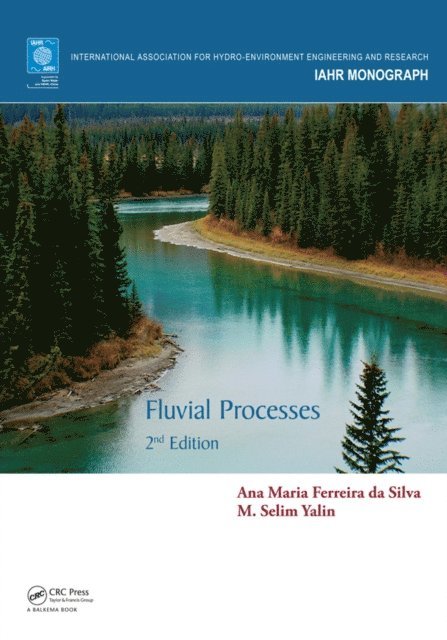
A stream flowing in alluvium deforms its bed surface, forming ripples, dunes, bars, etc., and, in many instances, it deforms its channel entirely, thereby creating meandering or braiding patterns. It could be said that, in general, an alluvial stream and its deformable boundary undergo a variety of fluvial processes leading to the emergence of a multitude of alluvial forms.
This book concerns the physics and analytical treatment of various fluvial processes and the associated alluvial bed and plan forms listed above. Following an introductory chapter on the basics of turbulent flow and sediment transport, the book covers the origin, geometric characteristics and effects of bed forms, from small- to meso-scale (ripples, dunes, alternate and multiple bars); the initiation, geometry and mechanics of meandering streams; the computation of flow, bed deformation and the planimetric evolution of meandering streams; and braiding and delta formation. The book also covers the regime concept, the time-development of a stream towards its regime state, and the formulation of stable, or equilibrium, morphology. The book distinguishes itself by its comprehensive analysis and discussion of key processes involved in large-scale river morphodynamics.
The book was written primarily for researchers and graduate students of hydraulic engineering, water resources and related branches of earth sciences, but it will also prove useful for river engineers and managers.
860 kr
Läs direkt efter köp
A stream flowing in alluvium deforms its bed surface, forming ripples, dunes, bars, etc., and, in many instances, it deforms its channel entirely, thereby creating meandering or braiding patterns. It could be said that, in general, an alluvial stream and its deformable boundary undergo a variety of fluvial processes leading to the emergence of a multitude of alluvial forms.
This book concerns the physics and analytical treatment of various fluvial processes and the associated alluvial bed and plan forms listed above. Following an introductory chapter on the basics of turbulent flow and sediment transport, the book covers the origin, geometric characteristics and effects of bed forms, from small- to meso-scale (ripples, dunes, alternate and multiple bars); the initiation, geometry and mechanics of meandering streams; the computation of flow, bed deformation and the planimetric evolution of meandering streams; and braiding and delta formation. The book also covers the regime concept, the time-development of a stream towards its regime state, and the formulation of stable, or equilibrium, morphology. The book distinguishes itself by its comprehensive analysis and discussion of key processes involved in large-scale river morphodynamics.
The book was written primarily for researchers and graduate students of hydraulic engineering, water resources and related branches of earth sciences, but it will also prove useful for river engineers and managers.