Anand R. Prasad - Böcker
Visar alla böcker från författaren Anand R. Prasad. Handla med fri frakt och snabb leverans.
9 produkter
9 produkter
602 kr
Skickas inom 10-15 vardagar
Future Internet Services and Service Architectures presents state-of-the-art results in services and service architectures based on designs for the future Internet and related emerging networks. The discussions include technology issues, key services, business models, and security. The work describes important trends and directions. Future Internet Services and Service Architectures is intended to provide readers with a comprehensive reference for the most current developments in the field. It offers broad coverage of important topics with twenty chapters covering both technology and applications written by international experts. The 20 chapters of Future Internet Services and Service Architectures are organized into the following five sections:-• Future Internet Services -- This section contains four chapters which present recent proposals for a new architecture for the Internet, with service delivery in the Future Internet as the key focus.• Peer-to-Peer Services -- Using the P2P network overlay as a service platform, five chapters explore the P2P architecture and its use for streaming services, communication services, and service discovery.• Virtualization -- Virtualization and its benefits for resource management, supporting hetereogeneity, and isolation are the basis for five chapters which describe virtualization at the endpoint, in the cloud, and in the network.• Event-Distribution -- Publish/Subscribe mechanisms are important for applications which require time-sensitive delivery of notifications. The two chapters in this section present recent developments in publish/subscribe load balancing and in sensor networks.• VANETs - Vehicular Ad Hoc Networks (VANETs) are a network technology which are designed for vehicle-to-vehicle and vehicle-to-infrastructure connectivity for moving vehicles. The four chapters in this section provide an introduction to VANETs, routing, services and system architecture.Future Internet Services and Service Architectures is complemented by a separate volume, Advances in Next Generation Services and Service Architectures, which covers emerging services and service architectures, IPTV, context awareness, and security.
602 kr
Skickas inom 10-15 vardagar
Advances in Next Generation Services and Service Architectures presents state-of-the-art results in services and service architectures, identifies challenges including business models, technology issues, service management, and security, and describes important trends and directions. The book is intended to provide readers with a comprehensive reference for the most current developments in the field. It offers broad coverage of important topics with eighteen chapters covering both technology and applications written by international experts.The chapters are organized into the following four parts:-• Part 1: Emerging Services and Service Architectures - This part provides eight chapters which survey many of the important emerging categories of services, and provides details about architectures, service models, and sample applications.• Part 2: IPTV and Video Services - Video content delivery to a variety of endpoints with varying capacities and network connectivity is a fundamental service. In this part, four chapters address enabling technologies including semantic support, context-awareness, QoE optimization, and support for mobile devices.• Part 3: Context Awareness - User sensitive application delivery has long been viewed as an important capability to increase the value of services to users. Context awareness focuses on representing and using the immediate situation and surroundings of the user in the delivery of the service. In this part, four chapters cover recent progress in context awareness and illustrate its use in next generation networks and IPTV.• Part 4: Security - New types of services and service architectures require new security techniques. This part contains two chapters, one on security challenges and the other on the user of reputation in service management.Advances in Next Generation Services and Service Architectures is complemented by a separate volume, Future Internet Services and Service Architectures, which covers future Internet architectures, peer-to-peer service models, event based processing, and VANETs.Keywords Services, Service Architectures, IPTV, context awareness, smart grids, web 2.0, IMS, security, next-generation networks.
801 kr
Skickas inom 10-15 vardagar
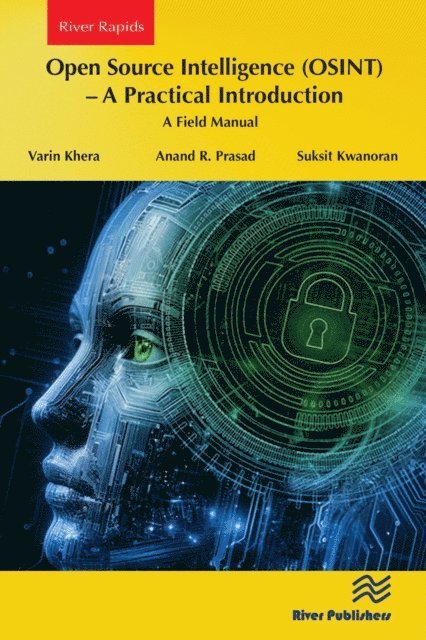
This practical book introduces open-source intelligence (OSINT) and explores how it can be executed in different intelligence scenarios. It covers varying supporting topics, such as online tracking techniques, privacy best practices for OSINT researchers, and practical examples of OSINT investigations. The book also delves into the integration of artificial intelligence (AI) and machine learning (ML) in OSINT, social media intelligence methodologies, and the unique characteristics of the surface web, deep web, and dark web.Open-source intelligence (OSINT) is a powerful tool that leverages publicly available data for security purposes. OSINT derives its value from various sources, including the internet, traditional media, academic publications, corporate papers, and geospatial information.Further topics include an examination of the dark web's uses and potential risks, an introduction to digital forensics and its methods for recovering and analyzing digital evidence, and the crucial role of OSINT in digital forensics investigations. The book concludes by addressing the legal considerations surrounding the use of the information and techniques presented.This book provides a comprehensive understanding of CTI, TI, and OSINT. It sets the stage for the best ways to leverage OSINT to support different intelligence needs to support decision-makers in today's complex IT threat landscape.
1 427 kr
Skickas inom 10-15 vardagar
Advances in Next Generation Services and Service Architectures presents state-of-the-art results in services and service architectures, identifies challenges including business models, technology issues, service management, and security, and describes important trends and directions. The book is intended to provide readers with a comprehensive reference for the most current developments in the field. It offers broad coverage of important topics with eighteen chapters covering both technology and applications written by international experts.The chapters are organized into the following four parts:-• Part 1: Emerging Services and Service Architectures - This part provides eight chapters which survey many of the important emerging categories of services, and provides details about architectures, service models, and sample applications.• Part 2: IPTV and Video Services - Video content delivery to a variety of endpoints with varying capacities and network connectivity is a fundamental service. In this part, four chapters address enabling technologies including semantic support, context-awareness, QoE optimization, and support for mobile devices.• Part 3: Context Awareness - User sensitive application delivery has long been viewed as an important capability to increase the value of services to users. Context awareness focuses on representing and using the immediate situation and surroundings of the user in the delivery of the service. In this part, four chapters cover recent progress in context awareness and illustrate its use in next generation networks and IPTV.• Part 4: Security - New types of services and service architectures require new security techniques. This part contains two chapters, one on security challenges and the other on the user of reputation in service management.Advances in Next Generation Services and Service Architectures is complemented by a separate volume, Future Internet Services and Service Architectures, which covers future Internet architectures, peer-to-peer service models, event based processing, and VANETs.Keywords Services, Service Architectures, IPTV, context awareness, smart grids, web 2.0, IMS, security, next-generation networks.
1 427 kr
Skickas inom 10-15 vardagar
Future Internet Services and Service Architectures presents state-of-the-art results in services and service architectures based on designs for the future Internet and related emerging networks. The discussions include technology issues, key services, business models, and security. The work describes important trends and directions. Future Internet Services and Service Architectures is intended to provide readers with a comprehensive reference for the most current developments in the field. It offers broad coverage of important topics with twenty chapters covering both technology and applications written by international experts. The 20 chapters of Future Internet Services and Service Architectures are organized into the following five sections:-• Future Internet Services -- This section contains four chapters which present recent proposals for a new architecture for the Internet, with service delivery in the Future Internet as the key focus.• Peer-to-Peer Services -- Using the P2P network overlay as a service platform, five chapters explore the P2P architecture and its use for streaming services, communication services, and service discovery.• Virtualization -- Virtualization and its benefits for resource management, supporting hetereogeneity, and isolation are the basis for five chapters which describe virtualization at the endpoint, in the cloud, and in the network.• Event-Distribution -- Publish/Subscribe mechanisms are important for applications which require time-sensitive delivery of notifications. The two chapters in this section present recent developments in publish/subscribe load balancing and in sensor networks.• VANETs - Vehicular Ad Hoc Networks (VANETs) are a network technology which are designed for vehicle-to-vehicle and vehicle-to-infrastructure connectivity for moving vehicles. The four chapters in this section provide an introduction to VANETs, routing, services and system architecture.Future Internet Services and Service Architectures is complemented by a separate volume, Advances in Next Generation Services and Service Architectures, which covers emerging services and service architectures, IPTV, context awareness, and security.
1 618 kr
Skickas inom 5-8 vardagar
Starting from voice services with simple terminals, today a mobile device is nothing sort of a small PC in the form of smart-phones. The result has been a huge increase in data-services giving mobile communication access to critical aspects of human society / life. This has led to standardization of SAE/LTE (System Architecture Evolution / Long Term Evolution) by 3GPP and IEEE 802.16e / WiMAX. Together with penetration of mobile communications and new standardization come new security issues and thus the need for new security solutions. This book provides a fresh look at those security aspects, with main focus on the latest security developments of 3GPP SAE/LTE and WiMAX. SAE/LTE is also known as Evolved Packet System (EPS).The intended audience for this book is mobile network and device architects, designers, researchers and students. The goal of the authors, who have a combined experience of more than 25 years in mobile security standardization, architecture, research, and education, is to provide the book?s readers with a fresh and up-to-date look at the architecture and challenges of EPS and WiMAX security. This book includes 6 chapters, where the first 3 chapters are intended to be introductory ones, and the remaining 3 chapters provide more in-depth discussions. The book starts with Chapter 1 where we give a background of Next Generation Mobile Networks (NGMN) activity and requirements. Following explanation of NGMN, Chapter 2 provides an overview of security, telecommunication systems and their requirements. Chapter 3 provides some background on standardization. Chapter 4 discusses the EPS (or SAE/LTE) security architecture developed by 3GPP. In particular, this chapter covers the authentication and key agreement method for SAE/LTE together with newly defined key hierarchy. This chapter also addresses the challenging aspects of SAE/LTE interworking and mobility with UMTS together with the necessary key-exchange technologies. The focus of Chapter 5 is WiMAX (IEEE 802.16) security. Chapter 5 provides an in-depth discussion of the WiMAX security requirements, the authentication aspects of PKMv2, and the overall WiMAX network security aspects. In Chapter 6 we briefly cover security for (i) Home(evolved)NodeB (H(e)NB) is the Femto solution from 3GPP), (ii) Machine-to-Machine (M2M) security and (iii) Multimedia Broadcast and Multicast Service (MBMS) and Group Key Management.
418 kr
Skickas inom 5-8 vardagar
418 kr
Skickas inom 5-8 vardagar
402 kr
Skickas inom 5-8 vardagar