Ananya Kassahun Admasu – författare
Visar alla böcker från författaren Ananya Kassahun Admasu. Handla med fri frakt och snabb leverans.
3 produkter
3 produkter
Inbunden, Engelska, 2026
1 612 kr
Skickas inom 3-6 vardagar
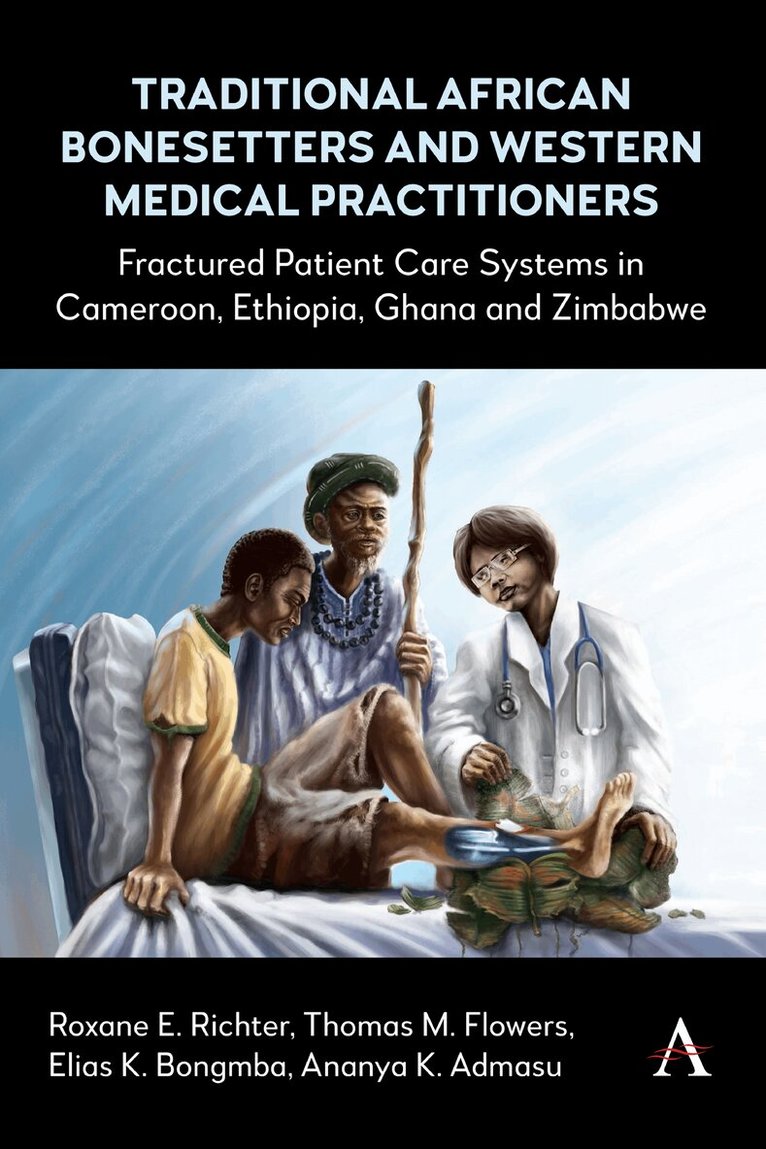
Traditional bone setting (TBS) has long held a prominent sway in African healthcare, particularly in the more remote and pastoral expanses of Africa. This unique interdisciplinary religious, human rights, and sociological study of medicine manuscript is an examination of not only generationally inherited ethnobotanical, pharmacognosy TBS traditions but also direct observations on how current surgical orthopedic medicine and modern-day social mechanisms clash with traditional healthcare approaches in contemporaneous and inexorable ways. Whether intentionally or not, this entrenched two-tier infrastructure supports, promotes, and maintains a fiscally and socially alienated infrastructure: one that serves the poor general public and the other that is oriented toward serving the prosperous and powerful urban class. Some argue that these disparate structures are destined to remain grassroots-based adversaries, due to systemic mistrust, irreconcilable intellectual and spiritual beliefs, and possible biochemical appropriations. These ensuing biomedical collisions between “Western” orthopedic trauma care and traditional bonesetters in Cameroon (Central Africa), Ethiopia (East Africa), Ghana (West Africa), and Zimbabwe (South Africa) were documented over eight years via one-on-one interviews with TBS patients, practicing bonesetters, and in-country practicing orthopedic surgeons; evidence-based ethnobotanical research; and patient service preferences.
E-bok
Engelska, 2026418 kr
Läs direkt efter köp
Traditional bone setting (TBS) has long held a prominent sway in African healthcare, particularly in the more remote and pastoral expanses of Africa. This unique interdisciplinary religious, human rights, and sociological study of medicine manuscript is an examination of not only generationally inherited ethnobotanical, pharmacognosy TBS traditions but also direct observations on how current surgical orthopedic medicine and modern-day social mechanisms clash with traditional healthcare approaches in contemporaneous and inexorable ways. Whether intentionally or not, this entrenched two-tier infrastructure supports, promotes, and maintains a fiscally and socially alienated infrastructure: one that serves the poor general public and the other that is oriented toward serving the prosperous and powerful urban class. Some argue that these disparate structures are destined to remain grassroots-based adversaries, due to systemic mistrust, irreconcilable intellectual and spiritual beliefs, and possible biochemical appropriations. These ensuing biomedical collisions between "e;Western"e; orthopedic trauma care and traditional bonesetters in Cameroon (Central Africa), Ethiopia (East Africa), Ghana (West Africa), and Zimbabwe (South Africa) were documented over eight years via one-on-one interviews with TBS patients, practicing bonesetters, and in-country practicing orthopedic surgeons; evidence-based ethnobotanical research; and patient service preferences.
E-bok
PDF, Engelska, 2026418 kr
Läs direkt efter köp
Traditional bone setting (TBS) has long held a prominent sway in African healthcare, particularly in the more remote and pastoral expanses of Africa. This unique interdisciplinary religious, human rights, and sociological study of medicine manuscript is an examination of not only generationally inherited ethnobotanical, pharmacognosy TBS traditions but also direct observations on how current surgical orthopedic medicine and modern-day social mechanisms clash with traditional healthcare approaches in contemporaneous and inexorable ways. Whether intentionally or not, this entrenched two-tier infrastructure supports, promotes, and maintains a fiscally and socially alienated infrastructure: one that serves the poor general public and the other that is oriented toward serving the prosperous and powerful urban class. Some argue that these disparate structures are destined to remain grassroots-based adversaries, due to systemic mistrust, irreconcilable intellectual and spiritual beliefs, and possible biochemical appropriations. These ensuing biomedical collisions between "e;Western"e; orthopedic trauma care and traditional bonesetters in Cameroon (Central Africa), Ethiopia (East Africa), Ghana (West Africa), and Zimbabwe (South Africa) were documented over eight years via one-on-one interviews with TBS patients, practicing bonesetters, and in-country practicing orthopedic surgeons; evidence-based ethnobotanical research; and patient service preferences.