Anastasia Telesetsky - Böcker
Visar alla böcker från författaren Anastasia Telesetsky. Handla med fri frakt och snabb leverans.
9 produkter
9 produkter
615 kr
Skickas inom 10-15 vardagar
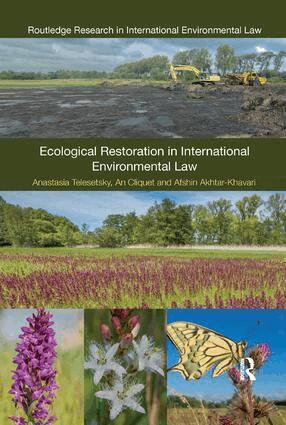
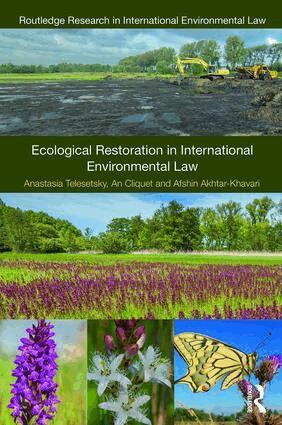
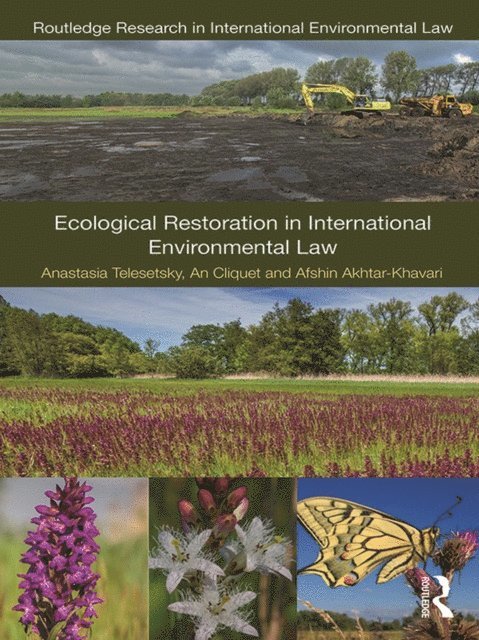
Human activities are depleting ecosystems at an unprecedented rate. In spite of nature conservation efforts worldwide, many ecosystems including those critical for human well-being have been damaged or destroyed. States and citizens need a new vision of how humans can reconnect with the natural environment. With its focus on the long-term holistic recovery of ecosystems, ecological restoration has received increasing attention in the past decade from both scientists and policymakers. Research on the implications of ecological restoration for the law and law for ecological restoration has been largely overlooked. This is the first published book to examine comprehensively the relationship between international environmental law and ecological restoration. While international environmental law (IEL) has developed significantly as a discipline over the past four decades, this book enquires whether IEL can now assist states in making a strategic transition from not just protecting and maintaining the natural environment but also actively restoring it. Arguing that states have international duties to restore, this book offers reflections on the philosophical context of ecological restoration and the legal content of a duty to restore from an international law, European Union law and national law perspective. The book concludes with a discussion of several contemporary themes of interest to both lawyers and ecologists including the role of private actors, protected areas and climate change in ecological restoration.
3 049 kr
Skickas inom 10-15 vardagar
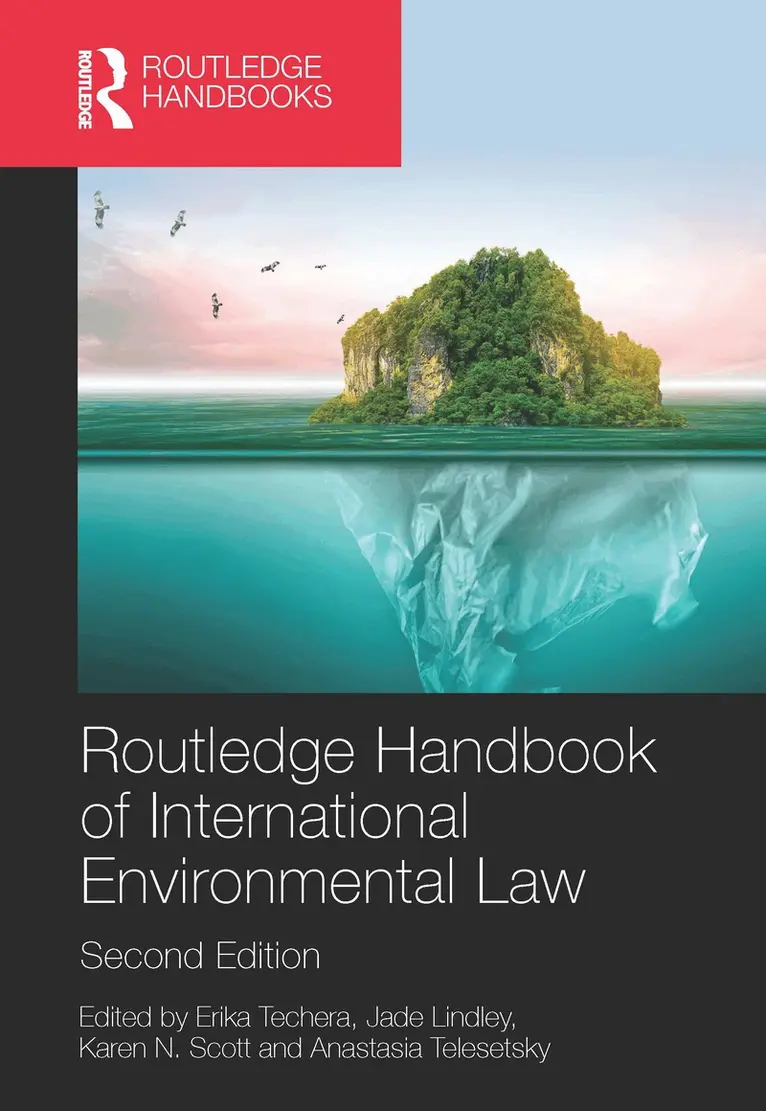
This book critically explores the legal tools, concepts, principles and instruments, as well as cross-cutting issues, that comprise the field of international environmental law. Commencing with foundational elements, progressing on to discrete sub-fields, then exploring regional cooperative approaches, cross-cutting issues and finally emerging challenges for international environmental law, it features chapters by leading experts in the field of international environmental law, drawn from a range of countries in order to put forward a truly global approach to the subject.The book is split into five parts:• The foundations of international environmental law covering the principles of international environmental law, standards and voluntary commitments, sustainable development, issues of public participation and environmental rights and compliance, state responsibility, liability and dispute settlement.• The key instruments and governance arrangements across the most critical areas of international environmental law: biodiversity, wildlife, freshwater, forestry and soils, fisheries, marine pollution, chemicals and waste, air and atmospheric pollution and climate change.• Crucial developments in seven distinct regions of the world: Africa, Europe, North America, Latin America, South East Asia, the polar regions and small island states.• Cross-cutting issues and multidisciplinary developments, drawing from multiple other fields of law and beyond to address human rights and Indigenous rights, war and armed conflict, trade, financing, investment, criminology, technology and energy.• Contemporary challenges and the emerging international environmental law regimes which address these: the changing climate, forced migration, marine plastic debris and future directions in international environmental law.Containing chapters on the most critical developments in environmental law in recent years, this comprehensive and authoritative book makes for an essential reference work for students, scholars and practitioners working in the field.
789 kr
Skickas inom 10-15 vardagar
This book critically explores the legal tools, concepts, principles and instruments, as well as cross-cutting issues, that comprise the field of international environmental law. Commencing with foundational elements, progressing on to discrete sub-fields, then exploring regional cooperative approaches, cross-cutting issues and finally emerging challenges for international environmental law, it features chapters by leading experts in the field of international environmental law, drawn from a range of countries in order to put forward a truly global approach to the subject.The book is split into five parts:• The foundations of international environmental law covering the principles of international environmental law, standards and voluntary commitments, sustainable development, issues of public participation and environmental rights and compliance, state responsibility, liability and dispute settlement.• The key instruments and governance arrangements across the most critical areas of international environmental law: biodiversity, wildlife, freshwater, forestry and soils, fisheries, marine pollution, chemicals and waste, air and atmospheric pollution and climate change.• Crucial developments in seven distinct regions of the world: Africa, Europe, North America, Latin America, South East Asia, the polar regions and small island states.• Cross-cutting issues and multidisciplinary developments, drawing from multiple other fields of law and beyond to address human rights and Indigenous rights, war and armed conflict, trade, financing, investment, criminology, technology and energy.• Contemporary challenges and the emerging international environmental law regimes which address these: the changing climate, forced migration, marine plastic debris and future directions in international environmental law.Containing chapters on the most critical developments in environmental law in recent years, this comprehensive and authoritative book makes for an essential reference work for students, scholars and practitioners working in the field.
1 387 kr
Skickas inom 7-10 vardagar
Disasters can strike often and with unexpected fury, resulting in devastating consequences for local populations that are insufficiently prepared and largely dependent upon foreign aid in the wake of such catastrophes. International law can play a significant role in recovery after natural disasters; however, without clear legal frameworks, aid may be stopped, delayed, or even hijacked - placing the intended recipients in critical condition. This edited volume brings together experts, emerging scholars, and practitioners from North America, Japan, New Zealand, and Australia to analyze the evolution of international disaster law as a field that encompasses new ideas about human rights, sovereignty, and technology. Chapters focus on specific natural disasters like Hurricane Katrina, Cyclone Nargis, and Typhoon Haiyan in addition to volcanic and earthquake activity, wildfires, and desertification. This book begins a dialogue on the profound implications of the evolution of international law as a tool for disaster response.
467 kr
Skickas inom 7-10 vardagar
Disasters can strike often and with unexpected fury, resulting in devastating consequences for local populations that are insufficiently prepared and largely dependent upon foreign aid in the wake of such catastrophes. International law can play a significant role in recovery after natural disasters; however, without clear legal frameworks, aid may be stopped, delayed, or even hijacked - placing the intended recipients in critical condition. This edited volume brings together experts, emerging scholars, and practitioners from North America, Japan, New Zealand, and Australia to analyze the evolution of international disaster law as a field that encompasses new ideas about human rights, sovereignty, and technology. Chapters focus on specific natural disasters like Hurricane Katrina, Cyclone Nargis, and Typhoon Haiyan in addition to volcanic and earthquake activity, wildfires, and desertification. This book begins a dialogue on the profound implications of the evolution of international law as a tool for disaster response.
1 994 kr
Skickas inom 10-15 vardagar
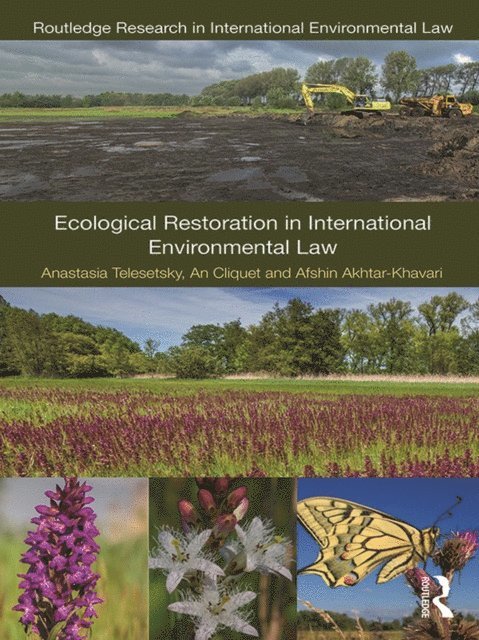
Human activities are depleting ecosystems at an unprecedented rate. In spite of nature conservation efforts worldwide, many ecosystems including those critical for human well-being have been damaged or destroyed. States and citizens need a new vision of how humans can reconnect with the natural environment. With its focus on the long-term holistic recovery of ecosystems, ecological restoration has received increasing attention in the past decade from both scientists and policymakers. Research on the implications of ecological restoration for the law and law for ecological restoration has been largely overlooked. This is the first published book to examine comprehensively the relationship between international environmental law and ecological restoration. While international environmental law (IEL) has developed significantly as a discipline over the past four decades, this book enquires whether IEL can now assist states in making a strategic transition from not just protecting and maintaining the natural environment but also actively restoring it. Arguing that states have international duties to restore, this book offers reflections on the philosophical context of ecological restoration and the legal content of a duty to restore from an international law, European Union law and national law perspective. The book concludes with a discussion of several contemporary themes of interest to both lawyers and ecologists including the role of private actors, protected areas and climate change in ecological restoration.
585 kr
Skickas inom 3-6 vardagar
3 417 kr
Skickas inom 7-10 vardagar
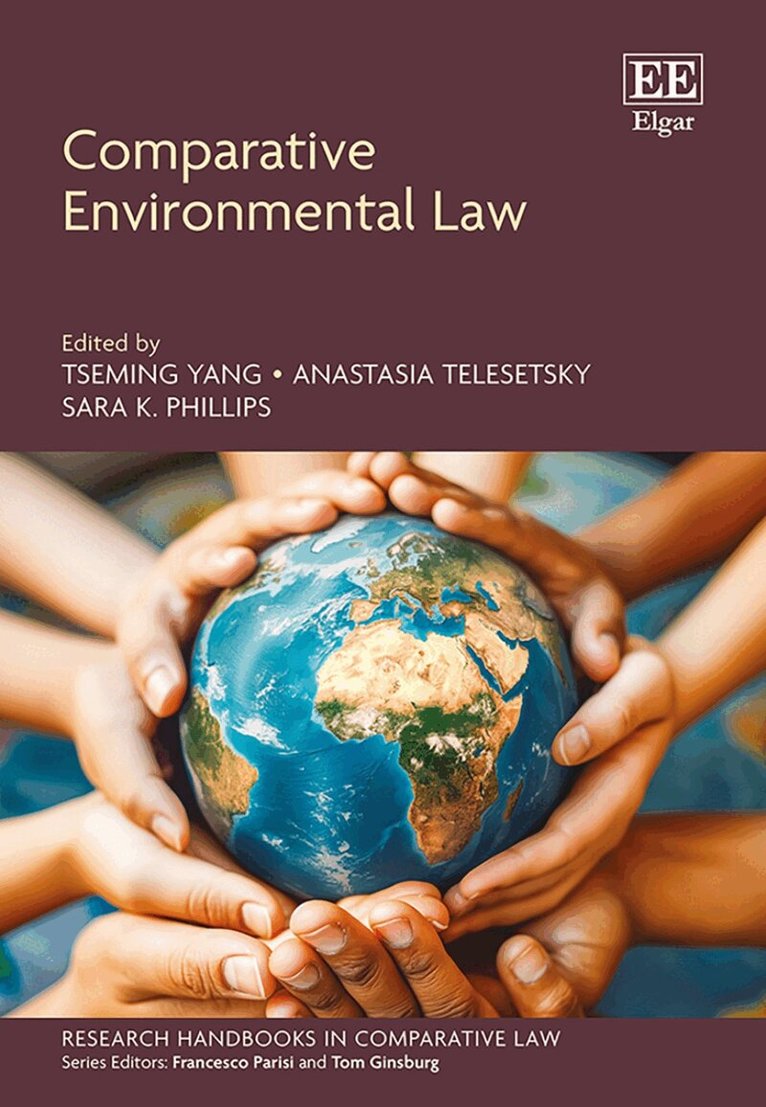
Discussing the law in theory and in practice, Comparative Environmental Law identifies the ways in which regulatory systems converge or diverge, examining key developments in international legal frameworks from every continent.Expert contributors review different comparative approaches and examine how these can be applied to the study of environmental law. They outline environmental impact assessments at project level and explore the importance of information disclosure in pollution management. Chapters also present insights into environmental human rights policies, covering compliance and enforcement, as well as biodiversity and water laws across the Americas and Europe. The handbook provides forward-thinking analyses of emerging areas, such as renewable energy and the impact of environmental policies on Indigenous communities, and presents an expansive overview of current environmental issues, including land contaminations, mining regulations and food waste.An essential resource for legal scholars and researchers, this handbook is also useful for students of environmental management and government officials involved in law-making and international development.
Del 3 - Yearbook of International Disaster Law
Yearbook of International Disaster Law
Volume 3 (2020)
Inbunden, Engelska, 2022
3 434 kr
Skickas inom 5-8 vardagar
The Yearbook of International Disaster Law aims to represent a hub for critical debate in this emerging area of research and policy and to foster the interest of academics, practitioners, stakeholders and policy-makers on legal and institutional issues relevant to all forms of natural, technological and human-made hazards. This Yearbook primarily addresses the international law dimension of relevant topics, alongside important regional and national dimensions relevant for further development of legal and policy initiatives. In the Thematic Section of Volume 3, entitled ‘Health and International Disaster Law’ distinguished scholars debate legal and institutional implications of the Covid-19 pandemic and health emergencies in relation to several emerging or neglected topics.