Anatoli Rapoport - Böcker
Visar alla böcker från författaren Anatoli Rapoport. Handla med fri frakt och snabb leverans.
8 produkter
8 produkter
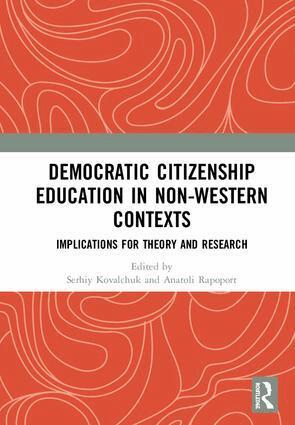
Democratic Citizenship Education in Non-Western Contexts
Implications for Theory and Research
Inbunden, Engelska, 2019
2 044 kr
Skickas inom 10-15 vardagar
This book examines the issues of theorizing citizenship education research in non-Western societies that have embarked on democratic development after the fall of authoritarianism and colonialism.Despite a proliferation of studies on citizenship and citizenship education in non-Western contexts, there has been limited theorization of this research and little discussion of the applicability to such contexts of Western theoretical frameworks. This volume addresses these issues through empirical case studies of citizenship conceptions, practices, and education in South and West Africa, Latin America, Central Europe, and the Middle East. The contributors to the volume call into question the uncritical application of Western theoretical frameworks to non-Western societies and advocate for the development and wider application of new paradigms rooted in local processes and indigenous knowledge to better understand and theorize citizenship and citizenship education in such societies.This volume will be of interest to scholars, researchers, and practitioners working in the field of comparative and international citizenship education. It was originally published as a special issue of Compare: A Journal of Comparative and International Education.
Democratic Citizenship Education in Non-Western Contexts
Implications for Theory and Research
Häftad, Engelska, 2021
559 kr
Skickas inom 10-15 vardagar
This book examines the issues of theorizing citizenship education research in non-Western societies that have embarked on democratic development after the fall of authoritarianism and colonialism.Despite a proliferation of studies on citizenship and citizenship education in non-Western contexts, there has been limited theorization of this research and little discussion of the applicability to such contexts of Western theoretical frameworks. This volume addresses these issues through empirical case studies of citizenship conceptions, practices, and education in South and West Africa, Latin America, Central Europe, and the Middle East. The contributors to the volume call into question the uncritical application of Western theoretical frameworks to non-Western societies and advocate for the development and wider application of new paradigms rooted in local processes and indigenous knowledge to better understand and theorize citizenship and citizenship education in such societies.This volume will be of interest to scholars, researchers, and practitioners working in the field of comparative and international citizenship education. It was originally published as a special issue of Compare: A Journal of Comparative and International Education.
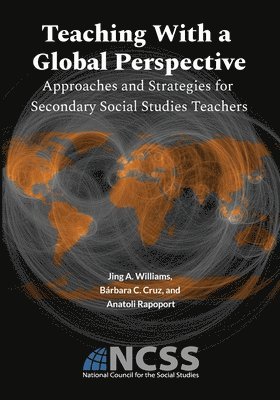
Teaching With a Global Perspective
Approaches and Strategies for Secondary Social Studies Teachers: Approaches and Strategies for
Häftad, Engelska, 2024
315 kr
Skickas inom 5-8 vardagar
581 kr
Skickas inom 7-10 vardagar
For citizenship education in the 21st century, globalization increasingly presents a new challenge and a new opportunity. Since the time when nationalism played a critical role in unifying new nations, nationality and citizenship have been virtually synonymous terms. As a result, the constructed symbiosis of citizenship and national identity has influenced state supported citizenship education in the most profound way. School curricula, particularly in public schools, produced and reinforced the dominant version of citizenship, which is national citizenship. Schools were expected to prepare future loyal citizens who would identify themselves with the nation.Due to the changing nature and scope of human interactions, the traditional model of citizenship education, however, appears increasingly outdated and deficient to address many contemporary challenges. Thus, schools have become a locus of a potential conflict of two citizenship discourses: the discourse of national citizenship that for a long time has served as the ultimate purpose of public education and the discourse of global citizenship that is forcefully and continuously seeking for a proper place in school curricula despite the lack of curricular heritage. The need for an education for citizenship that has a global scope and is guided by critical and emancipatory approaches becomes more evident. At the same time, the pressure to globalize and internationalize curriculum actively challenges such concepts as patriotism, national identity, loyalty to the state, or national uniqueness of government and democratic development that have been fundamental for citizenship and civic education for decades.In this book, a group of international scholars present their research about the dynamic development, interplay, and interconnectedness of two major discourses in citizenship education, namely national and global. Case studies and ethnographies from China, Cyprus, Egypt, Hong Kong and Singapore, Lebanon, Liberia, the Netherlands, Russia, and the United States display a multifaceted but yet comprehensive picture of educators’ attempts to promote social justice, global awareness, and multiple loyalties.The volume will appeal to several constituencies: it will be interesting to teachers and teacher educators whose focus of instruction is citizenship education, social studies education, and global education; it will also be interesting to scholars who conduct research in citizenship and global education.
1 027 kr
Skickas inom 7-10 vardagar
For citizenship education in the 21st century, globalization increasingly presents a new challenge and a new opportunity. Since the time when nationalism played a critical role in unifying new nations, nationality and citizenship have been virtually synonymous terms. As a result, the constructed symbiosis of citizenship and national identity has influenced state supported citizenship education in the most profound way. School curricula, particularly in public schools, produced and reinforced the dominant version of citizenship, which is national citizenship. Schools were expected to prepare future loyal citizens who would identify themselves with the nation.Due to the changing nature and scope of human interactions, the traditional model of citizenship education, however, appears increasingly outdated and deficient to address many contemporary challenges. Thus, schools have become a locus of a potential conflict of two citizenship discourses: the discourse of national citizenship that for a long time has served as the ultimate purpose of public education and the discourse of global citizenship that is forcefully and continuously seeking for a proper place in school curricula despite the lack of curricular heritage. The need for an education for citizenship that has a global scope and is guided by critical and emancipatory approaches becomes more evident. At the same time, the pressure to globalize and internationalize curriculum actively challenges such concepts as patriotism, national identity, loyalty to the state, or national uniqueness of government and democratic development that have been fundamental for citizenship and civic education for decades.In this book, a group of international scholars present their research about the dynamic development, interplay, and interconnectedness of two major discourses in citizenship education, namely national and global. Case studies and ethnographies from China, Cyprus, Egypt, Hong Kong and Singapore, Lebanon, Liberia, the Netherlands, Russia, and the United States display a multifaceted but yet comprehensive picture of educators’ attempts to promote social justice, global awareness, and multiple loyalties.The volume will appeal to several constituencies: it will be interesting to teachers and teacher educators whose focus of instruction is citizenship education, social studies education, and global education; it will also be interesting to scholars who conduct research in citizenship and global education.
Del 43 - Globalisation, Comparative Education and Policy Research
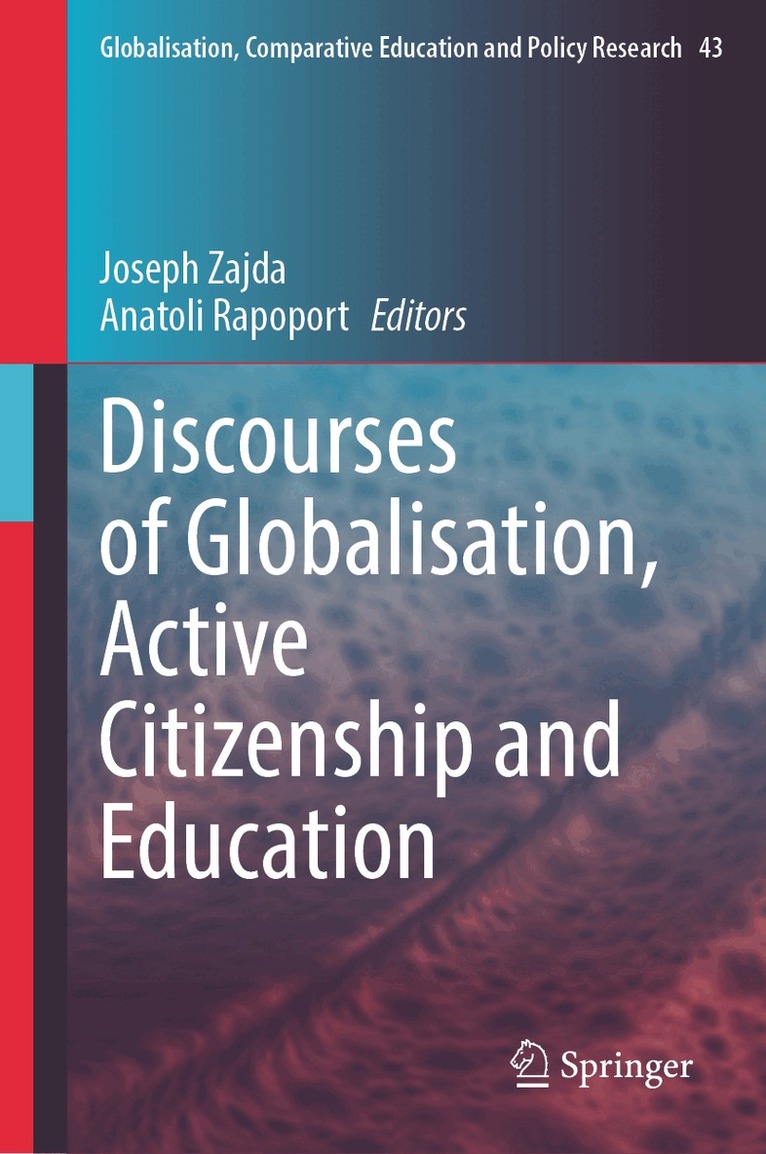
Discourses of Globalisation, Active Citizenship and Education
Inbunden, Engelska, 2024
1 635 kr
Skickas inom 10-15 vardagar
This book analyses dominant discourses of globalisation, and citizenship in schools.
Del 43 - Globalisation, Comparative Education and Policy Research
Discourses of Globalisation, Active Citizenship and Education
Häftad, Engelska, 2025
1 635 kr
Skickas inom 10-15 vardagar
This book analyses dominant discourses of globalisation, and citizenship in schools. Diverse worldviews and ideologies construct different meanings for globalization, citizenship, and education, resulting in conceptual debates, tensions, competing discourses, and practical challenges for scholars and educators, navigating complex and contested terrain. The chapters in this volume advance further the discussions on the phenomenon of globalisation, and how it impacts on the nature of active citizenship education in schools around the world. In order to help students recognize that they are inherently global citizens, capable of understanding that local actions are globally interdependent, and that communities can be seen as temporal social networks within and beyond physical space, and action for global citizenship in school. The book, by building on intercultural dialogue and active citizenship education in schools, will promote critical appraisal of various views of the world, andoffers different ways to reconstruct and re-imagine social reality.
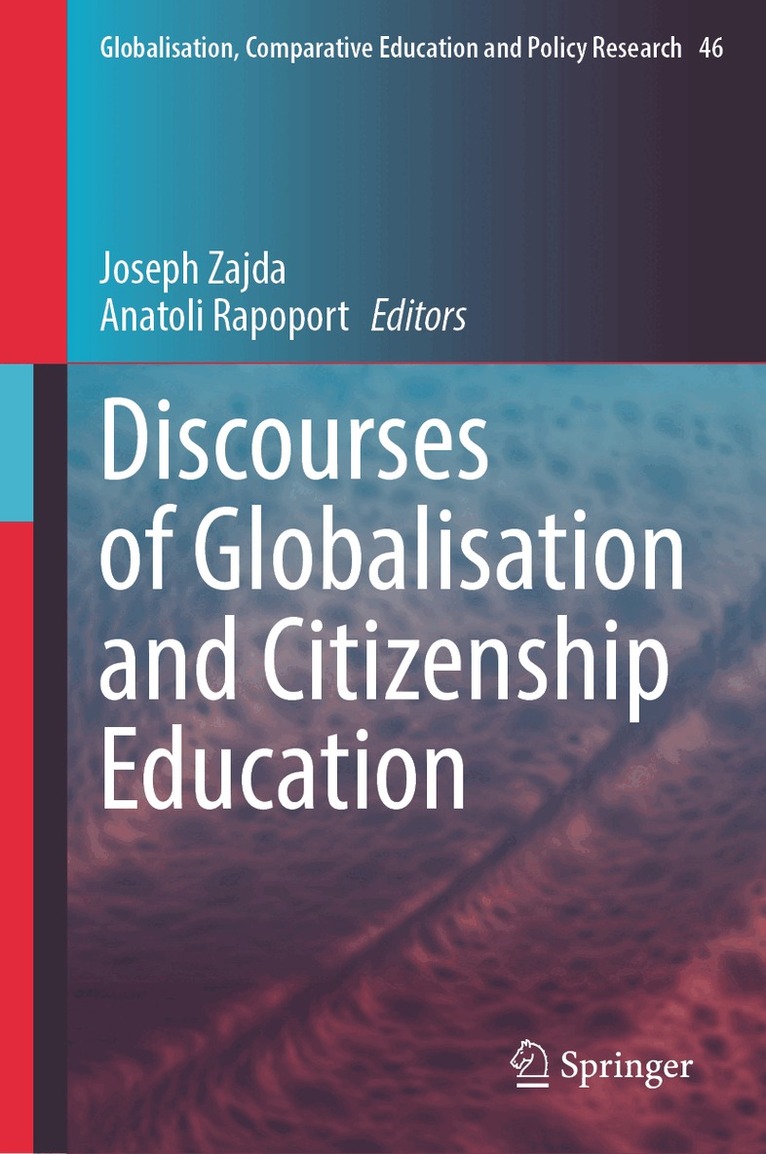
Del 46 - Globalisation, Comparative Education and Policy Research
Discourses of Globalisation and Citizenship Education
Inbunden, Engelska, 2025
1 548 kr
Skickas inom 10-15 vardagar
By building on intercultural dialogue, citizenship education, and values education in schools, the book promotes critical appraisal of various views of the world, and offers different ways to reconstruct and re-imagine social reality, and citizenship education for democracy and equality.