Anatolie Sidorenko - Böcker
Visar alla böcker från författaren Anatolie Sidorenko. Handla med fri frakt och snabb leverans.
6 produkter
6 produkter
2 101 kr
Skickas inom 10-15 vardagar
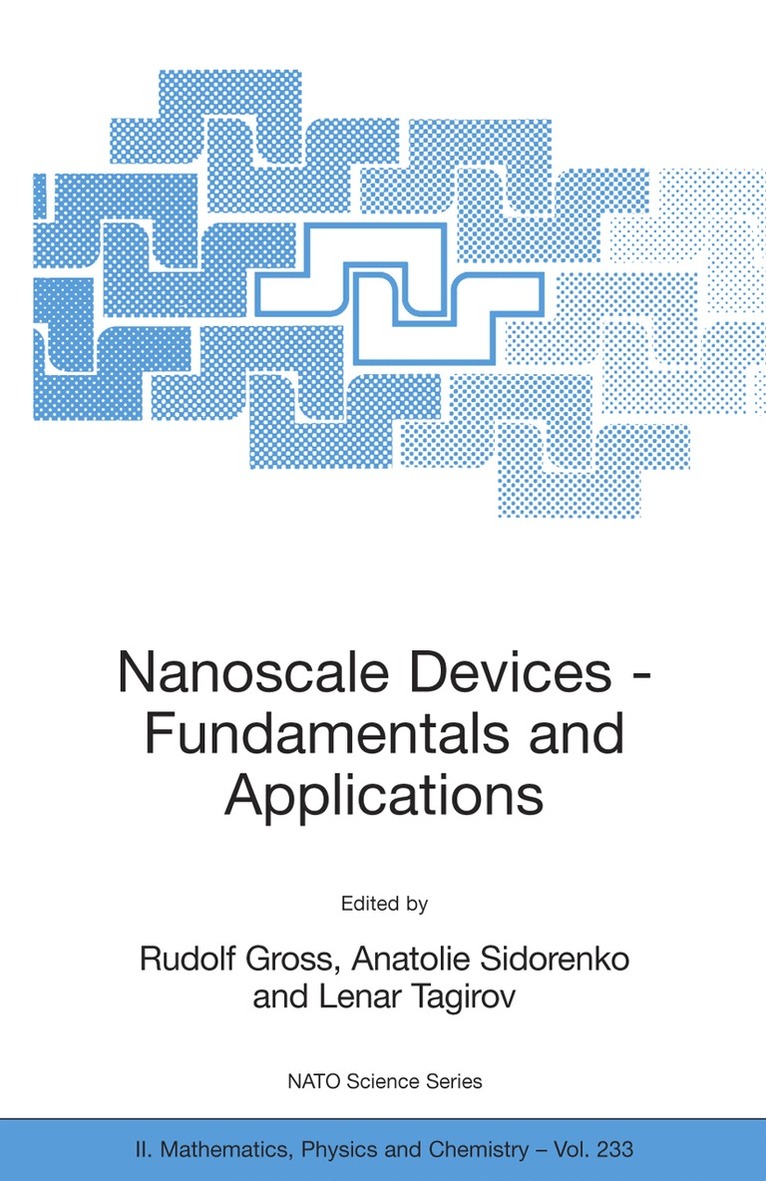
Over the last decade the interest in nanoscale materials and their applications in novel electronic devices have been increasing tremendously. This is caused by the unique properties of nanoscale materials and the outstanding performance of nanoscale devices. The fascinating and often unrivalled properties of nanoscale materials and devices opened new and sometimes unexpected fields of applications. Today, the widespread applications range from the detection of explosives, drugs and fissionable materials to bio- and infrared-sensors, spintronic devices, data storage media, magnetic read heads for computer hard disks, single-electron devices, microwave electronic devices, and many more. This book contains a collection of papers giving insight into the fundamentals and applications of nanoscale devices. The main focus is on the synthesis and characterization of nanoscale magnetic materials, the fundamental physics and materials aspects of solid-state nanostructures, the development of novel device concepts and design principles for nanoscale devices, as well as on applications in electronics with special emphasis on defence against the threat of terrorism.
2 101 kr
Skickas inom 10-15 vardagar
Over the last decade the interest in nanoscale materials and their applications in novel electronic devices have been increasing tremendously. This is caused by the unique properties of nanoscale materials and the outstanding performance of nanoscale devices. The fascinating and often unrivalled properties of nanoscale materials and devices opened new and sometimes unexpected fields of applications. Today, the widespread applications range from the detection of explosives, drugs and fissionable materials to bio- and infrared-sensors, spintronic devices, data storage media, magnetic read heads for computer hard disks, single-electron devices, microwave electronic devices, and many more. This book contains a collection of papers giving insight into the fundamentals and applications of nanoscale devices. The main focus is on the synthesis and characterization of nanoscale magnetic materials, the fundamental physics and materials aspects of solid-state nanostructures, the development of novel device concepts and design principles for nanoscale devices, as well as on applications in electronics with special emphasis on defence against the threat of terrorism.
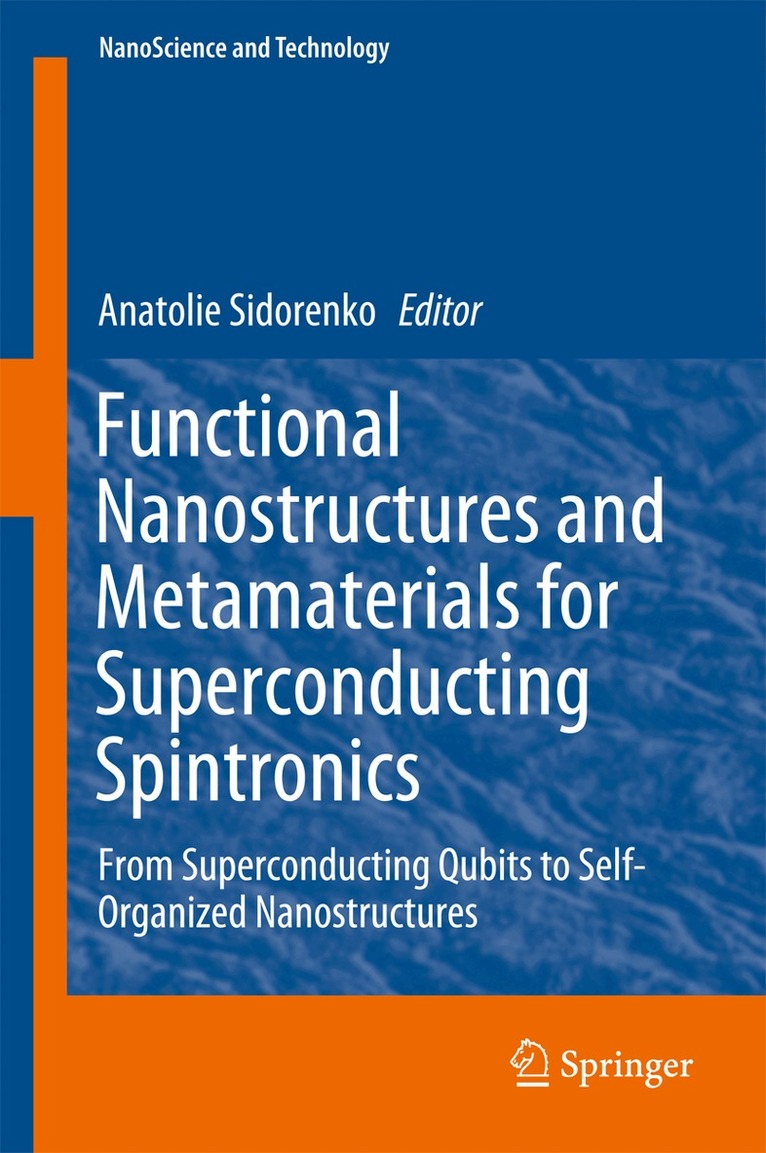
Functional Nanostructures and Metamaterials for Superconducting Spintronics
From Superconducting Qubits to Self-Organized Nanostructures
Häftad, Engelska, 2019
1 381 kr
Skickas inom 10-15 vardagar
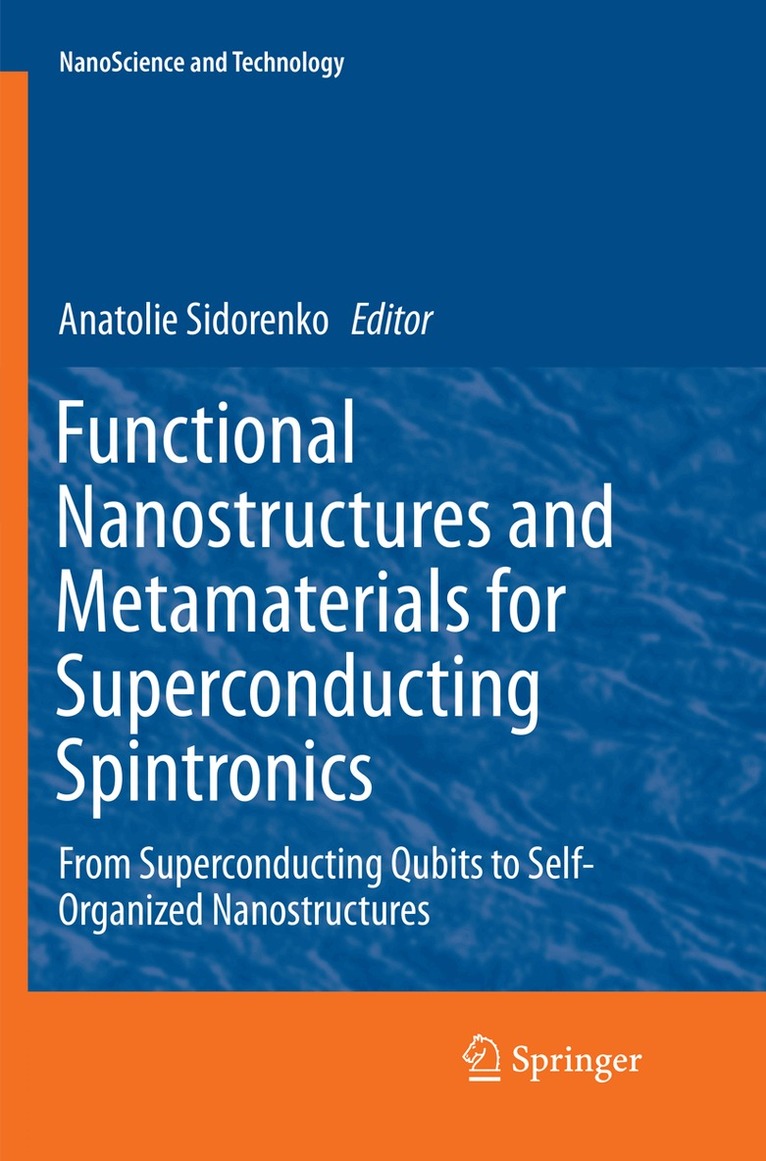
This book demonstrates how the new phenomena in the nanometer scale serve as the basis for the invention and development of novel nanoelectronic devices and how they are used for engineering nanostructures and metamaterials with unusual properties.
Functional Nanostructures and Metamaterials for Superconducting Spintronics
From Superconducting Qubits to Self-Organized Nanostructures
Inbunden, Engelska, 2018
1 381 kr
Skickas inom 10-15 vardagar
This book demonstrates how the new phenomena in the nanometer scale serve as the basis for the invention and development of novel nanoelectronic devices and how they are used for engineering nanostructures and metamaterials with unusual properties.
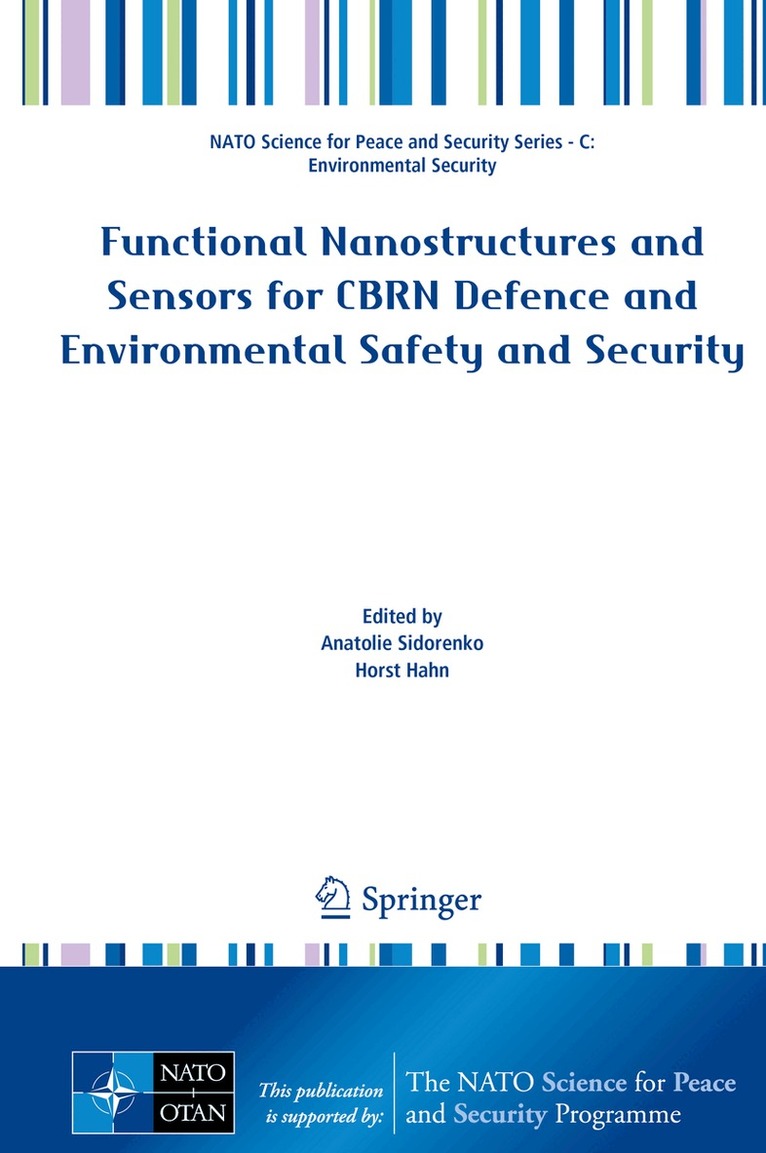
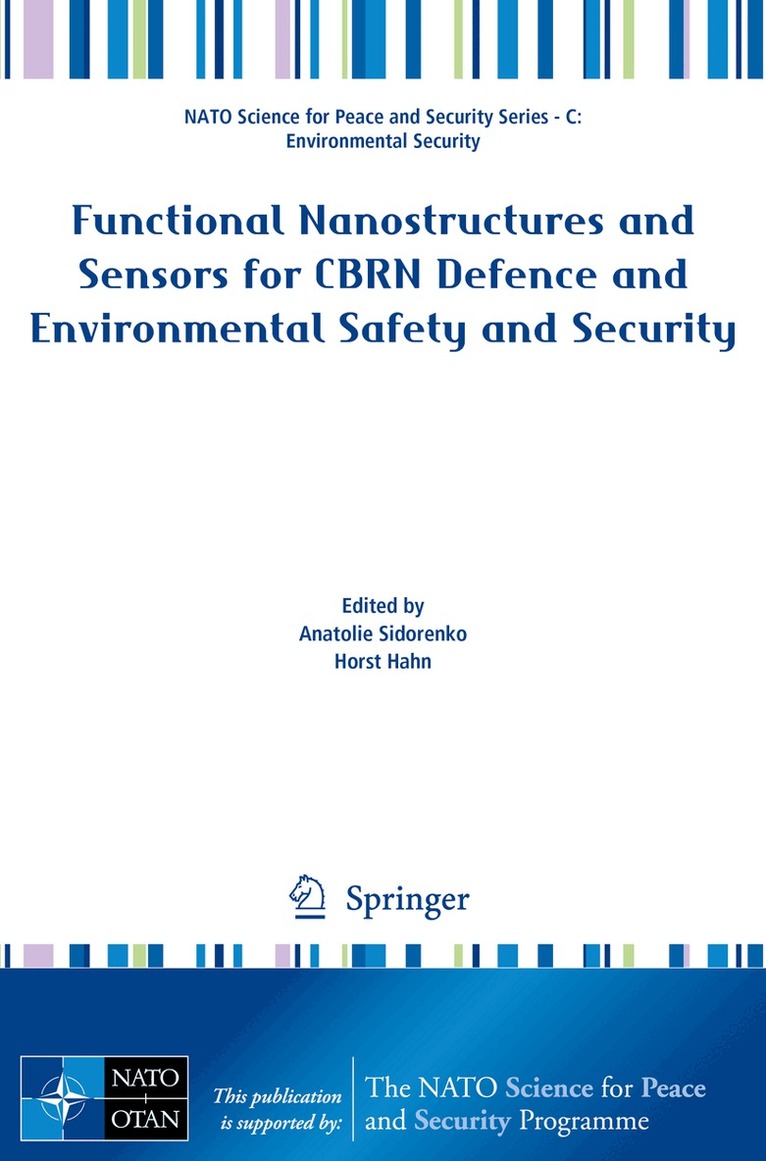
Functional Nanostructures and Sensors for CBRN Defence and Environmental Safety and Security
Inbunden, Engelska, 2020
1 578 kr
Skickas inom 10-15 vardagar
Over the last decade, techniques for materials preparation and processing at nanometer scale have advanced rapidly, leading to the introduction of novel principles for a new generation of sensors and detectors. At the same time, the chemical industry, transport and agriculture produce huge amounts of dangerous waste gases and liquids, leading to soil, air and water contamination. One more modern threat - international terrorism - demands that scientists make efforts to apply new principles and technologies to protect society against chemical, biological, radiological and nuclear (CBRN) attacks and to develop novel effective technologies for the remediation of large contaminated areas. Accordingly, the main goal of this book is to bring together experts (theorists, experimentalists, engineers and technologists) for an extensive discussion covering: novel principles for functional nanostructures and detector fabrication and implementation, the development of novel technologies for the deactivation of CBRN agents, their experimental realization and their application in novel monitoring and control systems, and technological processes for soil and water remediation, with a view to environmental protection and defence against CBRN-based terrorism. In keeping with the book’s main goal, the following topics are highlighted and discussed: - Sensors and detectors - detection of chemicals, principles of “artificial nose” and chemical “micro-lab on a chip” design, surface and underground water quality monitoring systems, molecular electronics, superconducting electronic devices, quantum detectors and Qubits.- Environmental protection and CBRN - detection of infrared, microwave, X-ray and terahertz radiation. Principles for novel IR-, UV-, and Terahertz-wave devices for the detection of low-contrast objects.- Novel technological processes for CBRN destruction and deactivation.All these topics are strongly interrelated, both with regard to fundamental aspects and to fabrication and implementation technologies; in addition, they are highly promising for application in novel functional devices, computer logics, sensing and detection of low-concentration chemicals, weak and extremely weak magnetic and microwave fields, infrared and ultraviolet radiation. Given its scope, the book will be a useful and interesting guide for a broad readership of engineers, scientists, PhD students and experts in the area of defence against environmental terrorism.
Functional Nanostructures and Sensors for CBRN Defence and Environmental Safety and Security
Häftad, Engelska, 2021
1 578 kr
Skickas inom 10-15 vardagar
Over the last decade, techniques for materials preparation and processing at nanometer scale have advanced rapidly, leading to the introduction of novel principles for a new generation of sensors and detectors. At the same time, the chemical industry, transport and agriculture produce huge amounts of dangerous waste gases and liquids, leading to soil, air and water contamination. One more modern threat - international terrorism - demands that scientists make efforts to apply new principles and technologies to protect society against chemical, biological, radiological and nuclear (CBRN) attacks and to develop novel effective technologies for the remediation of large contaminated areas. Accordingly, the main goal of this book is to bring together experts (theorists, experimentalists, engineers and technologists) for an extensive discussion covering: novel principles for functional nanostructures and detector fabrication and implementation, the development of novel technologies for the deactivation of CBRN agents, their experimental realization and their application in novel monitoring and control systems, and technological processes for soil and water remediation, with a view to environmental protection and defence against CBRN-based terrorism. In keeping with the book’s main goal, the following topics are highlighted and discussed: - Sensors and detectors - detection of chemicals, principles of “artificial nose” and chemical “micro-lab on a chip” design, surface and underground water quality monitoring systems, molecular electronics, superconducting electronic devices, quantum detectors and Qubits.- Environmental protection and CBRN - detection of infrared, microwave, X-ray and terahertz radiation. Principles for novel IR-, UV-, and Terahertz-wave devices for the detection of low-contrast objects.- Novel technological processes for CBRN destruction and deactivation.All these topics are strongly interrelated, both with regard to fundamental aspects and to fabrication and implementation technologies; in addition, they are highly promising for application in novel functional devices, computer logics, sensing and detection of low-concentration chemicals, weak and extremely weak magnetic and microwave fields, infrared and ultraviolet radiation. Given its scope, the book will be a useful and interesting guide for a broad readership of engineers, scientists, PhD students and experts in the area of defence against environmental terrorism.