Anatoly M. Khazanov – författare
Visar alla böcker från författaren Anatoly M. Khazanov. Handla med fri frakt och snabb leverans.
11 produkter
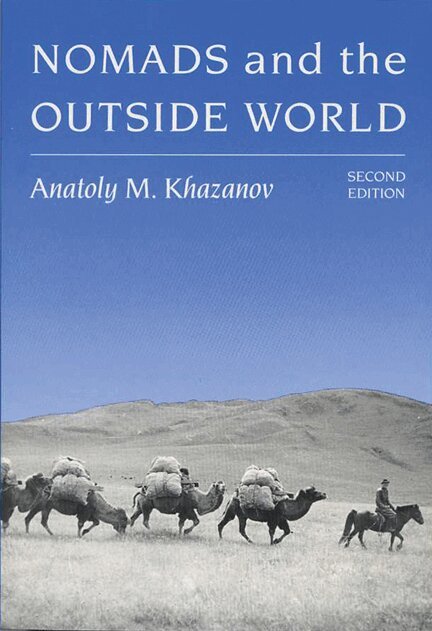
Nomads and the Outside World
Häftad, 1994
273 kr
Lägg i varukorg
This comparative study of pastoral nomadism is now updated, with a revised bibliography, and designed to present the whole phenomenon in historical, ecological, spatial and structural perspective. It covers numerous peoples of Central Asia, Siberia, North and East Africa and the Middle East.
Perpetrators, Accomplices and Victims in Twentieth-Century Politics
Reckoning with the Past
Av Anatoly M. Khazanov, Stanley Payne
Inbunden, 2009
1568 kr
Lägg i varukorg
These studies examine the ways in which succeeding democratic regimes have dealt with, or have ignored (and in several cases sugar-coated) an authoritarian or totalitarian past from 1943 to the present. They treat the relationship with democratization and the different ways in which collective …
Perpetrators, Accomplices and Victims in Twentieth-Century Politics
Reckoning with the Past
Av Anatoly M. Khazanov, Stanley Payne
Häftad, 2013
517 kr
Lägg i varukorg
These studies examine the ways in which succeeding democratic regimes have dealt with, or have ignored (and in several cases sugar-coated) an authoritarian or totalitarian past from 1943 to the present. They treat the relationship with democratization and the different ways in which collective …
Nomads in the Sedentary World
Av Anatoly M. Khazanov, Andre Wink
Inbunden, 2001
2513 kr
Lägg i varukorg
Studies the role played by nomads in the political, linguistic, socio-economic and cultural development of the sedentary world around them. Spans regions from Hungary to Africa, India and China, and periods from the first millennium BC to early modern times.
Nomads in the Sedentary World
Av Anatoly M. Khazanov, Andre Wink
Häftad, 2001
1173 kr
Lägg i varukorg
Studies the role played by nomads in the political, linguistic, socio-economic and cultural development of the sedentary world around them. Spans regions from Hungary to Africa, India and China, and periods from the first millennium BC to early modern times.
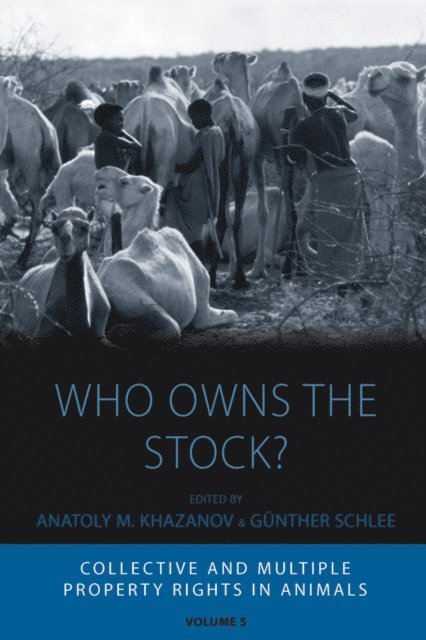
Who Owns the Stock?
Collective and Multiple Property Rights in Animals
Av Anatoly M. Khazanov, Günther Schlee
Inbunden, 2012
1921 kr
Lägg i varukorg
The issue of collective and multiple property rights in animals, such as cattle, camels or reindeers, among pastoralists has never been a subject of special cross-cultural and comparative study. Focusing on pastoralist societies in East and West Africa, the Far North and Siberia, and the Eurasian …
Who Owns the Stock?
Collective and Multiple Property Rights in Animals
Av Gunther Schlee, Anatoly M. Khazanov
E-bok, 2012
326 kr
Lägg i varukorg
The issue of collective and multiple property rights in animals, such as cattle, camels or reindeers, among pastoralists has never been a subject of special cross-cultural and comparative study. Focusing on pastoralist societies in East and West Africa, the Far North and Siberia, and the Eurasian …
Nomads in the Sedentary World
Av Andre Wink, Anatoly M. Khazanov
E-bok, 2012
1366 kr
Lägg i varukorg
Studies the role played by nomads in the political, linguistic, socio-economic and cultural development of the sedentary world around them. Spans regions from Hungary to Africa, India and China, and periods from the first millennium BC to early modern times.
Nomads in the Sedentary World
Av Andre Wink, Anatoly M. Khazanov
E-bok, 2012
1427 kr
Lägg i varukorg
Studies the role played by nomads in the political, linguistic, socio-economic and cultural development of the sedentary world around them. Spans regions from Hungary to Africa, India and China, and periods from the first millennium BC to early modern times.
Perpetrators, Accomplices and Victims in Twentieth-Century Politics
Reckoning with the Past
Av Stanley Payne, Anatoly M. Khazanov
E-bok, 2013
607 kr
Lägg i varukorg
These studies examine the ways in which succeeding democratic regimes have dealt with, or have ignored (and in several cases sugar-coated) an authoritarian or totalitarian past from 1943 to the present. They treat the relationship with democratization and the different ways in which collective …
Perpetrators, Accomplices and Victims in Twentieth-Century Politics
Reckoning with the Past
Av Stanley Payne, Anatoly M. Khazanov
E-bok, 2013
607 kr
Lägg i varukorg
These studies examine the ways in which succeeding democratic regimes have dealt with, or have ignored (and in several cases sugar-coated) an authoritarian or totalitarian past from 1943 to the present. They treat the relationship with democratization and the different ways in which collective …